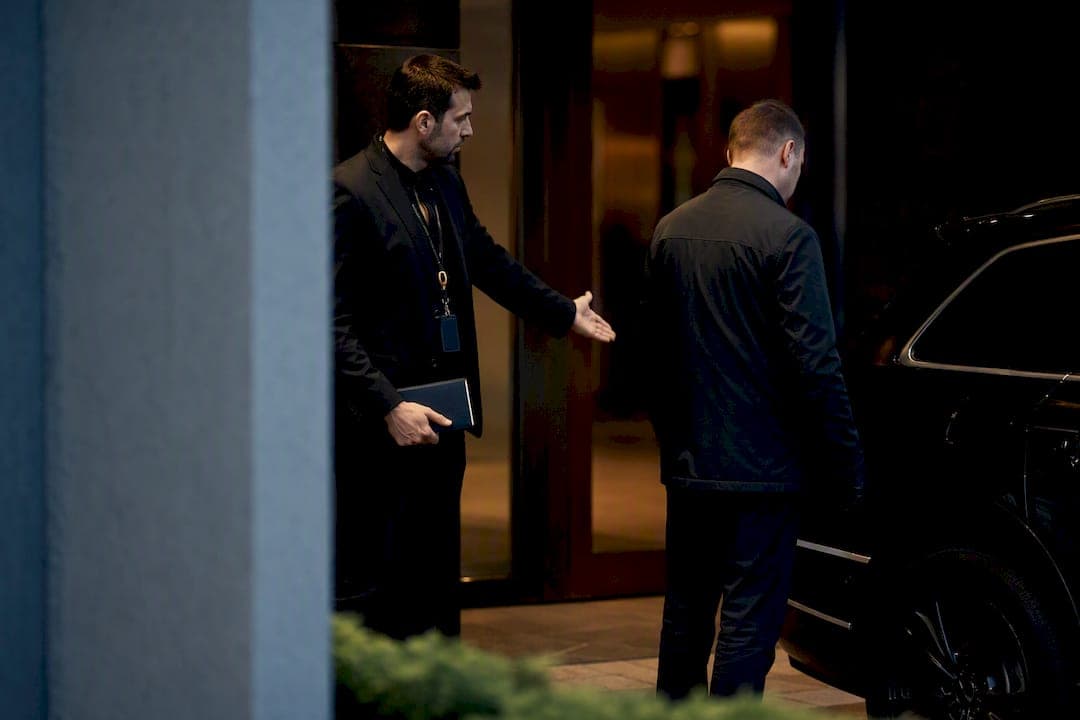
A talent transportation protocol guarantees dedicated, staged vehicles with vetted drivers, a named dispatch contact, signed NDAs, and a daily vehicle manifest. Lock in your vehicle manifest, confirm your driver assignments, and secure a certificate of insurance naming production as additional insured before your first call time. Providers with entertainment-specific experience build these steps into their standard onboarding, rather than treating them as add-ons.
TL;DR:
- Lock vehicle manifests and confirm driver assignments 2 to 4 weeks before production starts, with additional reinforcement at 24 to 48 hours prior.
- Maintain clear separation of roles on the transportation team, especially the coordinator owning the manifest and dispatch contacts, to prevent communication breakdowns.
- Ensure all compliance documents, including insurance, NDAs, and background checks, are verified and attached to the manifest before any talent moves.
- Build in contingency plans with standby vehicles and detailed cost estimates for overtime and extended holds, and negotiate response times beforehand.
- Stage talent vehicles separately and earlier than crew shuttles to avoid privacy leaks and streamline day-of transportation operations.
Table of Contents
- Pre-Production Checklist and Vehicle Manifest Timeline
- Who Owns What: Roles on the Transportation Team
- How Do You Run Day-Of Transportation Without Chaos?
- What Compliance Steps Are Non-Negotiable?
- Backup Vehicles and Budgeting for the Unexpected
- Templates You Can Copy Into Your Call Sheet
- Setting Vehicle Standards Before Assignment
- Accommodating Talent With Disabilities
- Keeping Pickup Locations Private and Secure
- Staying Inside Local Transportation Rules
- Training Drivers for Talent-Specific Situations
- Vehicle Sanitation and Health Protocols
- What Production Teams Actually Get Wrong
- How Riga Global Travel Handles Production Transport
- Sources
Pre-Production Checklist and Vehicle Manifest Timeline
Talent transport methods fail most often because production waits too long to lock vehicle counts. The fix is a simple countdown, tied to specific deliverables at each stage.
Booking windows shift by season. Multi-week productions typically need 2 to 4 weeks of lead time, while pilot and fall-season shoots require 4 to 6 weeks because vehicle and driver availability tightens across every market at once.
| Timeframe | Key actions |
|---|---|
| 2 to 4 weeks out | Estimate vehicle counts, issue PO or booking confirmation, request COI and NDA paperwork |
| Week before | Finalize vehicle manifest, assign dedicated drivers, confirm staging locations and dispatch contact |
| 24 to 48 hours out | Distribute final manifest and driver briefing, confirm flight tracking for arriving talent |
| Day-of | Pre-position vehicles, log hold times, collect wrap report fields |
A few habits separate protocols for talent transport that hold up under pressure from ones that collapse on day three:
- Never finalize a manifest without a backup vehicle line for at least one high-priority movement.
- Confirm the dispatch contact by phone, not just email, before week-of.
- Build flight-tracking access into the manifest for any talent flying in, not just airport-run drivers.
- Attach the signed COI and NDA to the manifest packet, not a separate folder.
Who Owns What: Roles on the Transportation Team
Efficient talent transportation depends on clear ownership, because overlapping duties are where communication breaks down on busy set days. Transportation department job descriptions define distinct roles for coordinator, captain, drivers, and mechanic, each with duties that don't overlap when documented correctly.
- Transportation coordinator: owns the manifest, manages vendor billing, and serves as the single point of contact between production and the transport vendor. This is the person a production transportation coordinator role is built around.
- Driver captain / head driver: oversees on-set movement, rotates drivers across shifts, and issues daily vehicle assignments.
- Cast driver / crew driver: handles vehicle care, passenger comfort, pre-shift inspections, and reports issues up the chain.
- Mechanic or unit mover: runs maintenance checks, handles seasonal readiness (cold starts, AC servicing), and signs off on vehicle condition before assignment.
On union productions, document which movements fall under Teamsters jurisdiction and which go to black car vendors, then share that coordination page with the AD team before week one. A one-page document prevents grievances that otherwise surface mid-shoot, when they're expensive to fix.
How Do You Run Day-Of Transportation Without Chaos?
Day-of execution is where talent transfer strategies either hold or fall apart, usually because staging and communication weren't nailed down in advance.
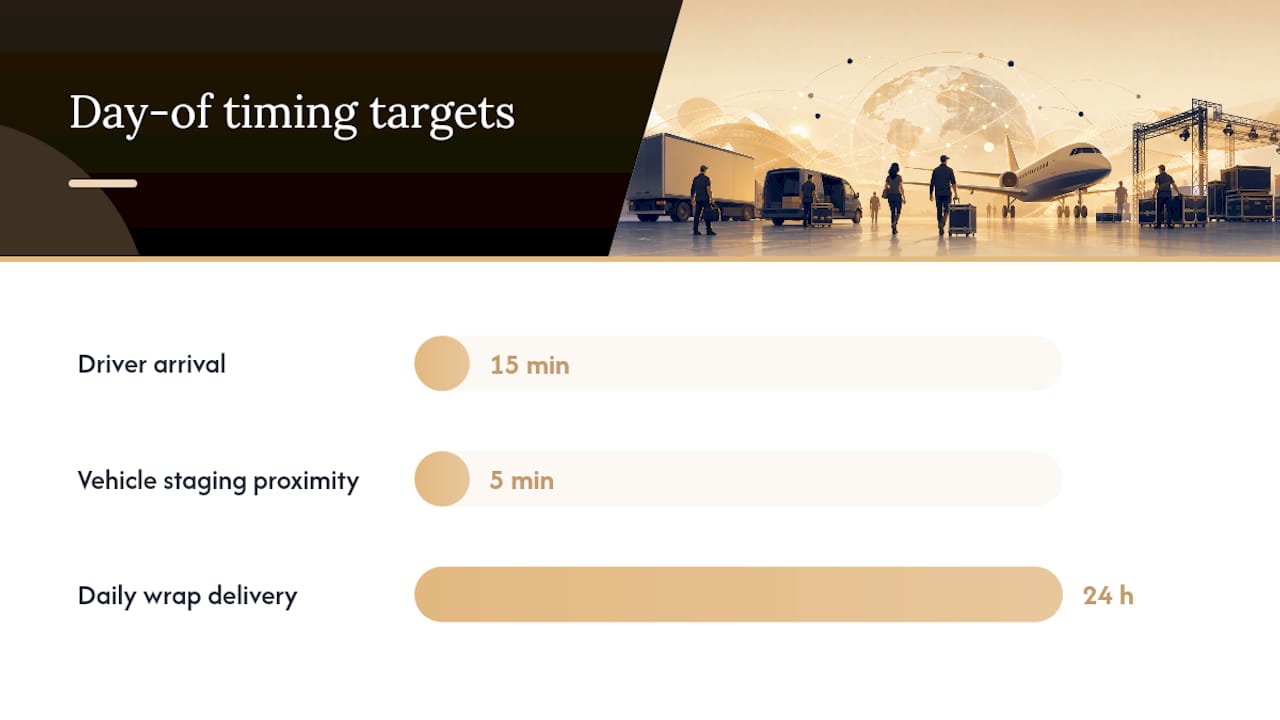
- Driver arrival and holding: drivers arrive 15 minutes early, check in with dispatch, and hold position until the passenger is confirmed ready. No wandering, no early departures.
- Staging strategy: position vehicles within five minutes of pickup points whenever the location allows it. Keep talent staging physically separate from crew shuttle lines.
- Driver briefing: cover emergency contacts, NDA terms, passenger preferences, primary and backup routes, and flight-monitoring responsibilities before the first pickup of the day.
- Communication stack: production radio for real-time updates, a named dispatch contact for escalation, a text chain for pickup confirmations, and a phone tree for anything urgent.
- Daily wrap report: log total vehicle hours, total trips, toll or congestion surcharges, and any budget variance, then deliver it to the line producer within 24 hours.
Pro Tip: Stage talent vehicles earlier and in a separate location from crew shuttles. It costs you nothing extra and it's the single easiest way to avoid a privacy leak at wrap.
Production teams consistently rate a named human dispatch contact above any automated system, because real-time answers from a person cut confusion during the exact hours when a shoot day tends to run long.
What Compliance Steps Are Non-Negotiable?
Talent management protocols only work if the paperwork behind them is airtight before anyone gets in a car.
- Request and verify a certificate of insurance naming your production as additional insured, not just the vendor's standard policy.
- Confirm driver background checks are complete, especially for any location requiring set access credentials.
- Require signed NDAs from every driver assigned to talent movements, with a written no-social-media policy attached.
- Use unmarked vehicles when discretion matters, and route sensitive itineraries through encrypted or closed-group messaging rather than open group texts.
- File all compliance documents with the manifest packet so nothing sits in a separate, hard-to-find folder.
Production-ready providers enforce NDAs and restrict driver social media activity as standard practice, not as a special request. That distinction is worth confirming during vendor selection, before you're locked into a contract.
Backup Vehicles and Budgeting for the Unexpected
Talent mobility solutions need a contingency layer, because shoot days rarely go exactly as scheduled. Response times for backup vehicles differ by market: urban cores generally see faster swaps than outlying or rural locations, where a standby car might sit 30 to 45 minutes away.
- Standby pools cover last-minute swaps; dedicated vehicles are reserved and assigned for the full shoot day. Use standby for crew shuttles and dedicated assignments for principal talent.
- Pricing typically falls into hourly holds, flat transfers, or negotiated day rates, with overtime billed separately once a shift runs past its contracted window.
- Two line items get missed constantly: overtime charges and contingency fees for extended hold times. Build both into your cost report before the shoot starts, not after.
- Before signing, confirm cancellation windows, how the vendor defines "standby," and whether surcharges appear on the invoice as a line item or get buried in the total.
Negotiate these terms in writing during pre-production. A verbal understanding about response times means nothing when a driver is stuck 40 minutes out and talent is waiting at the trailer.
Templates You Can Copy Into Your Call Sheet
A daily movement matrix is the operational backbone of how to transport talent without daily scrambling. It lists every movement in one place, so nobody's guessing who's picking up whom.
| Passenger | Pickup time | From | To | Vehicle class | Driver |
|---|---|---|---|---|---|
| Talent A | 6:15 AM | Hotel | Set | Executive SUV | Driver 1 |
| Crew shuttle | 6 AM | Crew hotel | Set | Sprinter van | Driver 2 |
Fill in one row per movement, updated daily, and distribute it alongside the call sheet so every department sees the same information.
For driver briefings, a top-10 checklist keeps things consistent shift to shift: emergency contacts, NDA terms, passenger name and preferences, primary route, backup route, flight status if applicable, dispatch contact number, hold location, radio channel, and wrap report deadline. Fold the pre-production timeline from earlier in this guide directly into your transport spreadsheet, and treat the manifest as a living document that gets updated the moment a call time shifts.
Setting Vehicle Standards Before Assignment
Vehicle standards are where a lot of otherwise solid protocols quietly fail, usually because nobody inspected the car before it showed up. Production transport guides recommend unscented interiors, a defined maximum vehicle age, and pre-cooled or pre-heated cabins as baseline requirements, not upgrades.
Run a pre-assignment inspection on every vehicle before it's cleared for a talent movement. Check for lingering scent from air fresheners, cigarette smoke, or cleaning products, since talent with sensitivities or allergies will notice immediately. Confirm the interior temperature is set before pickup, particularly for early-morning calls in cold climates or midday runs in summer heat.
Vehicle age matters more than most call sheets acknowledge. A car with visible wear, worn upholstery, or an outdated interior sends the wrong signal even if it runs fine mechanically. Set an age cap in your vendor contract and ask for documentation on fleet rotation.
Cleanliness inspections should happen at the start of every shift, not just once at the start of the week. That means checking floor mats, window streaks, trunk space for equipment, and confirming the vehicle smells neutral. A five-minute inspection before each assignment catches problems before they become a complaint from talent or their representative.
Accommodating Talent With Disabilities
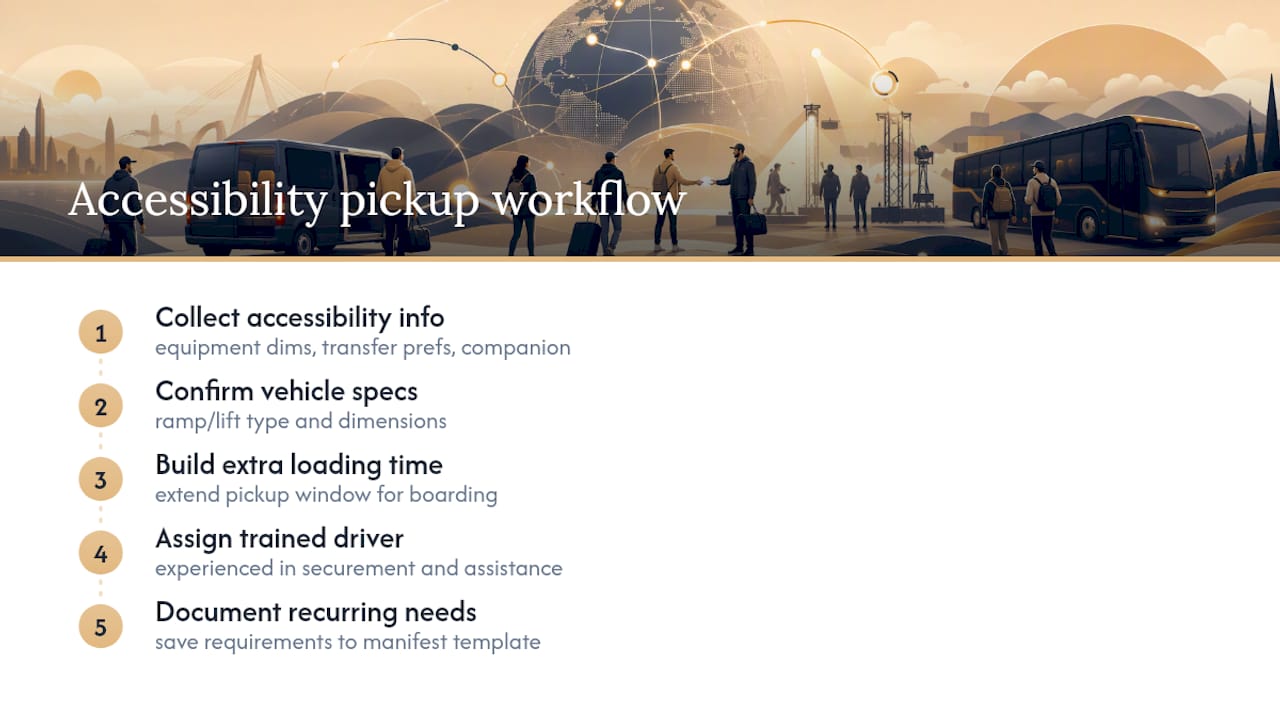
Accessibility needs should show up on the manifest days before pickup, not get discovered at the curb. If a cast member requires a wheelchair-accessible vehicle, confirm ramp or lift specifications with the vendor during initial booking, not the morning of the shoot.
Build accessibility requirements into the same intake form used for dietary restrictions or security requests. Ask specifically about mobility equipment dimensions, preferred transfer assistance, and whether a companion or aide needs to ride in the same vehicle. Some accessible vehicles need extra loading time, so build that into your pickup window rather than assuming standard timing applies.
Driver training matters here as much as the vehicle itself. A driver unfamiliar with securing a wheelchair or assisting a passenger with limited mobility can turn a routine pickup into a delay or, worse, a safety issue. Confirm with your vendor that drivers assigned to these movements have specific experience, not just a willingness to help.
Document any recurring accessibility needs in the manifest template so they carry over automatically to the next day's assignment, rather than requiring the coordinator to remember and re-communicate every shift.
Keeping Pickup Locations Private and Secure
Privacy failures rarely come from a driver leaking information on purpose. They come from sloppy default habits: an open group text with too many people on it, a pickup address shared in an unsecured channel, or a car parked somewhere visible with a call sheet taped to the dashboard.
Route sensitive pickup and drop-off details through a closed communication channel, limited to the coordinator, driver captain, and the assigned driver. Avoid naming exact addresses in any channel visible to the broader crew. Use general terms like "Location A" on the wider call sheet and reserve exact addresses for the driver's individual assignment sheet.
Unmarked vehicles matter more in dense urban settings where paparazzi or fans can identify a branded car on sight. For high-profile talent, request vendor vehicles with no exterior branding and confirm the driver isn't posting location tags or vehicle photos on personal social media.
Secure pickup zones, meaning locations away from public sidewalks or building entrances with foot traffic, reduce the odds of an unplanned encounter. This is worth flagging with location managers during scouting, not after a schedule is locked.
Staying Inside Local Transportation Rules
Regulations governing chauffeured transport vary by state and municipality, covering everything from driver licensing to vehicle-for-hire permitting. Confirm that any vendor operates under the correct commercial licensing for the market you're shooting in, and don't assume a vendor licensed in one city automatically holds the right permits in another.
Some markets require specific permits for vehicles operating near production zones or airport pickup areas, separate from the standard for-hire licensing a limousine company already carries. Ask your vendor directly whether they hold current permits for every location on your shoot schedule, not just the primary base of operations.
Insurance requirements tied to commercial passenger transport also differ by jurisdiction. This is another reason the COI conversation from earlier in this guide needs to happen early, since some markets require coverage minimums beyond what a vendor's standard policy provides. When in doubt, have your production counsel confirm licensing and insurance requirements for each filming location rather than relying on vendor assurances alone.
Training Drivers for Talent-Specific Situations
A driver who's excellent at standard airport transfers isn't automatically ready for talent work. Onboarding needs to cover situations that don't come up in typical chauffeur assignments: handling paparazzi encounters, managing fan approaches at pickup points, and staying composed when a schedule changes four times in one afternoon.
Walk new drivers through the NDA and confidentiality policy in person, not just as a signature on a form. Confirm they understand the no-social-media rule extends to personal accounts, not just professional ones. Cover de-escalation basics for situations where a crowd forms around a vehicle, since the instinct to drive away fast can create more risk than staying calm and waiting for security.
Pair new drivers with an experienced cast driver for their first few assignments whenever staffing allows it. This on-the-job shadowing catches habits that a written checklist can't, like reading when a passenger wants silence versus conversation, or recognizing when a route needs to change because of a spotted photographer.
Document driver training completion in the same file as background checks and NDAs, so the entire compliance record for each driver lives in one place your coordinator can reference quickly.
Vehicle Sanitation and Health Protocols
Health-related expectations for production vehicles haven't disappeared just because the acute phase of the pandemic has passed. Many productions still specify sanitation standards in their transportation contracts, particularly for long shoots where talent and crew share vehicles repeatedly over weeks.
Standard practice now includes wiping down high-touch surfaces between passengers, providing hand sanitizer in every vehicle, and having drivers carry basic supplies like masks on request. Some productions require air filtration systems in vehicles used for extended talent transport, especially during flu season or when a production insurer specifies it as a condition of coverage.
Ask vendors directly what their sanitation protocol looks like between assignments, not just at the start of a contract. A vehicle used for a morning airport run and reassigned to talent transport that afternoon should get a documented cleaning pass in between, not just a visual check.
Build sanitation confirmation into your daily driver checklist alongside the standard cleanliness inspection covered earlier. It takes a few extra minutes and closes a gap that's easy to overlook once a shoot is a few weeks in and routines get loose.
What Production Teams Actually Get Wrong
The most common failure isn't a missing vehicle. It's skipping the Teamsters and black car coordination document, which leaves ADs guessing who's authorized to move what, and that guesswork turns into grievances mid-shoot.
The fix that surprises most first-time coordinators: stage talent vehicles separately from crew shuttles, and stage them earlier. It costs nothing and prevents most of the privacy problems that show up at wrap. Providers with genuine production set transportation experience build this into their standard operating procedure rather than as a special request.
— Sammy
How Riga Global Travel Handles Production Transport
Some providers build these protocols into every production booking instead of treating them as a special request. That means dedicated chauffeurs, manifest-first scheduling, NDA compliance, and COI documentation ready before your first call time, not scrambled together the week of.
Some providers offer limousine and executive vehicle transport for cast, crew, and executives, with dispatch coordination built around the daily movement matrix rather than one-off bookings. When you reach out, include your shoot dates, estimated vehicle counts by day, a sample call sheet if you have one, and any special requirements like accessibility needs or unmarked vehicle requests. That gives the team what it needs to quote accurately on the first pass.
Productions filming in Los Angeles can start with our limousine service in Los Angeles, while New York shoots can review our New York limousine service page for coverage details. For talent-specific bookings, our celebrity and talent transportation page outlines what to expect. Reach out with your production dates and vehicle needs, and we'll put together a quote built around your actual manifest, not a generic package.
Sources
- IATSE Local 856 — Transportation department job descriptions (2023)
- TV & Film Production Transportation NYC: The Production — Detailed Drivers
- Atlanta Film & TV Production Transport | Chauffeurs Lane
- Transportation Coordinator Checklist: 8 Essential Steps for 2026 — JetCharterBus