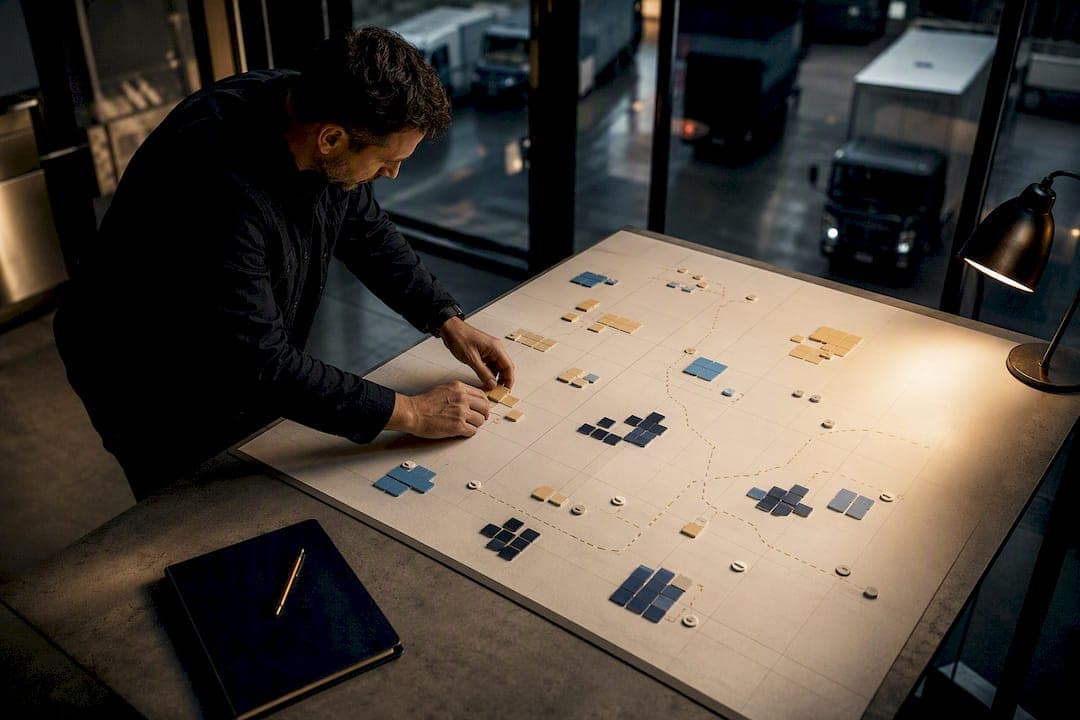
Production transportation planning succeeds when every talent sedan, crew shuttle, and gear truck lands where it needs to be, on time, with no one standing on a curb waiting. That means matching vehicle types to the call sheet, building a daily movement matrix before the shoot starts, and verifying every vendor's insurance and licensing before wheels turn. The rest of this guide walks through the checklist, the staffing, the permits, and the contingency math that keep those three priorities intact.
TL;DR:
- Permits for lane closures or historic district staging require one to two weeks, while standard parking approvals need only a few days.
- Matching vehicle types to call sheet purposes is crucial, with sedans for principals, SUVs for small groups, and gear trucks for equipment.
- Building and sharing a live, detailed daily movement matrix prevents schedule shifts from causing delays or confusion.
- Budget 10% of transportation costs for contingencies like overtime, vehicle breakdowns, and traffic delays to avoid mid-shoot budget issues.
- Having a named dispatch contact, pre-approved insurance, and a clear contingency plan integrated into the call sheet enhances on-set coordination.
Table of Contents
- What Is a Production Transportation Planning Checklist?
- Who Handles What: Coordinator, Captain, Drivers, and Dispatch
- What Permits and Insurance Do You Actually Need?
- How Do You Match Fleet to the Call Sheet?
- How Do You Plan for What Goes Wrong?
- What Riga Global Travel Sees on Actual Productions
- Why Most Transportation Plans Fail Before the Camera Rolls
- Ready to Simplify Your Next Shoot's Ground Transportation?
- Sources
What Is a Production Transportation Planning Checklist?
A working checklist runs from three weeks before principal photography to a formal closeout, and skipping any phase tends to show up as a delay on set. The Transportation Coordinator Checklist built by working coordinators breaks the job into clear phases rather than a single long to-do list.
Three weeks out (pre-production):
- Read the script and flag every location, vehicle need, and time-sensitive move.
- Map locations for congestion zones, restricted streets, and parking limits.
- Verify vendor licensing (TLC where applicable), confirm certificates of insurance, and pull driver background checks.
- File union notices if Teamsters or another local governs the work.
- Draft a rough daily movement matrix tied to the shooting schedule.
Two weeks and one week out:
- Submit permit applications for anything beyond standard street parking.
- Lock the daily movement matrix and share it with assistant directors and locations.
- Confirm a single named dispatch contact at each vendor, not a call-center queue.
Shoot-day execution:
- Pre-position vehicles at the unit base before first call.
- Run live tracking on shuttles and sedans so dispatch can react to traffic in real time.
- Keep an emergency contact chain posted with the transportation captain, not buried in an email thread.
Wrap and closeout:
- Reconcile driver hours and overtime against the call sheet.
- Check vehicles for damage and confirm COIs covered the full shoot window.
- Log what broke down operationally so the next show doesn't repeat it.
Pro Tip: Build the daily movement matrix in a shared spreadsheet or app the AD team can see live. A matrix that only the transportation captain can access is a matrix that gets ignored when the schedule shifts.
Who Handles What: Coordinator, Captain, Drivers, and Dispatch
Transportation coordinators typically start prepping about three weeks before filming begins and often stay engaged through closeout, which runs anywhere from two to five weeks after wrap, according to job-title data on the role. The coordinator reads the script, scouts with the location manager, and builds the vehicle plan before anyone books a car.
- Transportation coordinator (TC): owns the budget, the vendor relationships, and the overall plan.
- Transportation captain: runs the floor on shoot days, manages drivers, and reports directly to the TC.
- Drivers: carry the required documentation, drug screening, and background checks the vendor should have on file.
- Dispatch: the vendor's operational hub, ideally staffed by one named contact rather than a rotating desk.
Productions typically separate this human-movement work from Teamsters equipment truck jurisdiction, since union protocols and asset types dictate the split. A small commercial shoot might run with one TC and two drivers. A mid-size episodic often needs a captain plus four to six drivers. A feature with multiple units can require a full transportation department integrated tightly with the AD team and production office, not bolted on as an afterthought.
What Permits and Insurance Do You Actually Need?
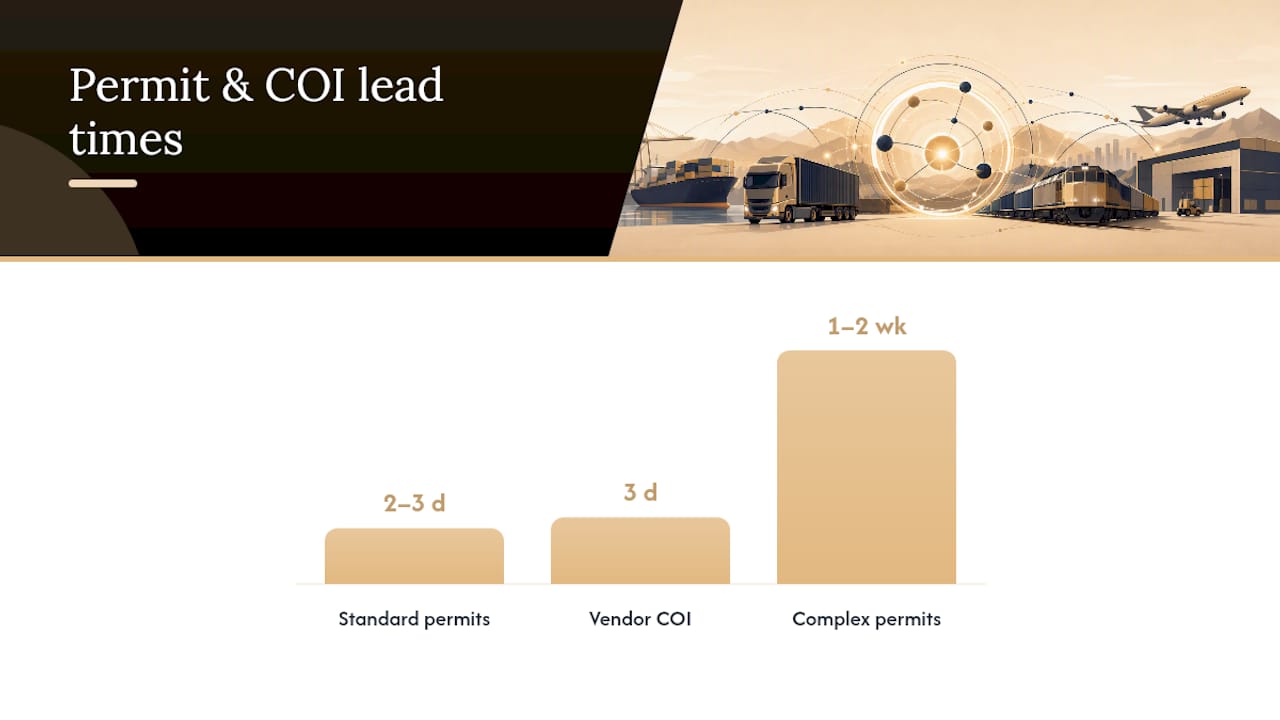
Permit timelines are the single most underestimated variable in production transport planning. Routine street-parking permits in most cities clear within a few days, but complex requests, such as staging near historic districts or closing lanes for a convoy, can take one to two weeks to process.
- Standard parking or loading zone permits: 2 to 3 business days in most jurisdictions.
- Street closures, historic-district staging, or multi-vehicle convoys: plan for 1 to 2 weeks.
- Map every location against congestion-pricing zones and restricted corridors before locking the schedule, not after.
Certificates of insurance need to name the production as additional insured, and many vendor contracts require a primary and non-contributory clause with a waiver of subrogation. Chauffeurs working near talent should sign NDAs before the first pickup, not after a wrap party photo leaks. Document any Teamsters or other union agreement during prep; grievances filed mid-shoot cost far more in delay than the paperwork would have cost upfront.
Pro Tip: Ask any vendor for their COI template before you book, not after. If they need three days to produce one, that's a preview of how they'll handle a shoot-day emergency.
How Do You Match Fleet to the Call Sheet?
Fleet mistakes usually come from booking one vehicle type for every job instead of matching class to purpose. Fleet guidance from working productions suggests a fairly consistent pattern across shoot sizes:
- Executive sedans for principal talent and department heads.
- V-Class or Escalade-class SUVs for small groups moving together, like a director and a producer.
- Sprinter vans for crew shuttles running between the unit base and set.
- Two to three gear trucks on a typical feature, sized to the camera and lighting package.
The daily movement matrix should list who is moving, from where, to where, call time, vehicle class, driver name, and dispatch contact, in that order, so anyone on set can read it without a translation key.
Routing matters as much as vehicle choice. Sequence pickups to avoid deadhead miles, sending one sedan to collect three nearby cast members instead of running three separate trips across town. Shuttle systems perform best on a fixed cadence, with main crew shuttles running every 10 to 15 minutes during call and wrap windows, backed by live tracking so dispatch can adjust without guessing.
| Vehicle class | Typical use | Booking window |
|---|---|---|
| Executive sedan | Principal talent, department heads | Confirm 1 to 2 weeks ahead |
| SUV (V-Class/Escalade) | Small groups, producers | Confirm 1 week ahead |
| Sprinter van | Crew shuttles | Confirm at pre-production lock |
| Gear truck | Camera, lighting, grip package | Confirm at scout stage |
Keep one standby vehicle staged at the unit base for every shoot day. It costs less than the delay caused by a flat tire with no backup.
How Do You Plan for What Goes Wrong?
Most transportation failures aren't dramatic. They're a fifteen-minute delay that snowballs because nobody planned for it. Budget a wrap-time contingency, commonly around 10% of the transportation line, to absorb overtime and congestion surcharges without a mid-shoot budget fight, an approach detailed in transportation cost-planning guidance.
- Pre-plan alternate routes for known congestion corridors and weather-sensitive roads.
- Keep one backup driver and one backup vehicle on call, not just in theory.
- Confirm generator or climate needs for vehicles waiting on long exterior days.
Set clear escalation rules before day one: transportation resolves routine delays on its own, but anything threatening the call time gets flagged to the line producer immediately, not after the fact. Wrap-time transport, including late-night shuttle logistics, deserves its own contingency line since fatigue and reduced visibility raise the stakes. Your closeout summary should capture what delayed the day, what the fix cost, and what to change next time.
Pro Tip: Write your contingency plan into the call sheet distribution, not a side document. A backup plan nobody has read isn't a backup plan.
What Riga Global Travel Sees on Actual Productions
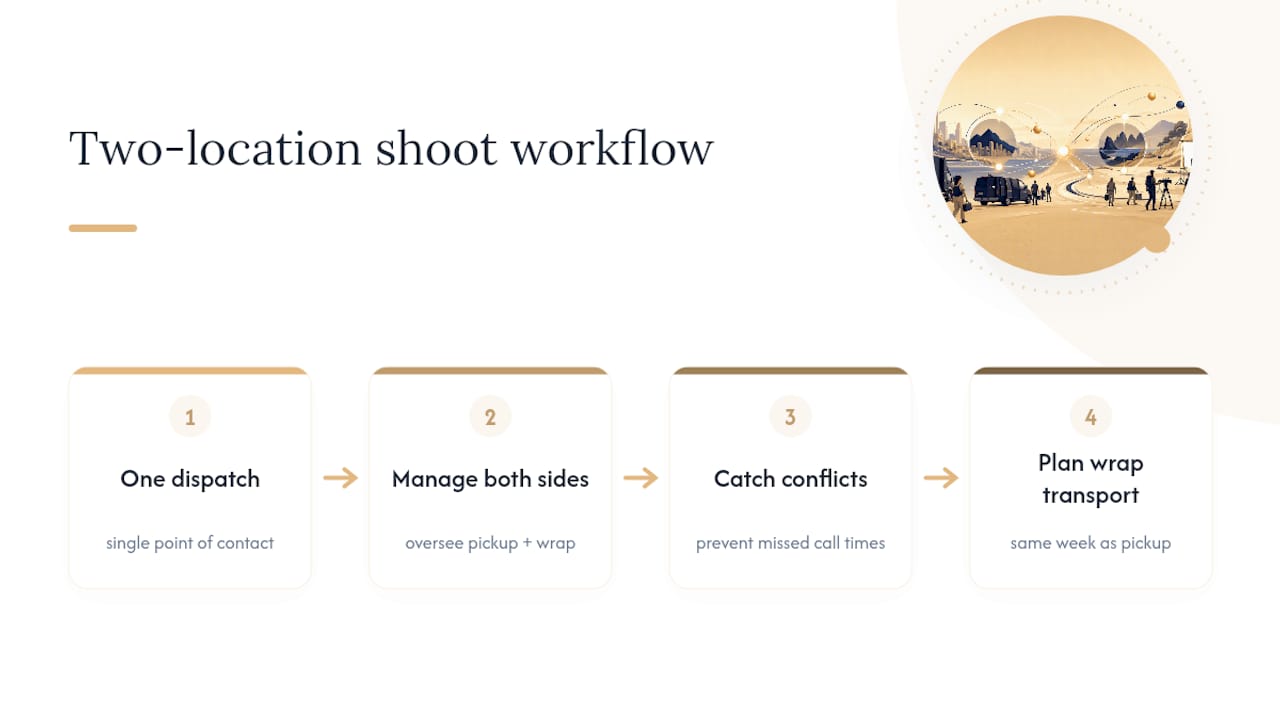
Some vendors run chauffeured sedans, Sprinter shuttles, and full dispatch support for entertainment productions, and that vantage point shapes a lot of this guide. A two-location shoot day, for instance, usually works best with one dispatch contact managing both sides rather than splitting oversight, because a single point of contact catches a scheduling conflict before it becomes a missed call time. Wrap transport gets planned the same week as pickup, not scrambled together at 6 p.m. For deeper detail on staffing and role structure, the transportation coordinator role breakdown covers how that position evolves across a shoot's lifecycle. Route surveys and truck-parking constraints, covered well in this commercial shoot planning guide, apply just as directly to unit base selection on a film set.
Why Most Transportation Plans Fail Before the Camera Rolls
The conventional advice on production transportation planning spends too much time on vehicle glamour and not enough on the boring mechanics that actually break a shoot day: permit lead times, a named dispatch contact, and a contingency line that's real money, not a rounding error. Most schedule collapses trace back to one of three causes: a permit filed too late, a vendor with no single point of contact, or a fleet mismatched to the actual headcount moving at any given hour.
If you take one thing from this guide, make it the daily movement matrix. It forces you to answer the who, what, when, and where questions before the shoot day arrives, when there's no time left to answer them. Union coordination and COI paperwork feel like overhead until the week they save a production from a grievance or a liability gap. Prioritize those two before you spend another hour comparing sedan trim levels. The vehicles matter less than the system moving them.
— Sammy
Ready to Simplify Your Next Shoot's Ground Transportation?
Some vendors provide chauffeured sedans, Sprinter shuttles, talent vehicles, and full dispatch support built around how productions actually operate, not a generic car service model bolted onto entertainment work. That means documented COIs ready before you ask, chauffeurs who know how to stage near a set without blocking a shot, and one dispatch line handling your whole day instead of three vendors passing the problem around.

For productions running in New York, the limousine service built for New York shoots covers everything from talent pickups to crew shuttles under one account. High-discretion moves for cast and executives run through celebrity and talent transportation with NDAs and vetted chauffeurs already in place. Request a quote or set up a production account before your next call sheet locks, so dispatch, vehicles, and paperwork are ready before day one instead of scrambled the week of.
Sources
- Behind the lens glossary: Teamsters Local 399 transport
- Production transport & logistics guide — Fixers in New York
- Transportation Coordinator Checklist: 8 Honest Steps 2026
- Film & TV production transportation guide — Chauffeurs Lane
- Locations and transportation: Transportation coordinator job title — StateUniversity.com