
White-glove studio transport is a premium logistics service defined by meticulous handling, custom packing, and full-service coordination designed specifically for delicate and high-value entertainment production assets. Producers and logistics managers who have moved camera rigs, lighting arrays, or set pieces across state lines know that standard freight simply does not cut it. The examples of white-glove studio transport covered here draw from real case studies in art logistics, production shipping, and sensitive environment relocations. Each one illustrates a concrete technique or protocol you can apply directly to your next production move.
1. What are the best examples of white-glove studio transport?
The strongest examples of white-glove studio transport share three features: specialized equipment, trained crews, and end-to-end service accountability. These are not abstract ideals. They show up in specific tools, protocols, and documented outcomes across the entertainment and fine art logistics industries. The sections below break down eight of the most instructive examples, each drawn from real-world practice.
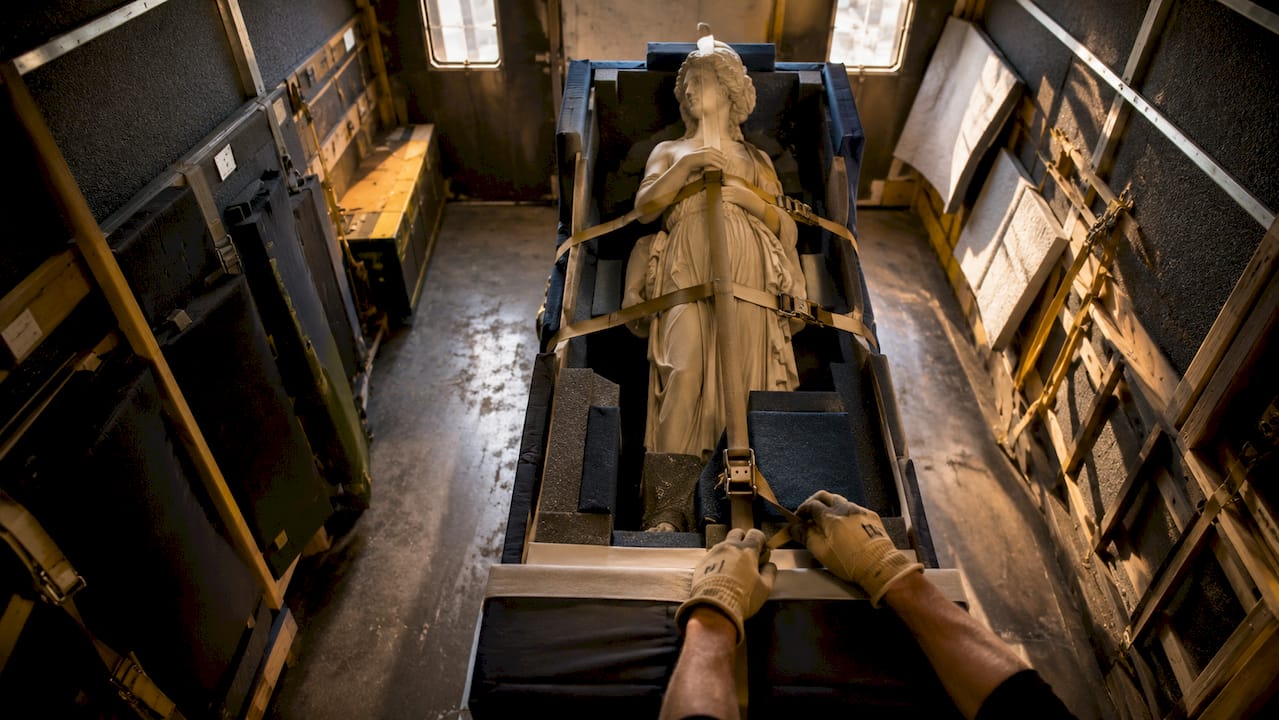
2. Monumental sculpture transport with climate-controlled vehicles
High-value art transport is the closest analog to moving irreplaceable studio assets, and the techniques transfer directly. Bovis Fine Art documented the transport of a 700 kg marble sculpture into the Opéra-Comique in Paris using a 12-ton climate-controlled truck and a four-person team operating 1-ton and 1.6-ton stackers. The result was millimetric indoor placement without a single point of contact damage.
That level of precision is exactly what a production logistics manager needs when moving a custom-built set piece or a vintage prop with no replacement value. The key variables are vehicle tonnage, crew size, and lifting equipment rated for the specific load.
| Variable | Specification Used |
|---|---|
| Vehicle type | 12-ton climate-controlled truck |
| Crew size | Four trained handlers |
| Lifting equipment | 1-ton and 1.6-ton electric stackers |
| Placement accuracy | Millimetric indoor positioning |
Pro Tip: Always confirm that your transport provider's lifting equipment is rated above the actual load weight. A stacker rated at exactly the load weight leaves zero margin for uneven floors or doorway angles.
3. Custom crating and precision positioning for fragile assets
Custom crating is the single most effective way to protect a fragile studio asset during transit. High-value equipment transport demands avoidance of heavy machinery when possible. Precision lifting systems, climate-controlled vehicles, and custom crates built to the exact dimensions of the asset minimize risk at every transfer point.
For studio applications, this means building crates around camera housings, lighting rigs, and prop furniture rather than forcing assets into standard freight containers. A crate built for a specific item eliminates internal movement entirely. Foam inserts cut to the item's profile add a second layer of protection against vibration during road transport.
The entertainment industry borrows this practice directly from fine art logistics. Production companies moving between New York and Los Angeles, for example, use the same crating standards that museum couriers apply to paintings. The investment in custom crating is always lower than the cost of replacing a damaged asset.
4. Full-service production set logistics from pickup to cleanup
White-glove logistics for production houses extend well beyond transit. Pakrite Express documents a service model that covers inside placement, uncrating, assembly, installation, and final site cleanup. That full chain of custody matters because a production set must be camera-ready the moment the crew arrives.
The practical benefit for a logistics manager is zero handoff gaps. When one provider owns every step from pickup to cleanup, there is no moment where an asset sits unattended on a loading dock or waits for a second crew to arrive. Production schedules do not accommodate delays caused by fragmented vendor chains.
Key service components in this model include:
- Pickup and inventory documentation at the origin location
- Custom crating and load securing before transit
- Inside placement at the destination, including navigating stairs and tight corridors
- Uncrating and assembly of set pieces and equipment
- Site cleanup to leave the space production-ready
Pro Tip: Request a written service scope that explicitly lists uncrating and cleanup as included deliverables. Verbal agreements on these steps are the most common source of billing disputes after a production move.
5. Protection-first methods for studio equipment moves
White-glove moving is a protection-first process. Ace Moving Co. identifies furniture wrapping, organized room-by-room placement, and floor and doorway safeguarding as core practices. For studio equipment, these translate into hard-shell cases, foam inserts, moving blankets, and floor runners laid before any cart or dolly enters the space.
Trained crews follow a specific sequence when handling complex equipment:
- Photograph the item in its assembled state before disassembly begins.
- Label every cable, bracket, and component with numbered tags that match a written inventory.
- Wrap each component individually using moving blankets or foam padding.
- Load heaviest items first and secure them to the vehicle wall with ratchet straps.
- Reassemble on-site using the photographs and labeled components as reference.
This sequence prevents the two most common failures in studio equipment moves: missing components and incorrect reassembly. Both failures cost production time, which is the most expensive resource on any set.
Solomon & Sons Relocation Services frames white-glove moving as a full-completion service. The goal is a ready-to-use space immediately after delivery. That standard applies directly to a studio control room or edit suite that must be operational the same day the move concludes.
Pro Tip: Assign one crew member exclusively to inventory documentation during the move. That person does not carry boxes. Their only job is to verify that every labeled item is loaded, transported, and checked off at delivery.
6. Dedicated coordinator and real-time communication protocols
Paramount Van Lines identifies transparency, clear communication, and a dedicated coordinator as the critical factors that prevent surprises in complex white-glove moves. For entertainment production, a dedicated coordinator is not a luxury. It is the operational mechanism that keeps a move aligned with a production schedule.
A coordinator handles real-time problem solving when a loading dock is blocked, a freight elevator is out of service, or a delivery window shifts by two hours. Without a single point of contact, those problems cascade into production delays. With one, they get resolved before the crew on set even knows there was an issue.
The coordinator role also covers communication between the transport provider and the production designer or art director. Set pieces often have placement requirements that are not obvious from a floor plan. A coordinator who has spoken directly with the designer arrives on set knowing exactly where each item goes and in what order.
7. Environmental and technical protocols for sensitive studio spaces
Some studio relocations require the same environmental controls used in scientific cleanrooms. Ontrack Moving handled a San Francisco cleanroom lab relocation that required crew gowning, shoe decontamination mats, and strict adherence to the facility's access protocols. The same principles apply when moving into a sound stage with static-sensitive electronics or a color grading suite with calibrated display equipment.
Protocols for sensitive studio environments include:
- Decontamination procedures at entry points to prevent particulate contamination
- Anti-static packaging for electronics and sensor-based equipment
- Climate-controlled vehicles to prevent humidity fluctuations during transit
- Vibration-dampening mounts inside the vehicle for sensitive optical equipment
- Limited access loading docks managed by a single credentialed crew
"For studio relocations involving sensitive environments, crews must often gown, use footwear decontamination mats, and comply fully with client protocols to maintain sterile conditions." Ontrack Moving
These protocols protect both the assets and the destination environment. A color grading suite contaminated with construction dust during a move requires recalibration and cleaning before it can be used. That downtime is preventable with the right entry protocols in place.
8. Luxury executive transport as part of production logistics
Premium studio logistics often include executive transport alongside equipment moves. TV production ground transportation in New York covers the full-service logistics model that production teams use when coordinating talent, crew, and equipment across multiple locations. Executive mobile office conversions on Mercedes-Benz Sprinter chassis, for example, range from $75,000 to $95,000 in build cost, with daily rental rates between $550 and $750. That cost reflects the level of customization required to support a working production environment in transit.
For a logistics manager, integrating executive transport into the same coordination framework as equipment moves reduces the number of vendors to manage. A single provider handling both talent transport and equipment logistics creates one chain of accountability rather than two. That consolidation is a measurable reduction in coordination overhead on a busy production day.
Key takeaways
White-glove studio transport requires custom equipment, trained crews, and full-service accountability from pickup through final placement to protect high-value production assets and meet tight production schedules.
| Point | Details |
|---|---|
| Custom crating is non-negotiable | Build crates to the exact dimensions of each asset to eliminate internal movement during transit. |
| Full-service scope prevents downtime | Require uncrating, assembly, and cleanup as written deliverables, not verbal agreements. |
| A dedicated coordinator is operational infrastructure | One point of contact resolves real-time problems before they reach the production floor. |
| Environmental protocols protect sensitive spaces | Anti-static packaging, decontamination procedures, and climate-controlled vehicles prevent damage to calibrated equipment. |
| Documentation drives reassembly accuracy | Photograph, label, and inventory every component before disassembly to guarantee correct on-site reassembly. |
Why the coordinator role is the most underrated factor in studio transport
I have watched productions lose half a day because two vendors pointed at each other over a missed delivery window. No one owned the problem. That is the real cost of fragmented logistics, and it is entirely preventable.
The technical side of white-glove transport gets most of the attention: the crates, the climate-controlled trucks, the lifting equipment. Those matter. But in my experience working with entertainment clients, the single biggest differentiator between a smooth move and a costly one is whether there is one person who owns the entire operation from the first pickup to the final cleanup call.
Paramount Van Lines puts it plainly: real-time support and communication are critical to white-glove service success. That is not a soft skill. It is a structural requirement. A coordinator who has read the production schedule, spoken with the art director, and walked the destination space before move day is worth more than any single piece of equipment in the fleet.
The other thing I would push back on is the assumption that white-glove transport is only for the most expensive assets. A $40,000 camera rig and a $400 prop both need to arrive on time and undamaged. The production schedule does not distinguish between them. Apply the same documentation and handling standards across the board, and you eliminate the judgment calls that lead to damage claims.
Providers who specialize in entertainment logistics, like Rigaglobaltravel, understand that the clock on a production set runs differently than in any other industry. That context shapes every decision from vehicle selection to crew briefing.
— Sammy
How Rigaglobaltravel supports your production logistics
Rigaglobaltravel delivers luxury studio transport and concierge logistics built specifically for entertainment industry clients. Whether you are coordinating a multi-location production in Los Angeles, managing talent arrivals in New York, or moving a full set between facilities, Rigaglobaltravel provides the dedicated coordination and premium vehicle fleet that production schedules demand.

From celebrity and talent transportation to executive ground logistics, every service is built around one standard: your production runs on time and your assets arrive intact. Contact Rigaglobaltravel to discuss a bespoke logistics plan for your next production move.
FAQ
What does white-glove studio transport include?
White-glove studio transport covers the full service chain from pickup and custom crating through inside placement, uncrating, assembly, and site cleanup. The goal is a production-ready space immediately after delivery, with no handoff gaps between vendors.
How is white-glove transport different from standard freight?
Standard freight moves items from point A to point B. White-glove moving services add trained handlers, custom protective packaging, environmental controls, and on-site setup, making them the correct choice for high-value or irreplaceable production assets.
Why do production sets need a dedicated transport coordinator?
A dedicated coordinator manages real-time problems like blocked loading docks or shifted delivery windows before they affect the production schedule. Without one, fragmented vendor chains create accountability gaps that cost production time.
What environmental protocols apply to sensitive studio relocations?
Sensitive studio moves require anti-static packaging, climate-controlled vehicles, decontamination procedures at entry points, and vibration-dampening mounts for optical equipment. These protocols mirror the standards used in cleanroom lab relocations and prevent damage to calibrated production equipment.
How should production teams document assets before a white-glove move?
Photograph every item in its assembled state, label all components with numbered tags, and maintain a written inventory that travels with the shipment. This documentation is the reference point for correct reassembly on-site and the primary record for any damage claims.