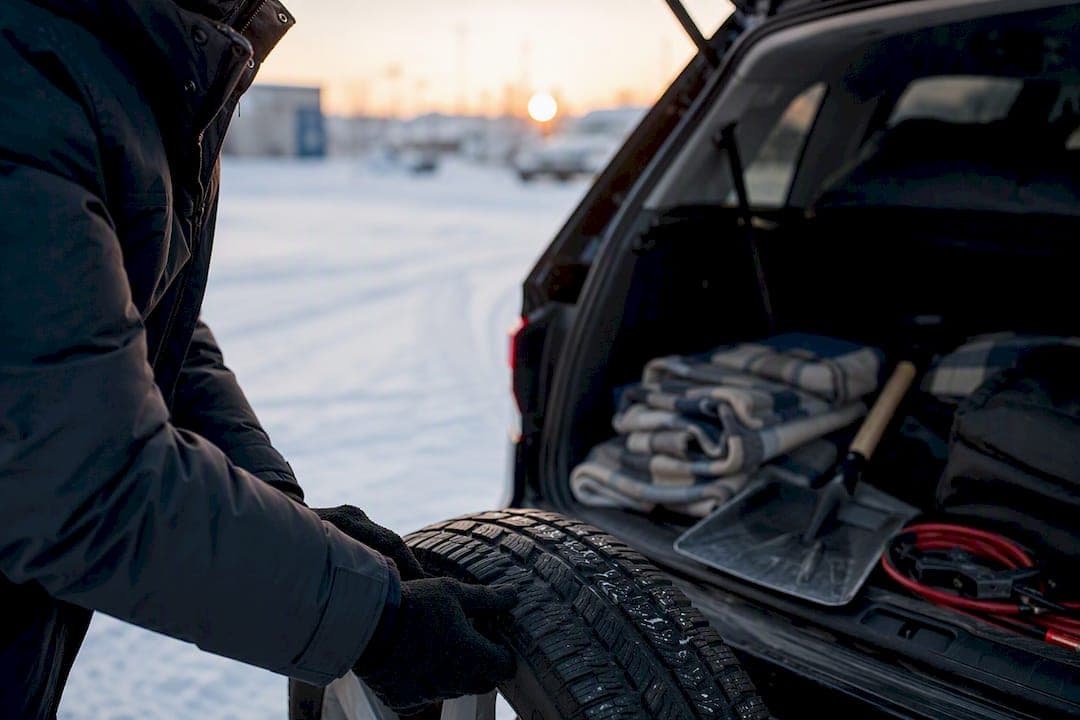
A winter weather transportation plan for production and executive ground transport has one job: guarantee safety, keep the schedule intact, and give you an escalation path before a storm turns into a shut-down. If your plan doesn't do all three at once, it isn't a plan, it's a hope. For chauffeured production operations, this means a written, rehearsed protocol covering staffed dispatch, standby vehicles, a winterized fleet, live tracking, and contract language that assigns risk before the first flake falls.
Five elements separate a plan that survives a storm from one that collapses under it:
- A dispatcher staffed and reachable for the full call window, not just business hours
- Standby vehicles pre-positioned, not summoned cold
- A fleet actually rated for ice and snow, with winter tires and emergency kits
- Real-time GPS tracking with a defined check-in cadence
- Contract clauses that name weather triggers and who pays for delay
A production that treats winter weather as a footnote in the call sheet is one storm away from a missed shoot day. Riga Global Travel builds winter contingencies into every production and executive account precisely because a short delay decision, made too late, costs far more than the plan that prevented it.
Key Takeaways
A winter weather transportation plan works only when staffed dispatch, a winterized fleet, and contract-level decision triggers operate together as one system.
| Point | Details |
|---|---|
| Define decision triggers early | Set specific snowfall, wind chill, and closure thresholds tied to named actions and owners. |
| Assign roles before the season starts | Give the production lead, transport lead, and driver lead clear, non-overlapping authority. |
| Require winter-rated equipment in contracts | Specify winter tires, on-board kits, and temperature-controlled storage in every vendor agreement. |
| Rehearse the call tree at least once per season | Run a staged delay drill to confirm dispatch response times and standby activation speed. |
| Riga Global Travel supports the full plan | Offers winterized fleet vehicles, staffed dispatch, pre-staged standby cars, and itemized surcharge billing. |
Table of Contents
- Building Your Production-Grade Winter Transportation Checklist
- Who Decides What: Building a Winter Transport Command Structure
- What Vehicle and Equipment Standards Should You Require?
- How Do You Set Realistic Buffers for Winter Routing?
- Setting Up Communications and Real-Time Tracking
- Contracts, Insurance and Pricing for Winter Operations
- Field Perspective: Lessons From Production Winter Ops
- How Riga Global Travel Supports Winter Production Transport Plans
- Sources
Building Your Production-Grade Winter Transportation Checklist
The checklist works in three phases: what you lock down before anyone books a flight, what you execute the morning of, and what you reconcile once wrap happens.
Pre-production, roughly two to four weeks out:
- Run a route risk assessment for every leg (hotel to set, airport to hotel, set to wrap location) and flag known problem grades or unplowed rural stretches.
- Verify vendor credentials: chauffeur licensing, insurance certificates, and documented winter-driving experience for every driver assigned.
- Confirm the fleet is winterized: tires swapped, batteries tested, fluids rated for cold.
- Assign and contract standby vehicles in writing, not as a verbal promise.
- Secure permits and staging approvals for holding areas near set.
- Book contingency lodging near set in case crew or talent can't safely travel back.
Day-of execution runs on a movement matrix. A production transportation checklist built around this matrix lists every person, origin, destination, vehicle class, and call time in one document, which is the only way a dispatcher can spot a conflict before it becomes a delay. Add a morning weather brief, defined staging and wrap-time procedures, and documented decision triggers for delay, standby activation, or cancellation.
Post-event work closes the loop: a close-out report logging vehicle hours, surcharge line items, and any incidents; after-action notes from drivers and on-site liaisons; and invoice reconciliation against the pre-agreed weather clauses.
| Trigger | Action | Owner |
|---|---|---|
| Snowfall forecast over 4 inches | Activate standby vehicles, notify talent reps | Transport lead |
| Road closure on primary route | Reroute via pre-cleared alternate | Driver lead |
| Wind chill below 0°F | Extend vehicle warm-up window, limit outdoor staging | On-site liaison |
| Dispatcher loses driver contact 20+ minutes | Trigger call-tree escalation | Production lead |
Who Decides What: Building a Winter Transport Command Structure
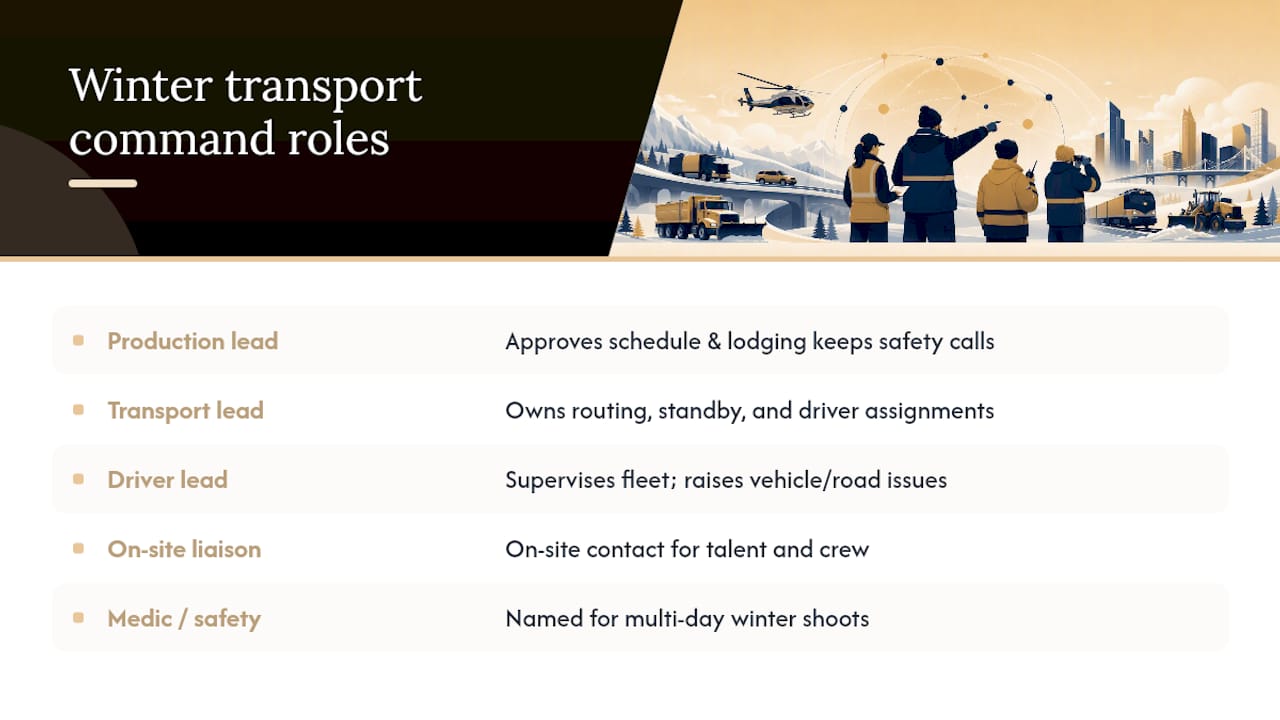
Winter days punish ambiguity. If two people think they have authority to call a delay, you'll get contradictory instructions on set at the worst possible moment. Assign five roles before the season starts, not the morning of the first snow call.
The production lead holds executive decision authority: they approve schedule changes and lodging costs. The transport lead/dispatcher owns operations: routing, standby activation, and driver assignments. The driver lead supervises the fleet on the ground and reports mechanical or road issues upward. The on-site liaison is the location-level contact talent and crew actually see. A medic or safety officer should be named on any multi-day winter shoot, even if their primary job that day is something else.
Build a one-page contact template: name, direct phone, alternate phone, and exactly what each role is authorized to approve without checking upward.
Pro Tip: Print the authority matrix and tape it inside the dispatch vehicle. In a dead-zone call, nobody has time to scroll through a shared drive.
Some responsibilities can't be delegated: the call to cancel a movement in whiteout conditions, the call to activate standby lodging, and the call to override a driver's on-the-ground refusal to proceed. Those stay with the production lead, full stop.
What Vehicle and Equipment Standards Should You Require?
Vehicle selection depends on the movement, not on what's cheapest to book. Talent sedans work for short, well-plowed hotel-to-set runs. Luxury SUVs handle worse road conditions and add ground clearance. Sprinter shuttles move crew in volume; mini-coaches make sense for large cast moves on multi-week productions. In winter, every one of these classes needs winter-rated tires, not all-season tires marketed as "good enough," and any vehicle running mountain or rural routes should carry chains even if state law doesn't strictly require them.
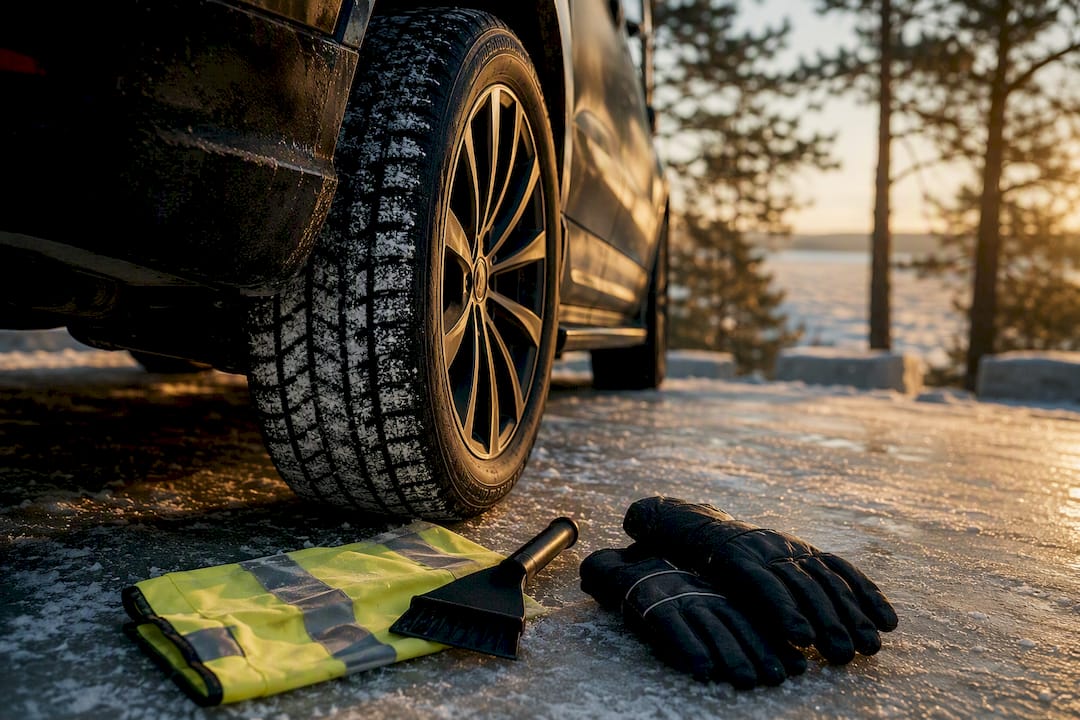
On-board equipment is non-negotiable: a shovel, ice scraper, jump-start kit, tow strap, insulated blankets, first-aid kit, de-icer spray, high-visibility vests, and a vehicle-mounted GPS unit. Equipment stored loose in a trunk in subzero temperatures degrades fast; batteries in particular die within minutes at extreme cold, which is why spare batteries and gear belong in temperature-controlled storage rather than an unheated cargo hold.
| Vehicle Class | Winter Tire Requirement | Minimum On-Board Kit |
|---|---|---|
| Talent sedan | Winter-rated tires | Ice scraper, blanket, jump kit |
| Luxury SUV | Winter-rated tires, chains available | Full kit plus tow strap |
| Sprinter shuttle | Winter-rated tires, chains on rural routes | Full kit plus first-aid, vests |
| Mini-coach | Winter-rated tires, chains mandatory in mountains | Full kit plus extended fuel reserve |
Staging matters as much as the vehicle spec. Holding areas need to be pre-cleared, not improvised, with a warm-up protocol so cabins are at temperature before talent boards. Drivers should run a pre-trip mechanical check every morning, not just at the start of the job.
Pro Tip: Keep a second battery pack in a heated vehicle, not the trunk. A dead battery at 6 a.m. call time is a delay you caused, not one the weather caused.
How Do You Set Realistic Buffers for Winter Routing?
Every winter movement needs pre-cleared primary and alternate routes, confirmed staging areas, and parking permits verified in advance, because a closed road discovered in real time is a delay you built into the plan without meaning to.
Buffer math scales with severity. A hotel-to-set run that takes 20 minutes clear should carry a 15 minute buffer in light snow, 30 in moderate snow or ice, and 45 minutes or a full reschedule in active whiteout conditions. Apply the same scaling to airport-to-hotel and wrap-to-hotel legs, since exhausted crews at the end of a wrap are the group least able to absorb a surprise delay.
Cut deadhead time with three tactics:
- Stagger pickups so vehicles run continuous loops instead of round trips.
- Reverse call-time sequencing on wrap so the last-needed talent gets the last pickup, not the first.
- Pair routes geographically so one vehicle serves multiple nearby stops instead of crossing town twice.
Drivers who know alternate routes and shortcuts save real production money on exactly the days when the primary route fails. Pre-stage standby vehicles at the midpoint of the day's movement matrix, not at the depot, so activation costs minutes rather than an hour.
Setting Up Communications and Real-Time Tracking
Set a check-in cadence before day one: drivers check in at departure, midpoint, and arrival every time, and dispatch reports status at regular intervals depending on storm severity. Tracking software should offer live GPS, geofencing around set and hotel zones, automated ETA updates, and group alerts, integrated directly into the day's call sheet rather than run as a separate system.
Build a simple call tree in advance:
- Driver reports an issue to dispatch first.
- Dispatch escalates to the transport lead within five minutes if unresolved.
- Transport lead notifies the production lead and, where talent is affected, the talent's agent or on-site liaison.
Every incident gets logged the same way: time, vehicle, location, weather conditions, action taken, and next step.
Contracts, Insurance and Pricing for Winter Operations
Winter risk needs to live in the contract, not in a verbal understanding between the dispatcher and the vendor. Ask for a weather surcharge clause, standby vehicle obligations spelled out by hour, and cancellation terms tied explicitly to the decision triggers in your operations table, not to vague "weather-permitting" language.
Insurance documentation should include proof of commercial auto liability, workers' compensation coverage for drivers, motor carrier authority where the route crosses state lines, and a current certificate of insurance with stated minimum limits.
- Sample clause: "Weather surcharge applies when NWS-forecasted snowfall exceeds 4 inches or wind chill drops below 0°F, billed at the pre-agreed standby hourly rate."
- Sample clause: "Standby vehicle activation, once ordered by the transport lead, is billed from time of dispatch regardless of whether the vehicle completes a movement."
| Pricing Trigger | Typical Basis |
|---|---|
| Standby vehicle hold | Per-hour rate from activation |
| Snow removal/detour time | Added to base run time |
| Overnight stranding | Lodging plus day-rate extension |
Running Rehearsals and Drills Before the First Snow Call
Run one drill before the season's first winter shoot. Script it simply: pre-brief the team, activate the call tree, stage a fake delay, activate a standby vehicle, then hold a short after-action review.
- Confirm dispatch actually fields the test call within the target response window.
- Confirm the standby vehicle activates and arrives inside the buffer time you set.
- Confirm GPS tracking is visible to every role that needs it.
- Confirm the talent handoff protocol works in cold conditions, not just on paper.
Log gaps in an after-action template with a named owner and a fix date. Run this drill once per season, including production leads, dispatch, and at least one driver.
Field Perspective: Lessons From Production Winter Ops
A production once pre-cleared a holding area two miles from set, purely as insurance against a closure that never came. When the primary road did close, that unused staging area turned into the launch point for the entire day's cast moves, and the shoot lost zero hours. That's the pattern worth noticing.
Three lessons hold up across winter productions: buffer time scales with severity, not with optimism; pre-cleared staging pays for itself the one day you need it; and a rehearsed escalation beats an improvised one every time, because polar-region productions that skip rehearsal before talent arrives routinely pay for it in lost hours.
What production leads get wrong: they assume standby vehicles are "on call" without a contract clause forcing activation speed. They skip the drill because the season looks mild. Do the drill anyway. Riga Global Travel's client checklists, built from production and halftime-show transport work, exist because these gaps repeat every season.
How Riga Global Travel Supports Winter Production Transport Plans
Every item in this checklist maps to something Riga Global Travel already runs day to day: a winterized fleet, staffed 24/7 dispatch, pre-staged standby vehicles, and invoicing that itemizes surcharges instead of burying them. That last part matters more than it sounds. A production that gets a clean, itemized bill after a storm day spends its energy on the next shoot day, not on a billing dispute.

Riga Global Travel's production set transportation services cover TLC-licensed drivers with documented winter experience, pre-clearance of staging areas near your location, and reporting that supports your after-action drills, not just your invoice reconciliation. If your production runs through the New York market this winter, start with the New York limousine service page and request a winter-readiness quote before your first call sheet goes out.
Sources
For vehicle specs and driver briefings, adapt Riga's production set transportation guide. For a ready-made checklist structure, start from the halftime show transport checklist. For buffer and standby budgeting examples across multi-day shoots, use the multi-city tour transport guide.
- Q&A: Location manager Jason Roberts on filming in the polar region with Will Smith
- The Blunt Guide to Filming in the Arctic | Xwander Productions
- The Complex Requirements of Managing Ground Travel for Television and Film Production Units - Programming Insider