Unit move transportation is the coordinated ground movement of cast, crew, and light production support vehicles, sedans, SUVs, Sprinters, and coaches, between hotels, base camp, and set. The first move on any production, before booking a single vehicle, is naming a transportation captain and locking in your vendor's dispatch contact and a preliminary vehicle manifest. Everything else below builds on that one decision.
TL;DR:
- Proper booking requires securing a dispatch contact and a preliminary vehicle manifest at least one to two weeks in advance for small moves, and longer for multi-week projects.
- Clear specifications, including passenger counts and exact pickup addresses, prevent vehicle mismatches and ensure the right vehicle type is assigned for each crew and talent group.
- Contracts should include a wrap-time contingency, explicit dispatch contact, and detailed billing rules, with multi-day and weekly charters offering cost stability.
- Pre-arranged staging, parking permits, and union coordination minimize logistical delays and avoid last-minute location issues.
- Most transportation chaos stems from poor communication, such as missing written union agreements, call sheet details, or confirmed pickup times.
Table of Contents
- How Does Unit Move Transportation Actually Work?
- Pre-Production Checklist: When to Book and What to Gather
- What Vehicle and Staffing Specs Should You Request?
- What Drives Pricing, and What Belongs in the Contract?
- Staging, Parking, and Teamsters Coordination Before Day One
- What Production Teams Get Wrong About Unit Moves
- How Riga Global Travel Handles Unit Moves From Booking to Wrap
- Sources
How Does Unit Move Transportation Actually Work?
Four roles run every unit move: the transportation captain sets the daily plan and owns delays; the transportation coordinator builds manifests and handles bookings; vendor dispatch assigns drivers and vehicles; and drivers execute the moves and report status back. Get comfortable with how the transportation coordinator role fits into daily logistics before your first call sheet goes out.
Vehicle choice follows headcount and cargo, not preference:
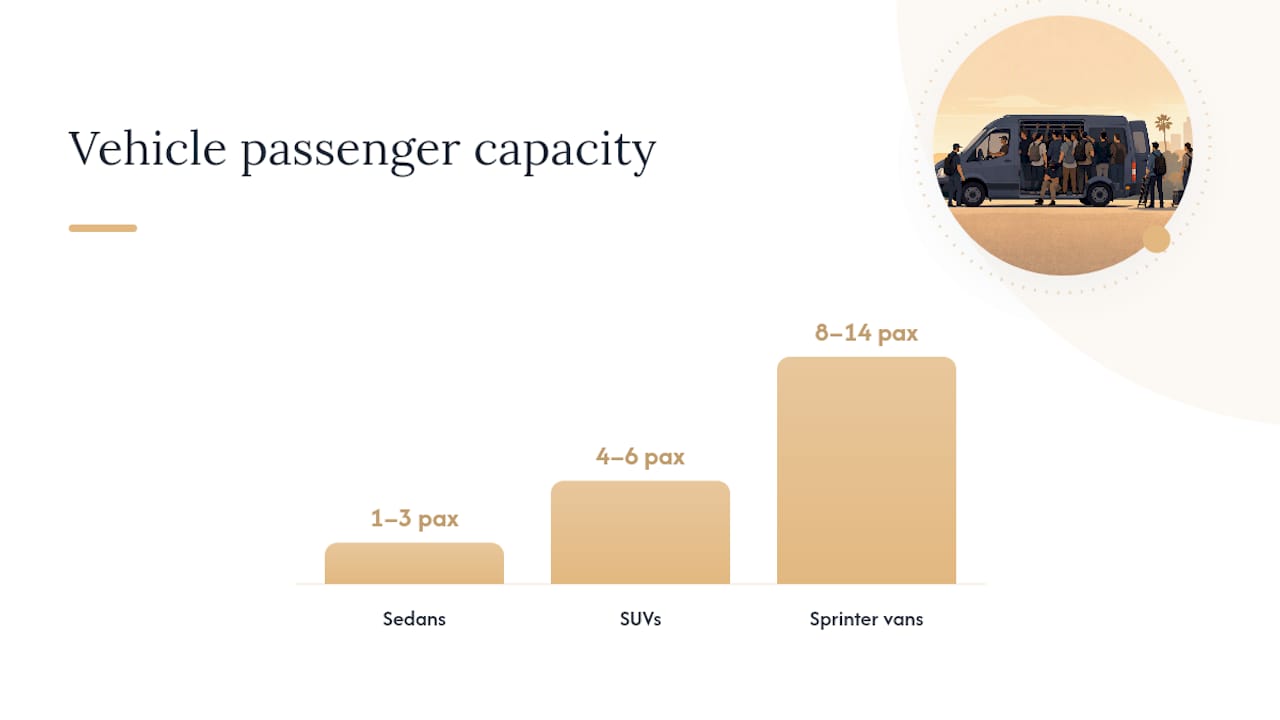
- Sedans and SUVs for talent, producers, and small department heads (1 to 6 passengers).
- Sprinter vans for crew groups and gear (8 to 14 passengers).
- Coaches for full-crew moves on large shoots or multi-week jobs, where charter buses give production the scheduling flexibility to absorb call-time changes without rebooking vehicles.
A typical shoot day runs staging at base camp, pickups timed to call, repositioning between locations as scenes wrap, and a final wrap sweep that returns everyone home. Early planning and real-time vendor communication are what keep that sequence from collapsing when a call time slips two hours, which happens more often than any schedule admits.
Pre-Production Checklist: When to Book and What to Gather
Booking windows scale with complexity. A single-day move can often be locked one to two weeks out. Multi-week or multi-city shoots need more runway, and industry planning guides recommend allowing sufficient lead time to secure coaches and dedicated drivers during peak production windows to secure coaches and dedicated drivers during peak production windows.
Before you request a quote, gather:
- Draft call sheets covering the shoot dates in question.
- Passenger counts broken out by department and by day, not just a total headcount.
- Exact pickup and drop addresses, including hotel hubs if the cast and crew are split across properties.
- Any known base camp or staging locations.
Vet vendors against a short list: a named dispatch contact you can reach directly, current insurance documentation, driver background checks, signed NDAs, and a track record of production-ready policies rather than general livery work. A solid transportation coordinator checklist will also flag congestion pricing zones and documented union coordination before day one, both of which belong on your radar long before wrap.
Once the vendor is confirmed, transport details go straight onto the call sheet: pickup times, vehicle assignments, and driver contact numbers next to each department's call. That call-sheet integration is what keeps 40 crew members from calling the transportation captain individually at 5 a.m.
Pro Tip: Build your vehicle manifest as a living document, not a one-time export. Update it every time a call time shifts, and share the current version with vendor dispatch daily, not just at the start of the week.
What Vehicle and Staffing Specs Should You Request?
Specificity in your request for quote prevents mismatched vehicles showing up on day one. State seat counts, not vehicle names, since "SUV" can mean anything from a five-seat crossover to a seven-seat full-size.
- Sedans: 1 to 3 passengers, minimal luggage, best for talent and executive pickups.
- SUVs: 4 to 6 passengers, moderate gear capacity, suited to department heads traveling with equipment.
- Sprinter vans: 8 to 14 passengers, strong for crew shuttles between hotel and base camp.
- Coaches: full-crew capacity for large ensemble shoots or long call sheets, with driver rest rules that matter more as shoot days stretch.
Staffing terms matter as much as the vehicle. Request the same driver across multi-day moves whenever possible. Dedicated driver assignments reduce the friction of handoffs and mean one person, not three, understands your set's quirks by day three. For moves spanning several days or cities, confirm who covers driver lodging and how dispatch stays reachable outside standard hours; production-ready vendors typically offer 24/7 dispatch rather than a call center that closes at 6 p.m.
Require a manifest field for every vehicle keyed to call time, staging location, and passenger list, plus amenities appropriate to talent or executive passengers when applicable.
What Drives Pricing, and What Belongs in the Contract?
Three pricing models cover most unit moves: hourly rates for unpredictable days with multiple stops, day rates for full-shoot-day coverage, and flat transfers for point-to-point airport or hotel runs. Match the model to the shoot, not the other way around; hourly billing on a tightly scripted transfer day just adds administrative overhead.
Budget line items to build into your production accounting from the start:
- Driver hours and overtime, which accumulate fast on 14-hour shoot days.
- Deadhead time, the unpaid-looking miles a vehicle drives empty between assignments.
- Fuel and municipal congestion surcharges in dense urban markets.
- Driver lodging on multi-day or multi-city moves.
Multi-day and weekly charter contracts reduce daily rate variability and simplify invoicing compared with booking day by day, which matters once your production accountant starts reconciling a month of receipts.
Contracts need a wrap-time contingency clause (shoots run long; your contract should assume that), a named dispatch contact in writing, clear cancellation and overtime billing rules, and an invoicing flow that matches how your production accounting department actually processes vendor payments. A rough budget formula: (driver day rate × number of days) + (overtime hours × overtime rate) + fuel/congestion surcharges + lodging, per vehicle, then summed across your manifest.
Staging, Parking, and Teamsters Coordination Before Day One
Base camp needs real square footage for coach idling and staging, and most locations were never designed for it. Staging and parking requirements often get discovered too late because production teams assume curb space exists until a coach shows up with nowhere legal to sit for six hours.
Work through this before the first shoot day:
- Confirm municipal permits for staging, idling, and parking enforcement with your locations department, not after the fact.
- Walk the staging and parking footprint with your vendor and locations manager together.
- Meet the Teamsters captain with your vendor before principal photography starts, and put in writing which moves fall under union jurisdiction versus vendor-staffed moves.
- Assign road guides or a police liaison for complex multi-vehicle moves through dense traffic.
Pro Tip: Document the union jurisdiction conversation in an email, not a hallway handshake. A one-paragraph written agreement from the Teamsters captain and your vendor saves you from a grievance filed three weeks into production over who was supposed to drive what.
Pre-positioning vehicles near likely pickup points, rather than dispatching from a central lot every time, cuts deadhead mileage and keeps your budget line item honest. Coach operator networks like Movable's professional operator platform are worth knowing about if your production scales into multi-coach territory and you need vetted operators beyond your primary vendor's fleet.

What Production Teams Get Wrong About Unit Moves
Most transportation problems on set aren't vehicle problems. They're communication problems wearing a vehicle costume. The move itself is rarely hard; sedans and Sprinters do what they're built to do. What breaks is the handoff between departments, and it breaks in the same three places on almost every production I've reviewed.
First, nobody writes down the Teamsters agreement. It stays a verbal understanding between the transportation captain and the union rep, which works fine until a new AD shows up who wasn't in that conversation. Second, productions treat the vendor's dispatch contact as optional information instead of a required field on the call sheet. Third, transport times get announced verbally at the production meeting and never make it onto the printed call sheet, so half the crew finds out about a 5:30 a.m. pickup from a group text.
Fix those three things and most unit move chaos disappears before it starts. For productions running complex, multi-city, or retained transport programs, Riga Global Travel's production team handles the coordination layer directly, so your transportation captain isn't chasing three vendors across two time zones.
— Sammy
How Riga Global Travel Handles Unit Moves From Booking to Wrap
Riga Global Travel runs unit moves the way a production actually needs them run: chauffeured sedans and SUVs for talent, Sprinters for crew shuttles, coaches for full-cast moves, all under one dedicated dispatch line instead of three separate vendor contacts. Production billing runs through direct invoicing, so your accounting department gets one clean statement instead of a stack of driver receipts.

To request a quote, send your shoot dates, a draft call sheet, passenger counts by department, and your preliminary vehicle manifest. Flag any special requirements up front, security details, NDA needs, multi-city legs, so the quote reflects the real shoot, not a generic estimate. Productions based around Los Angeles can start directly with Riga Global Travel's Los Angeles limousine service for studio and location moves, while New York shoots can go straight to the New York production transport page to get a dedicated dispatch contact assigned before your first call sheet goes out.
Sources
- Charter Bus for Film Production Crews: The Complete Planning Guide
- Transportation Coordinator Checklist: 8 Honest Steps 2026
- TV & Film Production Transportation NYC: The Production