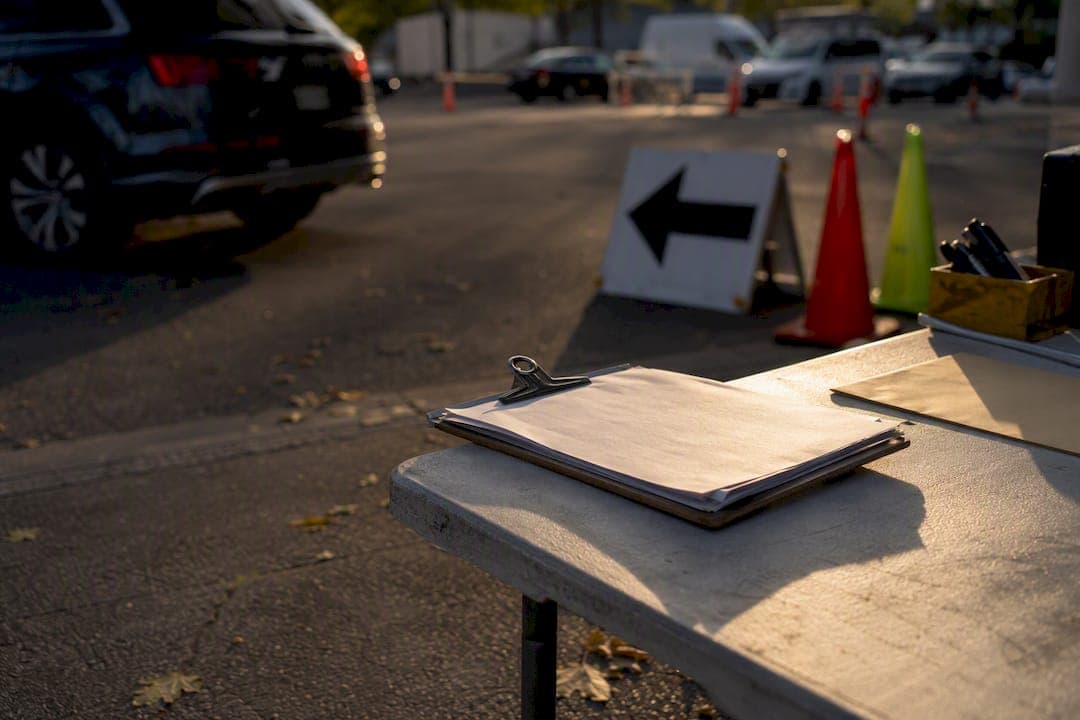
Production parking and staging means the human-movement layer of a shoot: chauffeured sedans, crew shuttles, and coordinated vehicle staging, run separately from equipment trucks. The non-negotiable posture is 24/7 dispatch, vehicles staged before wrap, and union boundaries documented in writing. Riga Global Travel handles this daily for film, TV, and commercial productions, and the first move for any coordinator is locking a single dispatch contact before the first call sheet goes out.
TL;DR:
- A reliable production vehicle vendor must provide a dedicated dispatch contact available 24/7 with a broad fleet and on-site staging for seamless scheduling.
- Locking in vehicle permits, verifying licensing, and sharing movement plans at least 72 hours before shooting prevent last-minute chaos and delays.
- Staging return vehicles 60 minutes before wrap and pre-positioning at pickup points reduce idle time and turnaround, especially when scenes extend unexpectedly.
- Heavy talent vehicles should be luxury sedans or SUVs for privacy, while crew and background transport should match their operational needs with appropriate vehicle types.
- Incorporating sustainable practices like route consolidation, hybrid vehicles, and low-idling policies lowers environmental impact without disrupting production schedules.
Table of Contents
- What a Production-Grade Parking and Staging Service Should Offer
- What Belongs on Your Preproduction Parking and Staging Checklist?
- How Do You Run Staging and Parking Tactically on Shoot Day?
- Which Vehicle Should You Book for Each Role on Set?
- What Union Rules Govern On-Set Parking and Staging?
- What Does Day-of Dispatch and Coordination Actually Look Like?
- What Should Go on the Close-Out Report and Invoice?
- How Do You Sync Shuttles With Talent Call Times and Meal Breaks?
- How Should Productions Handle Sustainability in Ground Transport?
- Why Specialist Production Transport Beats Generic Ground Transport
- How to Request a Production Parking and Staging Quote
- Where to Find Union Guidance and Planning Templates
- Sources
What a Production-Grade Parking and Staging Service Should Offer
A vendor worth hiring runs on production time, not retail-booking time. That means dispatch answers at 3 a.m. for an early call and again at midnight when a wrap slides two hours late, adjusting routing in real time as the call sheet shifts.
Look for these baseline capabilities when vetting a transportation partner:
- Single dispatch contact who tracks the whole shoot day, not a call center routing you to whoever picks up
- Fleet breadth spanning sedans, SUVs, Sprinter vans, and mini-buses under one account
- On-site staging with vehicles warmed, positioned, and ready before talent or crew walk out
- Wrap-time flexibility built into the rate, not billed as a surprise overage
- Airport meet-and-greet for flight-tracking pickups tied to production travel windows
- Invoice-ready direct billing, with hourly charter and flat airport-transfer options split cleanly by cost center
Vendors missing more than one of these items usually mean someone on your team ends up doing dispatch by phone at 5 a.m.
What Belongs on Your Preproduction Parking and Staging Checklist?
Lock these five items before the first shoot day, in this order:
- Build the daily movement matrix. List every passenger, vehicle class, pickup and drop location, and call/wrap time in one document. This single sheet, recommended as standard practice in transportation coordinator planning, is what your dispatch vendor pre-positions vehicles against.
- Secure staging and parking permissions. Confirm access protocols for the location, including low-emission or congestion-zone rules, studio gate procedures, and any permit filings required by the city or lot owner.
- Book vehicles early and verify licensing. Confirm driver credentials, set overtime terms in writing, and get billing rates locked before the first pickup.
- Coordinate contingency vehicles. Ask your vendor what happens if a Sprinter breaks down at 6 a.m. with talent inside it. A real answer, not a shrug, is the test.
- Loop in the AD and locations manager. Share the matrix with both before day one so nobody is discovering the plan on set.
Finalizing this plan early, rather than scrambling once the shoot starts, is what separates a smooth week from a chaotic one, according to on-set transportation best practices.
Pro Tip: Send the movement matrix to your vendor 72 hours before the first shoot day, not the night before. Vendors need lead time to source the right vehicle mix, not just any available car.
How Do You Run Staging and Parking Tactically on Shoot Day?
Rules that sound obvious on paper fall apart fast when a scene runs long. A few tactical habits keep the schedule intact:
- Stage return vehicles 60 minutes before estimated wrap. This is the single most cited practice in transportation coordinator checklists, and for good reason: a wrap that slides an hour still has a car waiting instead of one circling the block.
- Separate talent vehicles from crew shuttles physically, not just on paper. Talent cars stage closer to base camp; crew shuttles hold farther back so they don't block set access.
- Sequence crew shuttle departures last in, first out. The crew members with the earliest call time tomorrow leave first tonight.
- Pre-position vehicles at the next pickup point rather than returning to a central lot between runs. This cuts deadhead mileage and shaves real minutes off turnaround.
- Confirm parking and idling rules for large vehicles before booking. A 45-foot coach needs a location that allows extended daytime parking, and many municipalities restrict overnight idling, a detail worth checking per charter bus planning guidance before the vehicle ever shows up.
Which Vehicle Should You Book for Each Role on Set?
Matching vehicle class to passenger role isn't a luxury decision, it's an operational one. A showrunner riding in a packed van loses prep time; a background shuttle running as a dedicated black car burns budget for no reason.
| Role | Recommended vehicle | Why |
|---|---|---|
| Lead talent, showrunners | Executive sedan or luxury SUV | Privacy, quiet, minimal stops |
| Producers, department heads | SUV | Room for luggage, laptop workspace |
| Small crew groups | 12 passenger Sprinter van | Flexible routing, fast loading |
| Larger crew or background | Mini-bus or coach | Cost efficiency at scale |
| Background/extras, low-priority moves | Shuttle loop or rideshare | Acceptable when dispatch control matters less |
Dedicated charters make sense for talent and coordinated crew moves because they run on hourly models with one dispatch contact; rideshare, by contrast, passes congestion and state surcharges straight to the passenger and offers no real-time routing control, a tradeoff transportation coordinators flag when weighing cost against reliability. For talent-specific bookings, confirm driver licensing verification (a TLC check in jurisdictions like New York) before signing off on any vendor.
What Union Rules Govern On-Set Parking and Staging?
Get this wrong and you're not looking at a scheduling headache, you're looking at a grievance.
Teamsters and affiliated locals hold jurisdiction over equipment trucks and picture vehicles on union productions. Transportation coordinators manage the separate layer of human movement: cast, crew, and staff transport.
Conflating the two, say booking a black-car vendor to move a picture car or hauling equipment through a talent transport contract, is one of the fastest ways to trigger a jurisdictional dispute. The Teamsters' Motion Picture and Theatrical Trade Division draws this line clearly, and any production working with union crews needs to respect it from day one.
Beyond the union boundary, verify driver and base licensing for every vehicle moving talent, factor congestion pricing and local permit rules into your budget, and distribute the documented division of labor to the AD team before the first shoot day. A one-page memo covering who moves what solves more problems than any amount of on-set improvisation.
What Does Day-of Dispatch and Coordination Actually Look Like?
Run day-of operations through one contact at a flexible transportation dispatcher, not a chain of texts to whoever's available:
- Route every update through a single dispatch contact tied directly to the call sheet, using SMS or a dispatch platform rather than a phone tree.
- Set a protocol for last-minute call-time shifts before they happen: who approves overtime driver hours, and how fast can a reassigned vehicle actually move.
- Use bus sign-in sheets to feed AD attendance logs so headcount and transport records match without a manual reconciliation later.
- Handle late wraps with a stated grace period, and bill overtime transparently rather than surprising the production office with it after the fact.
Pro Tip: Ask your vendor upfront how they handle a call time that moves two hours earlier with four hours' notice. Their answer tells you more about reliability than any brochure will.
What Should Go on the Close-Out Report and Invoice?
Reconciliation gets fast or slow based on what you collect during the shoot, not after it.
- Vehicle hours, trip counts, and driver sign-off times for every vehicle used that day
- Toll and congestion surcharge receipts, itemized rather than bundled
- Invoice-ready billing that separates talent cost lines from crew cost lines
- Driver logs and trip manifests, requested directly from the vendor, not reconstructed from memory
Send a close-out summary to the line producer within 24 hours, covering total vehicle hours, trip counts, surcharges, and any budget variance. This habit, standard among experienced transportation coordinators, speeds up reconciliation and makes a vendor worth rebooking on the next production.
How Do You Sync Shuttles With Talent Call Times and Meal Breaks?
Talent transport is the piece most productions get wrong first: they book a vehicle for the call time and forget the meal break exists as a transport event too. A 12-hour shoot day usually has at least two moments where talent needs a vehicle waiting that has nothing to do with the original pickup: the lunch break run to a trailer or nearby restaurant, and the return trip after.
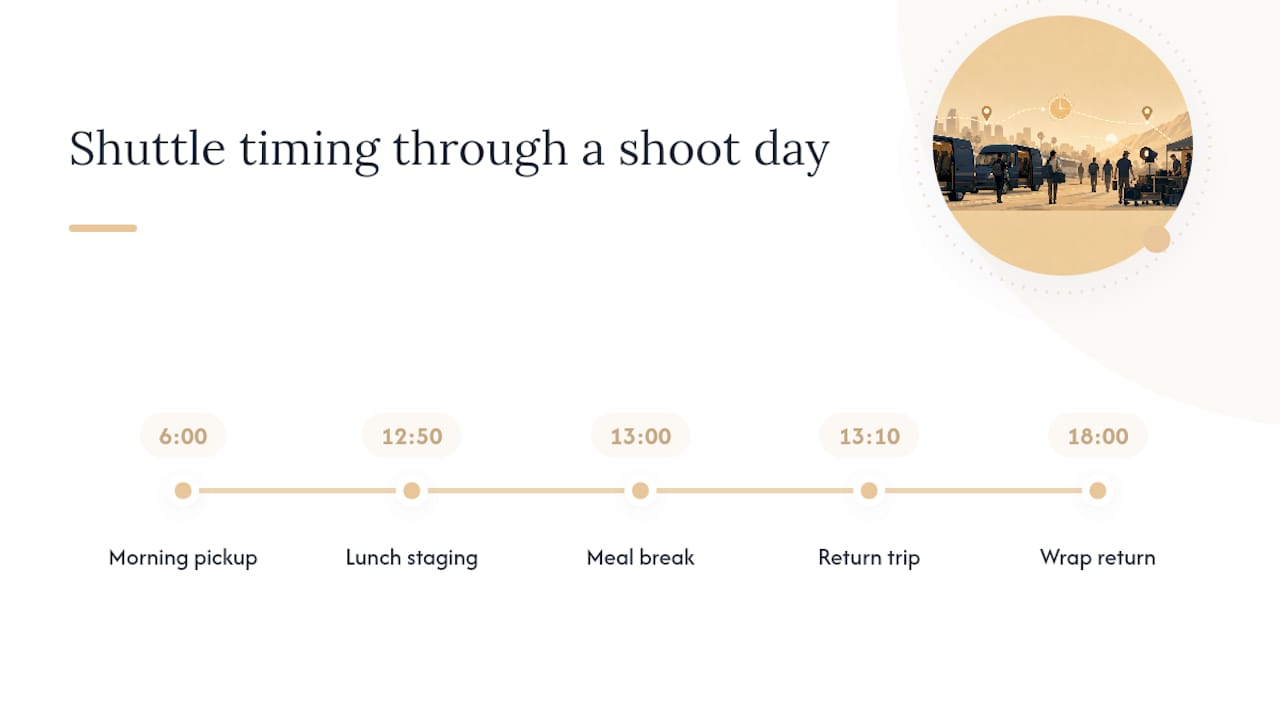
The fix is building shuttle timing around the actual rhythm of the day, not just its start and end. If lead talent has a 6 a.m. call and a scheduled 1 p.m. meal break, the vehicle assigned to that talent should be staged and ready at 12:50, not summoned by radio once the AD calls lunch. That ten-minute gap, multiplied across a full cast, is where schedules quietly slip.
Department heads and producers moving between set and production office during the day need the same treatment. If a DP has to review dailies at a nearby facility mid-afternoon, that trip belongs on the movement matrix from the start, not added as an emergency dispatch call once someone remembers it.
The practical move is to treat meal breaks and mid-day facility runs as scheduled transport events with the same staging discipline as the morning pickup: vehicle confirmed, driver briefed, location locked. Productions that build this into the matrix upfront report far fewer mid-day delays than those handling it reactively. It's a small planning step that saves real minutes on every single shoot day.
How Should Productions Handle Sustainability in Ground Transport?
Environmental scrutiny on production transport has grown alongside broader industry sustainability commitments, and ground transport is one of the easier levers a production can pull without touching the creative schedule.

Route consolidation is the biggest lever available. A crew shuttle running one full loop instead of three half-empty vehicles cuts fuel use and emissions without costing the production anything in convenience, and it usually saves money too. Pre-positioning vehicles at the next pickup point, already a best practice for reducing deadhead mileage, has the side benefit of cutting unnecessary miles driven.
Vehicle selection matters as well. Hybrid and electric options are increasingly available for sedan and SUV classes serving talent and department heads, and productions filming in low-emission or congestion-priced zones often find these vehicles avoid surcharges that gas vehicles incur. That's a case where the sustainable choice and the cost-efficient choice point in the same direction.
Idling restrictions, often framed purely as a compliance issue, double as an environmental one. A coach parked for six hours during a location shoot burns real fuel if left running for climate control the entire time; confirming shore power or alternate cooling options at the parking location addresses both the noise complaint and the environmental footprint at once.
None of this requires a separate sustainability plan bolted onto the production. It requires asking your transportation vendor, at the RFP stage, what their fleet mix and routing approach actually look like, and treating the answer as part of vendor selection criteria rather than an afterthought.
Why Specialist Production Transport Beats Generic Ground Transport
Most ground transport failures on set trace back to one mistake: booking a generalist car service and expecting it to behave like a production partner. It won't. A generalist dispatcher doesn't know what a call sheet is, doesn't understand why a wrap time is a moving target, and has never heard of a movement matrix.
Riga Global Travel built its dispatch model around entertainment-industry shoots specifically, covering everything from single-day commercial spots to multi-week television productions, because the operational demands are genuinely different from corporate car service. A vendor who has staged vehicles on a studio lot understands why 60 minutes before wrap matters more than any fixed pickup window.
If you're building an RFP for your next production, request a vendor's checklist or planning template before you request a rate. The rate tells you what it costs. The template tells you whether they've actually done this before.
— Sammy
How to Request a Production Parking and Staging Quote
Once you know what you need, getting a usable quote takes minutes, not days. Ask any vendor for five specific things: fleet mix available on your shoot dates, a named single dispatch contact (not a general reservations line), billing terms including overtime rate structure, proof of driver and base licensing, and clear terms on how last-minute call sheet changes get handled.
![CTA image placeholder]
Riga Global Travel runs production transport accounts for shoots in Los Angeles, New York, Miami, and Connecticut, with fleet options from executive sedans to Sprinter vans and dispatch built around call sheets rather than retail booking windows. If your production is based in Los Angeles or shooting in New York, request a production-specific quote directly through the relevant city page, or reach out through the main contact form to start an RFP for your next shoot day.
Where to Find Union Guidance and Planning Templates
For primary documentation beyond this guide, a few sources are worth bookmarking. The Teamsters' Motion Picture and Theatrical Trade Division covers union jurisdiction over equipment and picture vehicles. Coative's on-set transportation best practices walks through early-planning frameworks. The JetCharterBus coordinator checklist breaks down movement matrices and close-out reporting step by step. For vehicle-specific planning, Riga Global Travel's own guide on production set transportation covers role-to-vehicle matching in more depth than this article's table alone.
Sources
- Motion Picture and Theatrical Trade Division — Teamsters
- Best practices for coordinating on-set transportation — Coative
- Transportation Coordinator Checklist: 8 essential steps for 2026 — JetCharterBus