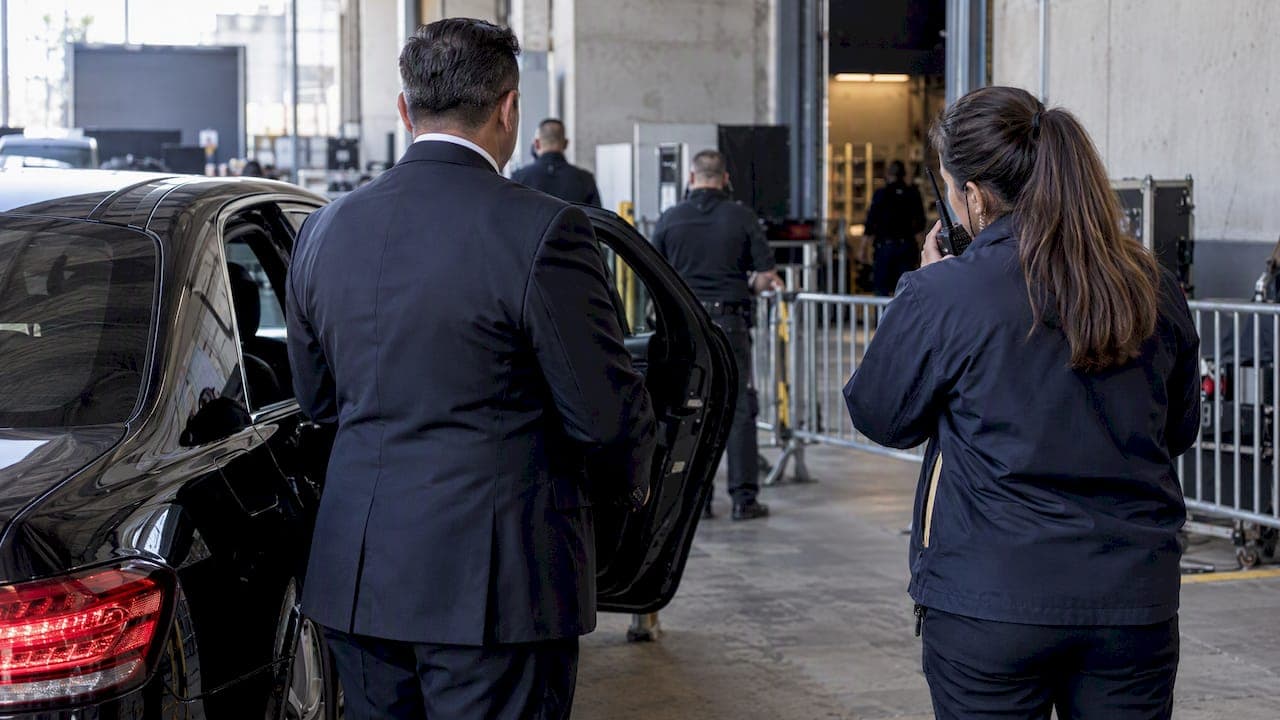
VIP security transportation, in a production context, means chauffeured ground transport and concierge support for talent, executives, and crew, not armed or armored escort services. Production companies, talent agencies, and corporate travel managers hire it for airport transfers, set logistics, and discreet point-to-point movement. RIGA Global Travel and SAG-AFTRA both shape how this category works. Start by gathering your trip dates, headcounts, and privacy requirements, then request a production quote from a vetted provider.
TL;DR:
- Most VIP production transport involves discreet, non-armored chauffeur services for airport transfers, set-to-set movement, and crew shuttles, not security escorts.
- Privacy protocols include signed NDAs, low-profile vehicles, verified background checks, and real-time tracking to prevent leaks or visibility issues.
- Booking normally requires advance deposits, several weeks' lead time for multi-vehicle setups, and clear cancellation and insurance terms aligned with SAG-AFTRA rules.
- Scheduling success depends on detailed manifests, designated staging zones, real-time ETA tracking, and reserve vehicles to handle delays or last-minute changes.
- Costs are often structured as flat-rate airport transfers, hourly or day rates, and retainer agreements, with schedule flexibility and careful vendor vetting essential.
Table of Contents
- What this service covers for productions and corporate VIPs
- Safety, privacy, and discreet-service protocols to require
- Booking timelines, contracts, and SAG-AFTRA travel rules
- Production logistics checklist: manifests, staging, and tech
- Pricing models and budgeting for production ground transport
- Selection checklist and questions to ask before you book
- A production partner's view on keeping talent schedules intact
- How we can help with your next production transport booking
- FAQ
- Sources
What this service covers for productions and corporate VIPs
Chauffeured VIP transport bundles several services under one booking. Productions typically mix and match depending on cast size, shoot location, and how visible the talent is.
- Airport transfers for cast, executives, and crew arriving on commercial or private aviation.
- Set-to-set transport that moves talent between units without breaking the shooting schedule.
- Group shuttles for background talent, crew rotations, and unit base movement.
- On-call chauffeur teams available for unscheduled pickups during long shoot days.
- Concierge tasks like credentialing, hotel coordination, dining reservations, and ticketing.
Vehicle choice depends on group size and privacy needs. A sedan or SUV works for individual talent pickups where discretion matters most. Vans and small coaches handle crew rotations and background shuttles more efficiently, and they free up premium vehicles for principal cast. Matching the vehicle to the task, rather than defaulting to the biggest or flashiest option, keeps budgets sane across a multi-week shoot.
Safety, privacy, and discreet-service protocols to require
Privacy failures on set rarely come from dramatic security breaches. They come from a driver mentioning a pickup location in the wrong group chat, or a vehicle idling somewhere a photographer can see it. The protocols below address that reality.
- Signed NDAs covering chauffeurs, dispatchers, and any staff with access to itineraries.
- Low-profile vehicles without branding or visible logos for talent movement.
- Controlled pickup and drop-off points away from public entrances or known paparazzi positions.
- Verified background checks and etiquette training for every chauffeur assigned to VIP work.
- Real-time tracking and vehicle telemetry so dispatch can monitor routes and driver behavior without relying on the chauffeur's own reporting.
Industry data backs up why this matters: 72% of corporate travel managers rank safety among their top two ground transportation priorities, and 54% rank it first, according to Business Travel News survey data. That same reporting frames driver-behavior monitoring and vehicle telemetry as standard duty-of-care tools rather than premium add-ons. Our own blog coverage of on-set transport practices walks through how these protocols play out on an actual shoot day, and chauffeur etiquette guidance from Hidden Door Travel breaks down the small behavioral habits that separate a transfer from a truly discreet experience.
Pro Tip: Ask any provider to name their NDA process before you ask about vehicles. If they can't describe it in one sentence, keep looking.
Booking timelines, contracts, and SAG-AFTRA travel rules
Production bookings move on different timelines than everyday corporate travel. A single executive pickup might get confirmed same-day, but multi-week shoots need vendor agreements locked weeks ahead so vehicle availability isn't a last-minute scramble.
- Booking lead time: production-day work often requires deposits and vehicle holds days or weeks in advance, especially for coaches and multi-vehicle convoys.
- Insurance and indemnity: confirm coverage limits match your production's risk profile before signing.
- Cancellation terms: shoot schedules shift constantly, so clarify what happens when a call time moves or a day gets scrapped.
- Invoicing and manifest handling: confirm how passenger manifests get shared, stored, and purged after wrap.
SAG-AFTRA guidance matters here because it determines who pays for what. Contracts reference a mileage reimbursement benchmark of $0.30 per mile for performers required to report outside studio zones when the producer doesn't supply transport, with exceptions spelled out in the contract language. Separately, SAG-AFTRA ended its 500-mile travel waiver for signatory producers, meaning negotiated travel provisions now apply equally regardless of distance. Build these obligations into your transport budget before the schedule gets set, not after.
Production logistics checklist: manifests, staging, and tech
Smooth movement on a shoot day comes down to preparation that happens before any vehicle arrives.
- Build a manifest with full names, call times, pickup addresses, alternate contacts, and any privacy flags.
- Designate staging zones away from public view where vehicles wait between calls.
- Assign a single point of contact on the transport side so dispatch and production aren't chasing multiple threads.
- Set up real-time ETA tracking so assistant directors know exactly when talent will arrive.
- Define escalation protocols for delays, including who gets notified and when.
- Hold spare vehicles in reserve for mechanical issues or last-minute headcount changes.
- Grant reroute authority to one person who can redirect vehicles if a location becomes compromised.
Technology tools that coordinate multiple arrivals and flag traffic or parking problems in real time make this far easier to manage, according to reporting on group ground transport. A detailed walkthrough of manifest-building and staging is covered in our guide to production set transportation.
Pro Tip: Keep one printed backup of the manifest on set. Cell service drops in parking structures and remote locations more often than production schedules expect.

Pricing models and budgeting for production ground transport
Production transport pricing rarely fits one formula, since a single shoot might need airport transfers, day-rate vehicles, and a standing retainer all at once.
- Flat-rate airport transfers for predictable point-to-point runs.
- Hourly or day rates for vehicles held on call through a shoot day.
- Per-vehicle group pricing for shuttles and coaches moving crew or background talent.
- Retainers for productions with ongoing, multi-week transport needs.
Block-booking vehicles for a known schedule tends to reduce per-ride costs and simplifies last-mile risk management compared to booking trip by trip, based on industry survey findings. Where SAG-AFTRA mileage guidance applies, factor the $0.30-per-mile benchmark into your decision between providing transport directly and reimbursing performers who drive themselves. A reasonable contingency line, usually a percentage held back for schedule changes, protects against the surge pricing that comes with last-minute vehicle requests. Align invoice cycles with your production accounting calendar so transport costs don't become a reconciliation headache after wrap.
Selection checklist and questions to ask before you book
Vetting a transport provider quickly matters when a shoot is weeks away and schedules are still shifting. Industry reporting increasingly favors partners who manage an entire travel program rather than fragmented one-off bookings, since centralized coordination reduces disruption risk across multi-day events.
Checklist items to confirm before signing:
- Proof of insurance with limits appropriate to your production's exposure.
- Signed NDAs covering every staff member with itinerary access.
- References from comparable productions, not just general corporate clients.
- A fleet mix that covers sedans, SUVs, vans, and coaches under one vendor.
- 24/7 dispatch availability and a documented backup vehicle plan.
Twelve questions worth asking directly:
- What's your backup vehicle policy if a car breaks down mid-shoot?
- How do you build and store passenger manifests?
- Who has access to itinerary and pickup location data?
- Have you worked union productions before, and which ones?
- What's your invoicing cadence and does it match net-30 or net-60 terms?
- How do chauffeurs handle unscheduled schedule changes?
- What training do chauffeurs receive on discretion and etiquette?
- Can you provide references from productions of similar scale?
- What happens if a call time moves with less than 24 hours' notice?
- Do you offer real-time tracking dashboards for production staff?
- How do you handle last-mile staging at crowded event or studio locations?
- What's your cancellation and rebooking policy?
Red flags include no written contract, an inability to produce actual production references, and vague insurance or indemnity language. Any provider who can't answer these questions clearly probably hasn't done this work before.
A production partner's view on keeping talent schedules intact
Years of moving cast and crew through tight shoot windows teach you that most transport failures aren't about the car, they're about a missed handoff between departments. A manifest with one wrong contact number, or a staging zone too close to a public entrance, causes more delays than traffic ever does.

— Sammy
How we can help with your next production transport booking
We have extensive experience working with major production companies and studios, offer on-time service, and provide direct access to ownership and management rather than an app-based dispatch layer. Chauffeurs go through screening, and our privacy protocols include NDA-based references on request.
Our relevant service pages cover the scenarios most productions ask about:
- Airport Transfers for commercial and private aviation arrivals.
- Celebrity transportation for discreet talent movement.
- Corporate and production account service through our main services page.
To request a production quote, send us your shoot or event dates, pickup windows, headcounts, and any specific privacy or staging requirements. We'll put together vehicle and pricing options based on your actual schedule rather than a generic package.
FAQ
What's the difference between VIP chauffeured transport and executive protection?
VIP chauffeured transport covers ground transportation and concierge services, like airport transfers, set logistics, and discreet routing, without armed or armored protection. Executive protection is a separate security discipline involving trained guards, which falls outside standard production transport booking.
Does SAG-AFTRA require productions to provide transportation?
SAG-AFTRA contracts specify when producers must supply transport versus reimburse mileage, with a benchmark of $0.30 per mile for performers reporting outside studio zones without provided transport. Specific obligations and exceptions are spelled out in the governing contract.
How far in advance should productions book VIP transport?
Lead time varies by scope, but multi-vehicle convoys and multi-week shoots typically need vendor agreements and deposits locked in well ahead of the first shoot day. Single pickups can sometimes be arranged on shorter notice, depending on provider availability.
What does Riga Global Travel's celebrity transportation service include?
Our celebrity transportation service includes discreet, chauffeured movement for talent and high-profile guests with screened chauffeurs and privacy protocols. Pricing is available on request based on vehicle type and trip scope.
What should go into a production transport manifest?
A manifest should include full names, call times, pickup addresses, alternate contacts, and any privacy flags tied to specific passengers. Keeping one printed backup on set helps when cell service is unreliable at remote or restricted locations.
Sources
- Survey: Policies limit some ground transport, buyers prioritize safety | Business Travel News
- What does the contract say about travel to a location for a Theatrical ... | SAG-AFTRA