
A dependable VIP route plan comes down to three things built before call time: a daily movement matrix, confirmed dispatch contacts, and a wrap buffer of 60 to 90 minutes. Skip any one of those, and a single late run cascades into a blown schedule. Riga Global Travel has run this system across sets, roadshows, and executive travel for years, and the version below (assembled with production-logistics writer Sammy) is the one we hand to coordinators who need something usable today.
Three things to do right now, before anything else:
- Build the movement matrix template (fields below) and fill it in for tomorrow's call.
- Confirm the named dispatch contact and every chauffeur's mobile number 24 hours out.
- Stage at least one spare vehicle for wrap, positioned 60 minutes ahead of the scheduled end time.
Key Takeaways
A reliable VIP route plan requires a daily movement matrix, assigned vehicles by role, a confirmed named dispatch contact, and a 60 to 90 minute wrap buffer working together, not any single piece alone.
| Point | Details |
|---|---|
| Build the matrix first | List every movement by who, from, to, vehicle class, and call time before assigning vehicles. |
| Stagger by department | Move crew departments first and talent last on arrival, reversed for wrap departures. |
| Budget the wrap buffer | Add 60 to 90 minutes between scheduled wrap and last vehicle departure to absorb delays. |
| Confirm dispatch 24 hours out | Share chauffeur contact details and lock the named dispatch contact a full day ahead. |
| Consider Riga Global Travel | Riga Global Travel runs sedans, Sprinters, and charter coaches under one dispatch desk for productions. |
Table of Contents
- How Do You Build a Daily Movement Matrix for VIP Route Planning?
- What Vehicle Types Should You Assign to Each Role?
- How Much Wrap Buffer Should You Build Into a VIP Schedule?
- How Do You Handle Day-of Communication and Dispatch?
- When Should You Charter a Bus Instead of Booking Vans?
- What Contingency Plans Prevent a Late Wrap From Halting Production?
- Who Built This Framework and Why It Holds Up on Set
- The Part of VIP Route Planning Everyone Skips
- Book Riga Global Travel for Your Next Production Move
- Sources
How Do You Build a Daily Movement Matrix for VIP Route Planning?
The matrix is the document that turns route planning for VIP transport from guesswork into a system. It is a single spreadsheet or shared sheet listing every vehicle movement of the day, and it becomes the source of truth that dispatch, chauffeurs, and production accounting all read from.
Each row needs nine fields: passenger name and role, origin address with a staging coordinate, destination address with a staging coordinate, vehicle class, call time, departure ETA, notes (security detail, baggage, instrument cases), assigned vehicle ID, and the dispatch contact responsible for that leg.
Sequencing determines whether the day runs smoothly or falls apart by 10 a.m.
- Stagger departments by call time. Construction, art, and camera crews move first; talent moves last on arrival and first on departure.
- Reverse the order for wrap. Whoever called last often leaves first, so build return runs in the opposite sequence from the morning pickups.
- Flag every leg that crosses a congestion pricing boundary or toll corridor, and attach the expected surcharge as its own budget line rather than folding it into the base fare.
Pro Tip: Color-code matrix rows by department instead of by vehicle. It is easier for a locations manager to scan "all camera department rows" than to hunt for a specific van number when a schedule shifts.
Our guide on production set transportation walks through a filled-out matrix example if you want a starting template rather than a blank grid.
What Vehicle Types Should You Assign to Each Role?
Vehicle allocation is where budgets get wasted, usually because someone books an SUV for a job a sedan could handle, or crams eight crew members into a vehicle rated for five. Match the vehicle to the actual mission, not the title on the call sheet.
- Talent and executives: sedans for single principals, SUVs when security or gear rides along.
- Small crew or entourage groups: Sprinter vans or VIP passenger vans, typically six to fourteen seats.
- Large crew moves: coaches or full charters once you are moving twenty or more people between the same two points.
Amenities matter more than most budgets account for. Climate control protects instruments and camera gear as much as it protects comfort, Wi-Fi keeps a twelve-hour crew shuttle from feeling like a punishment, and seat layout affects how fast a van can load and unload between takes.
The math that saves money: compare hourly vehicle charges against a per-day charter rate once you cross roughly six hours of use or three separate legs. A multi-day charter contract with a fixed weekly rate almost always beats hourly billing across a multi-day shoot, and it gives you a driver who learns the route by day two.
How Much Wrap Buffer Should You Build Into a VIP Schedule?
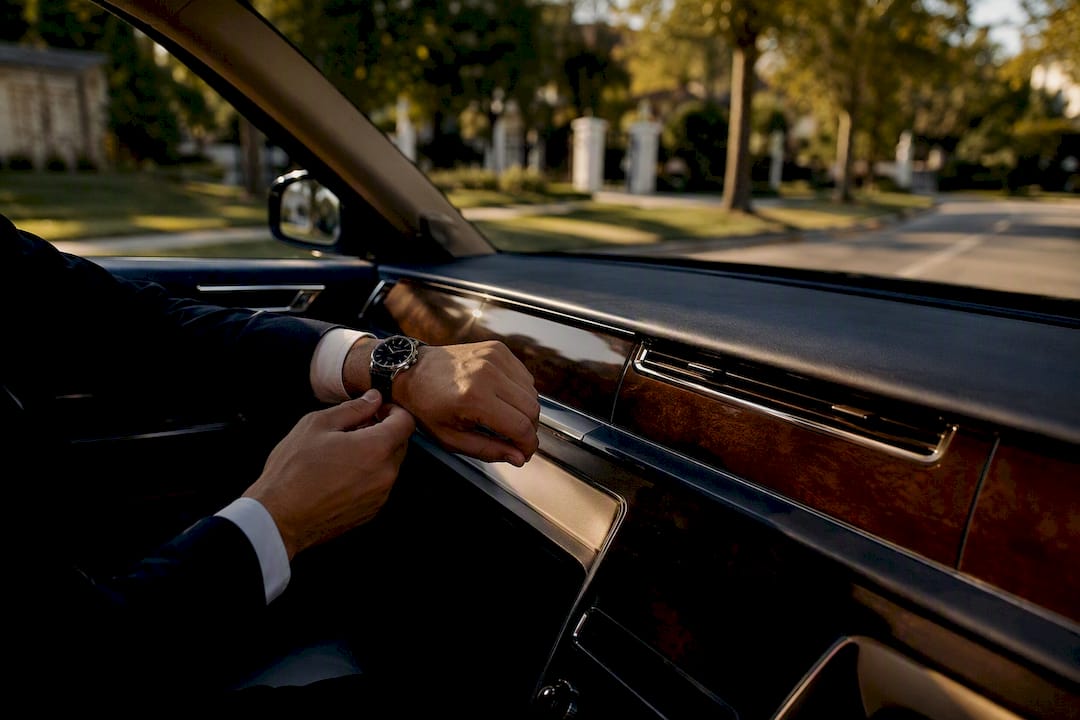
Budget a significant buffer between the scheduled wrap time and the last vehicle departure, typically around an hour or more. That buffer is cheap insurance against the single most common failure mode in production transport: a shoot runs long, and every downstream vehicle assignment collapses at once.
Write overtime and standby terms into the vendor agreement before the first call sheet goes out, not after the first late night.
- Define the overtime rate per vehicle class and the threshold hour it kicks in.
- Specify standby pay if a chauffeur waits beyond a set window without moving.
- Negotiate a flat weekly rate for any vehicle booked five or more consecutive days, since hourly billing on a long shoot rarely favors the production.
The transport plan should be the document call sheets defer to, not the reverse. When the assistant director's call sheet and the transport matrix disagree on a pickup time, the matrix wins, because it accounts for drive time and staging that a call sheet template usually ignores.
60 to 90 minutes is the buffer window worth budgeting for every wrap; a shorter window converts almost any schedule slip into a missed departure.
How Do You Handle Day-of Communication and Dispatch?
Chauffeur contact details need to reach the production desk at least 24 hours before the call, not the morning of. That lead time gives locations and security a window to confirm staging coordinates and flag any access issues before vehicles are already en route.
- Confirm the named dispatch contact by name and mobile number, not a generic company line, so a schedule change reaches a person who can act on it immediately.
- Turn on real-time GPS tracking and ETA sharing for every vehicle in the matrix, which cuts the staging wait time crews spend guessing whether a car is five minutes out or thirty.
- Lock pre-positioning windows with venue security and the locations manager, including exactly where a vehicle can idle without blocking a load-in lane.
Pro Tip: Give the dispatch contact read access to the movement matrix itself, not just a call sheet excerpt. Dispatch reacts faster when they can see the whole day's sequencing, not just their next assignment.
When Should You Charter a Bus Instead of Booking Vans?
Charter makes sense once you are moving background actors, large crews, or multiple departments between the same fixed points on a repeating schedule. A multi-day charter contract gets you a dedicated driver team, the same vehicle assigned for the run of the shoot, and priority scheduling when a call time shifts two hours with no warning.
Before booking, confirm three things with the venue or municipality directly:
- Coach clearance height and turning radius for the actual load-in lane, not just the general parking area.
- Local idling restrictions, which vary by city and can generate fines if a coach sits running between calls.
- Whether background-actor shuttles need to run separately from crew shuttles, which they usually do once headcount crosses roughly fifty people.
Consolidate pickup points wherever the geography allows it. Two hotels ten minutes apart rarely justify two separate coach runs when one central pickup point saves a driver an hour of the day.
What Contingency Plans Prevent a Late Wrap From Halting Production?
Stage at least one spare vehicle 60 minutes before the scheduled wrap, parked and ready rather than summoned once the call goes long. Give dispatch clear rules for when that spare deploys: a specific delay threshold, not a judgment call made under pressure.
- Track total vehicle hours, trip counts, congestion surcharges, and driver hours in real time so the close-out report doesn't require reconstruction after the fact.
- Set a clear trigger for driver rest requirements and overnight accommodations on any multi-day move that pushes past a reasonable single shift.
- Route freight and equipment moves separately from talent and crew vehicles; mixing them at the same drop-off lane creates avoidable scheduling conflicts.
Who Built This Framework and Why It Holds Up on Set
This framework comes from Sammy's production-logistics writing for Riga Global Travel, drawing on guides including production set transportation, studio lot transportation, and VIP hospitality transport at sports venues. Riga Global Travel runs chauffeured sedans, SUVs, Sprinters, and charter coaches for productions and executives, with on-site dispatch coordinating the whole day rather than each leg in isolation.
A transportation captain who centralizes decisions with vendors, line production, and locations management prevents more day-of failures than any single piece of technology.
The Part of VIP Route Planning Everyone Skips
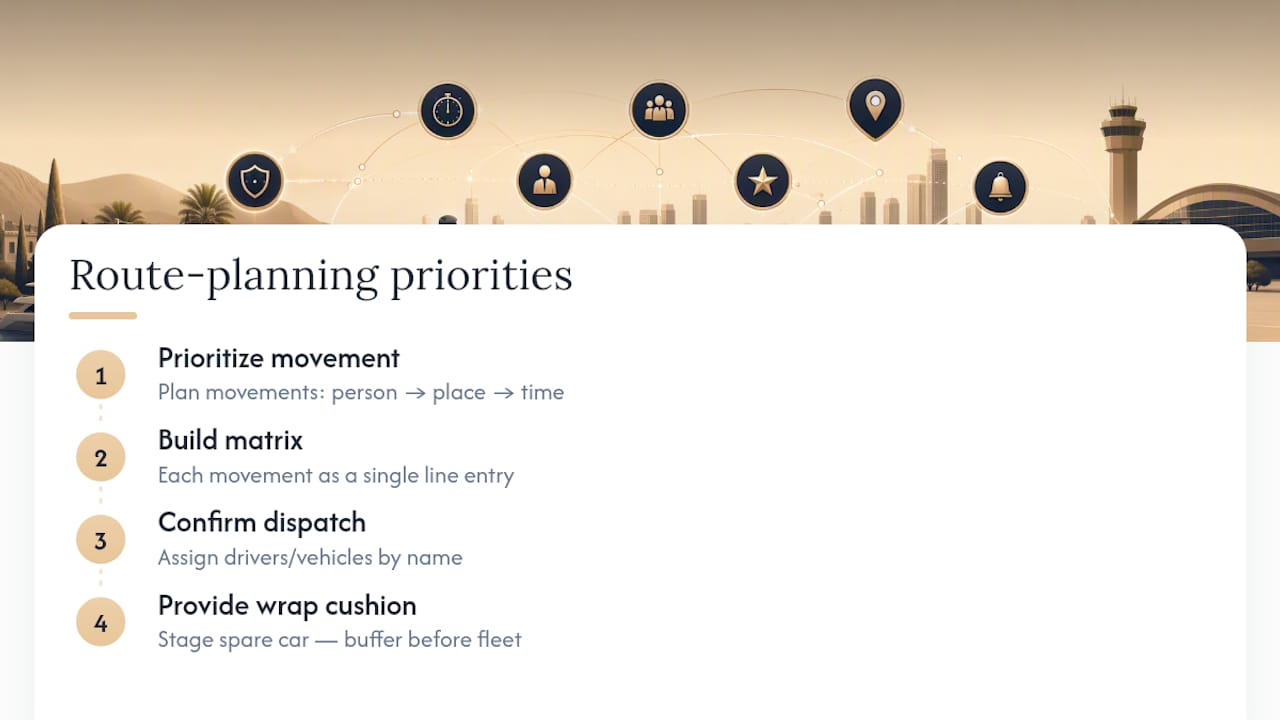
Most guidance on this topic treats the vehicle as the unit of planning: which car, which class, which rate. That's backward. The unit that actually matters is the movement, the single line in a matrix connecting one person to one place at one time. Get the movements right and vehicle assignment becomes a simple lookup. Get them wrong and no amount of luxury fleet or GPS tracking saves the day.
The conventional advice oversells technology and undersells sequencing. Real-time tracking is useful, but it only tells you a vehicle is late; it does nothing to prevent the cascading delay that follows when talent departs before crew has cleared the lot. The staggered call time, reversed for wrap, does more real work than any app.
If you take one thing from this framework, prioritize the buffer before the fleet. A production that books beautiful vehicles with zero wrap cushion will blow the schedule the first time a scene runs long, and it always runs long eventually. Build the matrix, confirm dispatch by name, stage the spare car, and the rest of the plan mostly takes care of itself.
Book Riga Global Travel for Your Next Production Move
Riga Global Travel is the direct alternative to piecing together vans, coaches, and sedans from separate vendors for a single shoot. One dispatch desk coordinates chauffeured sedans, SUVs, Sprinter vans, and full charter coaches, so your production runs on one movement matrix and one point of contact instead of three vendor threads that don't talk to each other.
When you request a quote, send over your shoot dates, the call sheet, the vehicle types and headcounts by department, and any staging constraints the location has flagged, such as load-in lane restrictions or idling rules. For productions running through New York, the celebrity and talent transportation page covers VIP-specific service, and the corporate car service page handles direct-billed accounts for corporate travel buyers. Start your quote request today and get a dispatch contact assigned before your next call sheet goes out.
Sources
- Charter Bus for Film Production Crews: The Complete Planning Guide
- Logistics for tours — VIP Transport