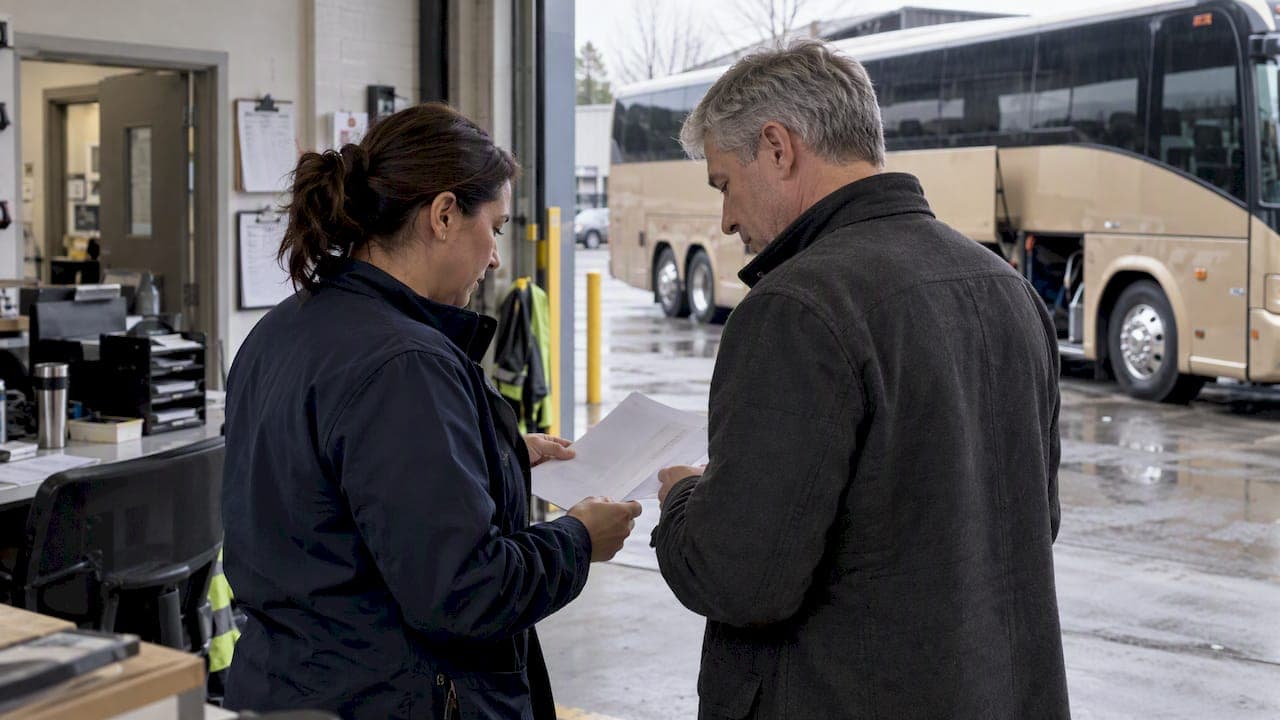
Many U.S. film permit authorities require a Certificate of Insurance, and may require general liability plus automobile liability, commonly $1,000,000 for general liability per occurrence and a $1,000,000 combined single limit when vehicles are used. Shuttles and buses carry higher federal minimums: $1,500,000 for 15 seats or fewer and $5,000,000 for 16 or more. Next, you get the permit checklist and attachments to submit.
TL;DR:
- Submit the COI with a separate Additional Insured endorsement, and add a separate Waiver of Subrogation endorsement whenever the permit office requests one.
- San Francisco may waive coverage only when no automobiles serve the production, including crew transport to and from the location; confirm eligibility and document travel.
- List owned, rented, and borrowed vehicles for your broker; personal or generic business policies may exclude film use, rotating drivers, and movement between sets.
- Verify the carrier’s certificate against the vehicle’s actual seat count, including the driver, and ask your broker whether for hire or interstate rules apply.
Table of Contents
- 1. What film permits normally require on the certificate
- 2. Auto liability limits, CSL and when a waiver applies
- 3. FMCSA thresholds for shuttles, buses and larger vehicles
- 4. Owned, hired and non-owned autos on a production
- 5. COI formatting and the checklist that prevents delays
- 6. Getting the right COI fast
- 7. Special cases: drones, equipment floaters and multi-state shoots
- 8. A transportation specialist's view: where permits really stall
- 9. How we help productions with COIs and transport logistics
- FAQ
- Sources
1. What film permits normally require on the certificate
A Certificate of Insurance (COI) is a document that proves your policies exist, who they cover, and what limits they carry. Permit offices read it as evidence, not as the policy itself. The California Film Commission asks for general liability of $1,000,000 per occurrence, and many city and county offices pair that with a higher aggregate, commonly $2,000,000.
Automobile liability is listed on its own line because vehicles are a separate exposure from your set and crew. A general liability policy usually excludes accidents involving autos, so permit offices want to see a distinct auto policy whenever cars, vans or trucks touch the shoot.
Expect to attach more than the certificate itself:
- Additional Insured endorsement: names the city, county or state, with its officers, agents and employees, as covered parties.
- Waiver of Subrogation: attached when the permit office or a vendor requests it.
- Separate endorsement pages: each endorsement travels as its own document, not as text typed into the COI.
- Permit-specific wording: the certificate holder and insured names must match the permit application.
Our primer on what a Certificate of Insurance means for a film production covers the basics if your team is new to the paperwork.
2. Auto liability limits, CSL and when a waiver applies
Combined single limit (CSL) means one dollar figure covers bodily injury and property damage from a single accident, with no split between the two. A $1,000,000 CSL is the common municipal request when vehicles are used. San Francisco asks for it, and the California Film Commission requires owned, hired and non-owned auto liability of not less than $1,000,000 for each accident.
Some offices bend the rule when no vehicles are involved. San Francisco can waive auto liability if no automobiles are used for the production, and that includes transport to and from the location. A waiver is therefore a statement about your whole logistics plan, not just your shoot day.
If you want to request one:
- Confirm the permit office allows it. Check the jurisdiction's insurance page first, since the waiver is a local policy, not a universal one.
- Document how the crew arrives. A short written statement on transit, walking or other non-auto travel supports the request.
- Account for every vehicle. Rented trucks, cast cars and personal vehicles used for the production all count as automobiles.
- Keep the paperwork consistent. If any vehicle appears later, the waiver may no longer hold and you will need a compliant COI.
3. FMCSA thresholds for shuttles, buses and larger vehicles
Federal rules lift the numbers once you move people for pay in larger vehicles. The Federal Motor Carrier Safety Administration sets minimum public liability insurance for for-hire motor carriers of passengers, and the schedule in 49 CFR 387.33T lists the same thresholds by seating capacity.
$5,000,000 for vehicles seating 16 or more passengers including the driver, and $1,500,000 for vehicles with 15 or fewer (FMCSA). A cast shuttle that crosses the 15-seat line moves into a much higher insurance tier.
These minimums apply to the for-hire carrier you hire, so your job is verification. Ask the carrier for its certificate and confirm the limit matches the vehicle it will actually send. Count seats including the driver, since a 15-passenger van and a 16-seat shuttle land on opposite sides of the line.
Also confirm whether the operation counts as for-hire and whether it crosses state lines, because interstate commerce rules can apply to a shoot that moves between jurisdictions. When in doubt, send the vehicle spec and route to your broker and ask them to confirm which standard governs.

4. Owned, hired and non-owned autos on a production
Three terms decide whether a claim gets paid. An owned auto belongs to the production company. A hired auto is rented or leased, like a grip truck from a rental house. A non-owned auto belongs to someone else but is used for your business, such as an employee's car on a coffee run or a vendor's van delivering wardrobe.
Entertainment insurance specialists note that omitting hired and non-owned auto coverage can leave a production financially exposed. A personal policy or generic business auto policy often misses film use, such as long stationary periods, movement between sets and rotating drivers, a mismatch practitioners at Parkside describe. For a plain-English look at the coverage type, this guide to types of non-owned auto insurance helps you ask your broker sharper questions.
Tailored production coverage should include:
- Commercial auto liability for every vehicle category you use
- Physical damage for rented or custom-built trucks and trailers
- Inland marine coverage for equipment riding in those vehicles
- Hired and non-owned auto on the same program
Programs such as PSWIS vehicle rental insurance bundle these lines. Rental houses typically demand a COI naming them as additional insured, a loss payee where relevant, and in-transit equipment language, as Kelly Insurance Group notes.
Pro Tip: Before you sign a vehicle rental agreement, send it to your broker and ask which auto category it falls under.
5. COI formatting and the checklist that prevents delays
Permit staff check the same fields every time: named insured, policy numbers, effective dates, coverage lines and limits, and the certificate holder name. A single mismatch between the COI and the permit application can stall the file. The California Film Commission also supplies sample insurance documents and endorsement wording you can hand directly to your broker.
The most common failure is Additional Insured language typed into the body of the COI instead of provided as a separate endorsement. Agencies often reject certificates that do this, and incomplete applications are put on hold. The Hawaiʻi Film Office shows the same pattern: specific language, separate endorsements, and documents uploaded with the application.
Attach this set with every permit application:
- The COI with limits that match the permit office's published minimums
- A separate Additional Insured endorsement using the office's exact wording
- A separate Waiver of Subrogation endorsement if requested
- Auto liability evidence covering owned, hired and non-owned vehicles
- Any special coverage the permit calls for, such as drone insurance
- A final read-through confirming names and dates match the application
6. Getting the right COI fast
Brokers move quickly when you hand them complete information. Give yours:
- The permit office's insurance requirements PDF
- Project name, shoot dates, and prep and wrap dates
- A vehicle list with seat counts and driver details
- Rental agreements for trucks, vans and equipment
- The exact certificate holder name and address
Production-savvy brokers and programs, like PSWIS, advertise fast COI turnaround, and rental houses run their own certificate workflows, so contact them early. Kelly Insurance Group describes the standard rental-house demands: additional insured status and matching scheduled equipment values.
Pro Tip: Ask for endorsements as separate attachments, and confirm the policy dates cover prep, shoot and wrap days.
For help planning the transport side, our guide to production set transportation walks through the logistics your broker will ask about.
7. Special cases: drones, equipment floaters and multi-state shoots
A few add-ons surface repeatedly on permits:
- Drones: many jurisdictions ask for a separate UAS policy, often with limits around $2,000,000 per occurrence, plus an endorsement naming the government entity, as Inland Empire Film Services outlines. FAA rules and local rules are separate checks.
- Equipment floaters: all-risk inland marine coverage protects gear in transit, and the wording should include care, custody and control.
- Territory and dates: confirm your policies cover every state and every day when the shoot moves across lines.
8. A transportation specialist's view: where permits really stall
The numbers rarely cause delays. Timing does. I see productions price their insurance correctly and still lose time because the endorsement arrived as a typed line on a certificate, or because the shuttle quote assumed a smaller vehicle than the one sent. The fix is not more paperwork, it is earlier conversations.
Bring your transport vendor into the process while the permit application is still a draft. A production-aware supplier checks seat counts against the federal thresholds, matches endorsement wording to the permit office's language, and flags a mismatch before an analyst does. If your shoot uses cast cars, shuttles or large vehicles, that call belongs in prep, not on the day before the permit deadline.
— Sammy
9. How we help productions with COIs and transport logistics
We run chauffeured fleets, shuttles and production logistics for film and entertainment clients, and our team coordinates certificate and endorsement wording with your broker and the permit office, so the paperwork and the vehicles line up. Our airport transfers and limousine service cover talent and crew arrivals, and our guide to booking luxury transport for a film set shows how we plan these jobs.
Send us your permit's insurance requirements and we will check coverage before you apply. Then request a production transport quote through Riga Global Travel and we will build the plan around your permit.
FAQ
What is a COI for filming?
A COI for filming is a certificate that proves your production carries the insurance a permit office requires. It lists your policies, limits and dates. The office usually also wants separate endorsements naming it as additional insured.
What insurance do you need for filming?
Most U.S. permits require general liability and, when vehicles are used, automobile liability. The California Film Commission asks for general liability of $1,000,000 per occurrence and auto liability of $1,000,000 combined single limit. Check each jurisdiction's own page.
What type of liability insurance is needed for filming?
You need commercial general liability for the set and commercial auto liability covering owned, hired and non-owned vehicles. Many offices also want the permit authority named as additional insured through a separate endorsement. Drone shoots usually need a separate UAS policy.
What is the minimum insurance requirement for FMCSA?
The FMCSA sets minimum public liability insurance at $1,500,000 for vehicles with 15 or fewer passengers and $5,000,000 for vehicles with 16 or more, including the driver. The limits apply to the carrier you hire, so verify its certificate.
Sources
- Sf
- Licensing and Insurance Requirements for For-Hire Motor Carriers of Passengers - Parts 365 & 387 | FMCSA
- Insurance Requirements | California Film Commission
- eCFR :: 49 CFR 387.33T -- Financial responsibility, minimum levels.