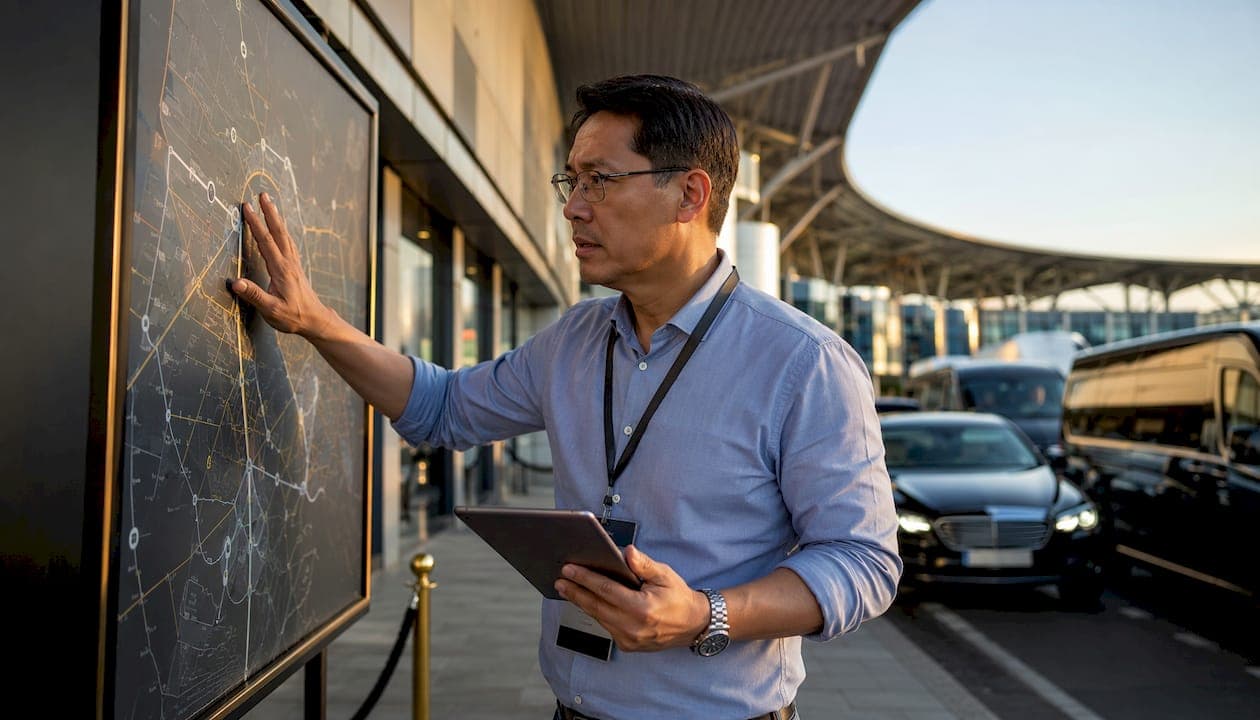
Effectively managing VIP hospitality transport at sports venues means running tiered luxury vehicle fleets, LPR gate control for frictionless access, cloud dashboards for real-time coordination, and bespoke concierge programs that feel like a natural extension of your client's brand. Get any one of those wrong and the whole experience unravels before the first whistle. Here is what the best operators do right:
- Deploy executive sedans (Mercedes S-Class) for individual VIPs and luxury vans (Mercedes V-Class) for groups
- Use LPR priority lanes and centralized cloud dashboards to manage arrivals without queues or manual ticketing
- Pre-book dedicated pickup points away from general crowds to protect guest privacy
- Coordinate with venue operations and local authorities on traffic flow and parking
- Build contingency plans for schedule changes, security incidents, and weather
- Train chauffeurs and hospitality staff to consistent, measurable professionalism standards
- Personalize every touchpoint from vehicle preferences to post-event drop-off routing
How technology makes VIP transport management at sports venues work
The biggest operational gap most event organizers face is not vehicle quality. It is the gap between the curb and the gate. LPR gate control closes that gap by reading plates in seconds, eliminating paper tickets and manual checks entirely. A VIP's car rolls in, the barrier lifts, and the guest never breaks stride.
Cloud-based management dashboards tie everything together. HUB Parking's Janus Management System, for example, unites barriers, pay stations, sensors, and validation kiosks in a single interface, giving operators real-time analytics on dwell patterns and congestion points. That live visibility lets you realign staffing and routing before a bottleneck forms, not after.
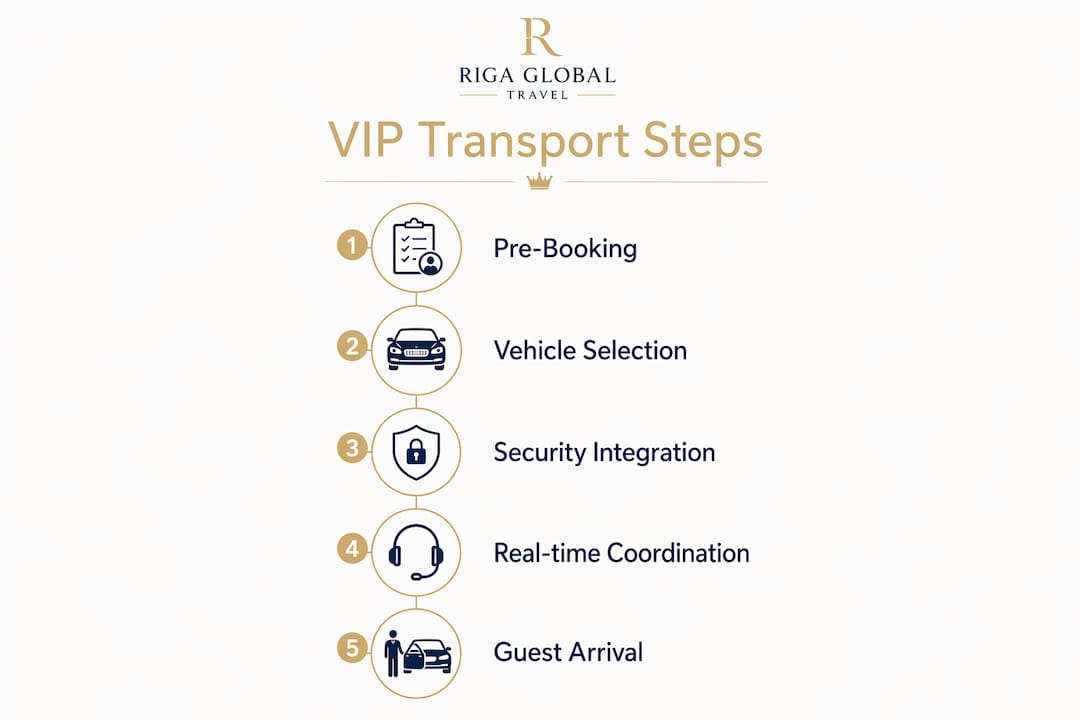
Pre-booking platforms and mobile digital passes reduce day-of chaos further. Guests reserve their bay in advance, pay in-app, and gain access via Bluetooth or LPR. No cash, no queues, no confusion at the gate. For VIP ticket-holders, configurable priority lane rules grant swift access while general traffic routes efficiently around them.
Dynamic tariff configurations let operators shape traffic flow by adjusting rates per zone or demand level. That keeps premium bays turning over and outer spaces occupied, all managed centrally without manual intervention.
Pro Tip: Integrate your parking management system with your VIP transport schedule so chauffeurs receive automatic gate clearance the moment a guest's itinerary is confirmed. That single connection removes the most common friction point at high-profile arrivals.
Choosing the right vehicles for tiered VIP transport
Vehicle selection is where the guest experience either earns its premium price or quietly disappoints. The tier structure is well established across sports event hospitality programs nationwide: executive sedans for individuals, luxury vans for groups.
1. Mercedes S-Class for individual VIPs and celebrities
The Mercedes S-Class is the default choice for solo executives, athletes, and high-profile guests who expect privacy and a quiet, controlled environment. The cabin delivers genuine acoustic isolation, rear-seat climate control, and enough legroom that a 6-foot-plus athlete arrives relaxed rather than folded. For on-site sports chauffeur assignments at major venues, it sets the right tone from the moment the door opens.
2. Mercedes V-Class for groups and hospitality teams
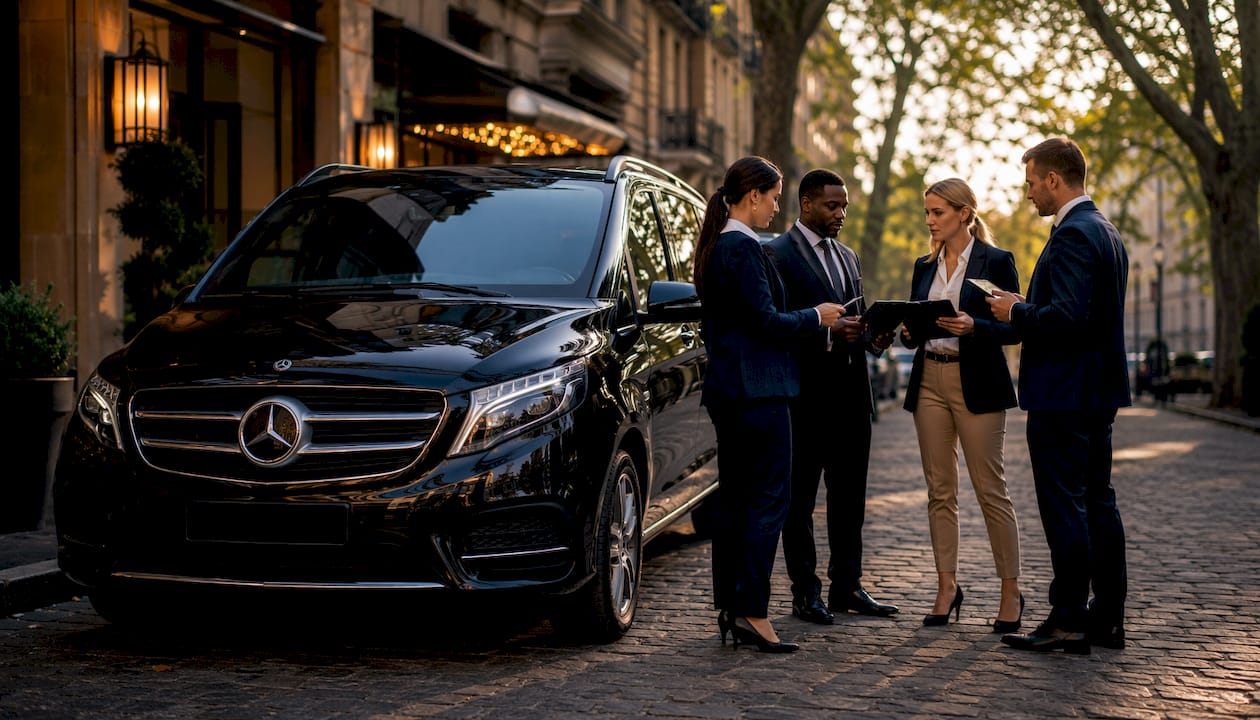
Corporate sponsors, hospitality teams, and production crews need space without sacrificing the luxury feel. The Mercedes V-Class seats up to seven passengers in a configured executive layout, with individual captain chairs, privacy glass, and enough cargo room for equipment or luggage, making it ideal for luxury event transportation. Nationwide providers coordinate shuttle services for VIPs, sponsors, and media around sports venues using exactly this class of vehicle.
3. Shuttle coordination for multi-group events
Large venues often run three or four distinct guest categories simultaneously: media, sponsors, hospitality guests, and production crews. Each group needs separate pickup points, separate timing, and often separate routes. The operational answer is a tiered shuttle matrix, where each group has a dedicated vehicle type, a named coordinator, and a fixed departure window. Mixing groups in the same vehicle or the same lane is where schedules collapse.
How to deliver bespoke concierge services for VIPs at sports venues
A concierge program that works at this level does not feel like a service. It feels like the client's own team showed up. Eclipse Sports Events, with 25 years of experience in luxury corporate hospitality, describes their model explicitly as a brand extension rather than a vendor relationship. That distinction drives every operational decision.
Tailoring starts before the event. You need each VIP's vehicle preference, dietary requirements, preferred communication channel, and any security considerations logged and distributed to the relevant staff. Chauffeurs should know a guest's name, their seating assignment, and their post-event destination before they pull up to the pickup point.
Coordination across transport, catering, and event operations is where most programs fall short. A guest who arrives on time but walks into a hospitality suite that is not ready has had a failed experience regardless of how smooth the ride was. The transport schedule must be built around the hospitality timeline, not the other way around.
Security integration matters at the concierge level too. Chauffeurs should be briefed on guest privacy requirements, media exclusion zones, and emergency contact protocols. For celebrity clients, that briefing is not optional.
Pro Tip: Build a single shared itinerary document accessible to your transport coordinator, hospitality lead, and venue liaison. When one team updates a timing, everyone sees it instantly. That one habit prevents most of the day-of miscommunications that derail VIP arrivals.
Planning the end-to-end VIP transport experience at a sports venue
Dedicated VIP pickup points away from general crowd areas are the single most important structural decision in your transport plan. A VIP who exits through the same gate as 40,000 other fans has not received a VIP experience. Separate entry and exit points, with controlled guest movement between them, are what separate a well-run program from a logistical failure.
Build your itinerary around the event timeline, working backward from kickoff or tip-off. For major events, VIP service windows typically open three hours before and extend two hours after the event, covering pre-game hospitality, the event itself, and post-event departures. Every vehicle assignment, chauffeur briefing, and parking clearance should map to that window.
Venue and local authority coordination is non-negotiable for traffic management. That means submitting vehicle manifests in advance, confirming access credentials with venue security, and establishing a direct communication line with the traffic management team on event day. For large venues, end-to-end coordination across transport, catering, and event operations is what keeps the guest experience consistent from arrival to departure.
Contingency planning covers three scenarios every serious operator prepares for: schedule changes (game goes to overtime, event runs long), security incidents (a guest requires immediate extraction), and vehicle failure (a chauffeur needs a replacement car within minutes). Each scenario needs a named decision-maker and a pre-approved response, not an improvised one.
For luxury transport at events of this scale, chauffeur training standards should include route knowledge, guest communication protocols, emergency procedures, and discretion requirements. A chauffeur who cannot navigate a venue's back-of-house access routes or who discusses a guest's presence with bystanders is a liability regardless of how well they drive.
What Rigaglobaltravel brings to VIP hospitality transport in 2026
Rigaglobaltravel specializes in limousine and concierge services for the entertainment industry, with a direct focus on the kind of high-stakes, high-visibility transport programs that major sports venues demand. The operational standards Rigaglobaltravel applies to game day VIP transport reflect the same principles that define elite hospitality: chauffeur training built around guest privacy, communication protocols that keep every team member aligned, and contingency planning that accounts for the unexpected before it happens.
Detailed guides published by Rigaglobaltravel detail how professional chauffeur training, continuous communication protocols, and emergency planning work together to protect and enhance the guest experience under all conditions. That depth of operational documentation is itself a signal of genuine subject matter expertise, not a marketing claim.
For event organizers managing luxury transport logistics across multiple guest tiers at a single venue, Rigaglobaltravel's model offers a replicable framework: tiered vehicles matched to guest type, technology-enabled access, and concierge-level service that scales without losing its personal character. The same approach applies whether the event is a regular-season game or a championship weekend.
Rigaglobaltravel serves Los Angeles, New York, and Miami with dedicated VIP transport programs built for sports and entertainment clients. If you are planning a major event and need a transport partner who already knows the terrain, contact Rigaglobaltravel to discuss your program.
Key Takeaways
Managing VIP hospitality transport at sports venues requires LPR technology, tiered luxury vehicles, bespoke concierge coordination, and rigorous contingency planning to deliver a consistently premium guest experience.
| Point | Details |
|---|---|
| LPR and cloud dashboards | License Plate Recognition eliminates queues and manual ticketing, giving VIPs frictionless priority lane access. |
| Tiered vehicle selection | Mercedes S-Class suits individual VIPs; Mercedes V-Class handles groups, sponsors, and hospitality teams. |
| Bespoke concierge design | Customized programs that act as brand extensions deliver higher guest satisfaction than generic service models. |
| Dedicated pickup points | Separate VIP entry and exit from general crowds to protect privacy and maintain schedule integrity. |
| Contingency planning | Pre-approved responses for schedule changes, security incidents, and vehicle failure prevent day-of failures. |