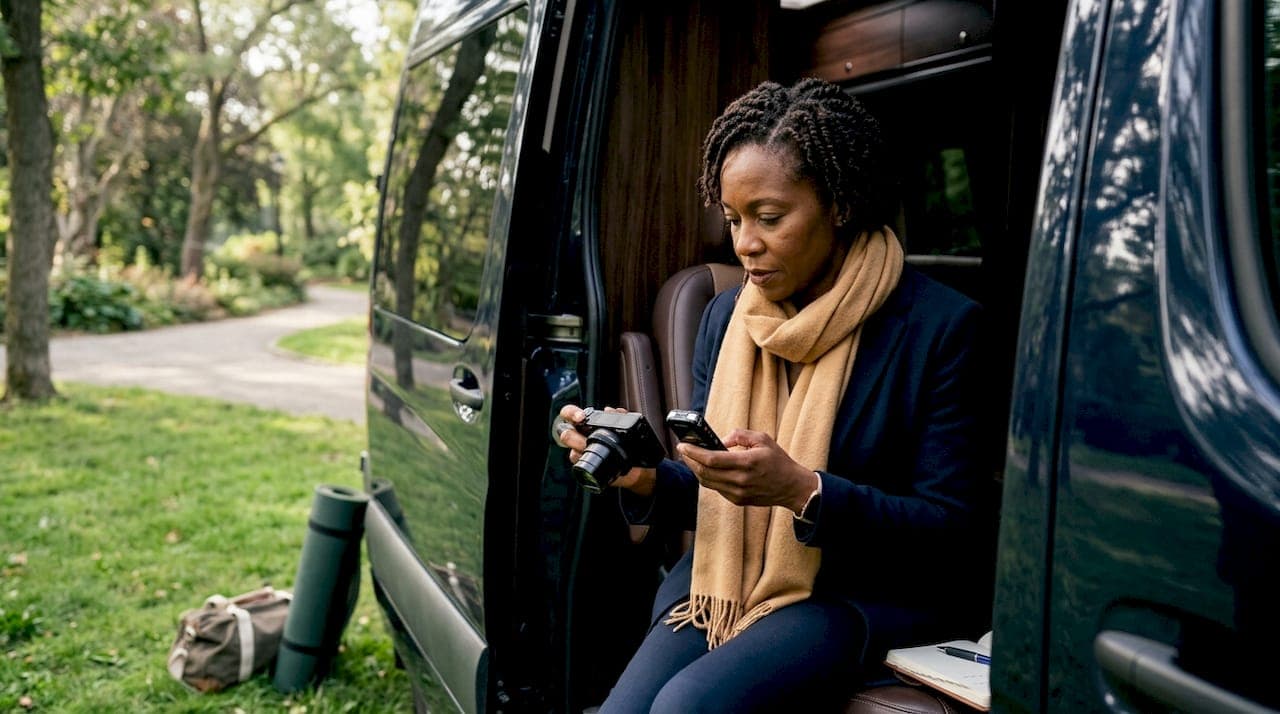
A field reporter car service is a specialized transportation solution built for journalists and media crews who need reliable, flexible, and secure mobility during on-site assignments. Unlike standard car rentals, these services include dedicated vehicles with space for broadcast equipment, flexible contract terms, and security provisions that match the unpredictable nature of news work. Rigaglobaltravel provides this category of service for media professionals who cannot afford delays, logistical gaps, or coverage failures in the field. Physical mobility remains foundational to credible journalism, and the right transport solution is the difference between reaching a story and missing it.
What is a field reporter car service?
A field reporter car service is the industry term for a managed transportation arrangement designed specifically around the operational demands of journalists, camera operators, and media producers working on location. The broader category is sometimes called "media ground transportation" or "press fleet management," but the core function is the same: getting reporters to the right place at the right time, with their gear intact and their safety protected.
Standard car rentals are built for leisure or general business travel. Field reporter services are built around editorial schedules, which change without warning. Physical mobility enables reporters to reach remote or crowded locations and adjust routes quickly for timely coverage. That flexibility is not a feature standard rental desks offer.
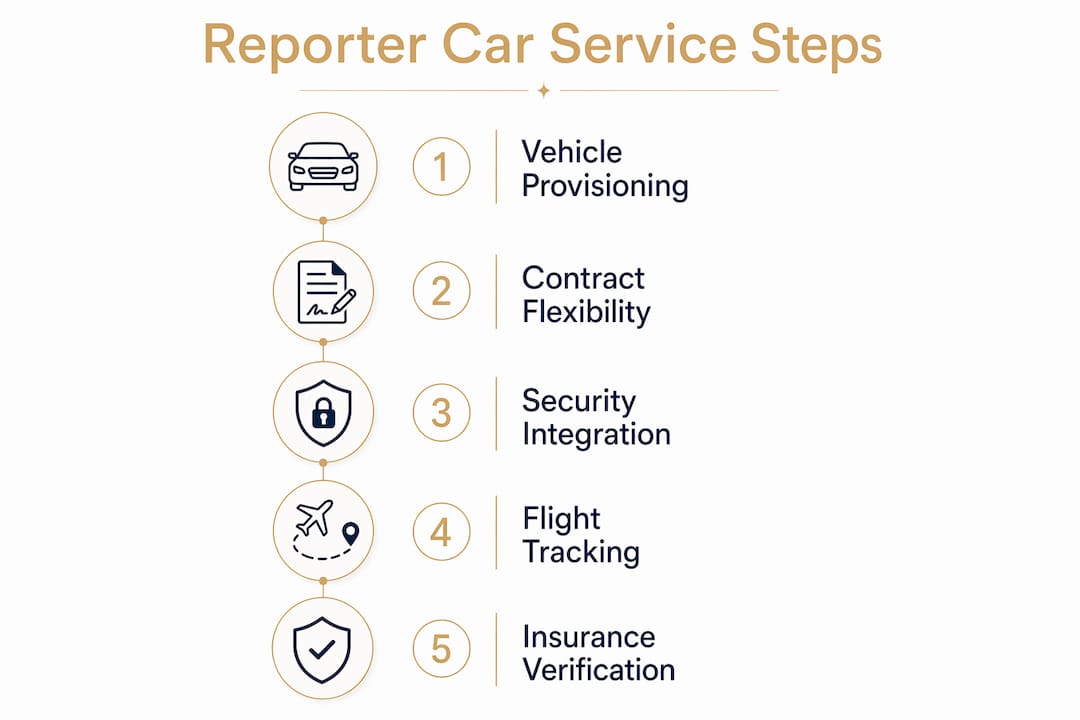
The service typically covers three core areas: vehicle provisioning, contract flexibility, and security integration. A reporter covering a political summit needs a different vehicle than one embedded with a sports team at a stadium. The right provider matches the vehicle type, insurance coverage, and support structure to the specific assignment.

How do field reporter car services differ from standard rentals?
The gap between a standard rental and a reporter-grade car service is operational, not cosmetic. These are the features that separate the two categories:
- Equipment-ready vehicles. Reporters travel with cameras, tripods, lighting rigs, and satellite uplink equipment. Dedicated press vehicles include cargo space, power outlets, and mounting points that standard sedans do not.
- Flexible rental terms. Pricing and rental terms vary significantly based on project duration, often requiring minimum commitments and deposits. Some event-specific offers include discounts on monthly rates with minimum 3-day rentals and 20% deposits, which reflects how these services are structured around editorial timelines rather than daily leisure use.
- Multi-location coverage. Specialized car services offer flexibility to travel between diverse assignments like stadiums, hotels, and remote venues without waiting or logistical delays. That range improves a reporter's ability to cover multiple stories efficiently in a single day.
- Driver expertise. Many press-grade services include drivers who understand local geography, checkpoint protocols, and media access routes. That knowledge is not available through a standard rental counter.
- 24/7 availability. News breaks at 2:00 AM. Field reporter services operate around editorial schedules, not business hours.
Pro Tip: When booking a field reporter car service for an international assignment, request a vehicle with a local driver who holds valid press zone access credentials. This single factor can cut checkpoint delays by hours in restricted coverage areas.
The distinction matters most when reporters work in unfamiliar cities or politically sensitive regions. A vehicle that fits the assignment profile reduces friction at every stage of the coverage day.
How do security and risk management integrate with reporter transport?
Security is not an add-on for field reporter car services. It is a core design feature, particularly for journalists working in volatile or geopolitically complex environments.
Journey management services offer reporters in volatile areas security oversight, risk assessment, and emergency evacuation capabilities that go far beyond standard rentals. These services rely on continuous monitoring from Global Security Operations Centres (GSOC) to enhance safety during assignments in challenging environments. That level of oversight means a reporter in a conflict zone has a team tracking their position and ready to coordinate extraction if conditions change.
The security layer also includes discreet vehicle selection. Media teams benefit from secure transport and contingency planning that remains low profile to avoid attracting attention in sensitive regions. A marked press vehicle can become a liability in certain environments. Experienced providers use unmarked, locally appropriate vehicles and operational plans aligned to the reporter's specific assignment.
"The most effective security for field reporters is invisible. Discreet vehicles, pre-planned routes, and real-time GSOC monitoring protect journalists without signaling their presence to those who might wish to interfere with their work."
Flight tracking is another feature that separates press-grade services from standard rentals. Professional field reporter car services incorporate flight tracking and manage waiting times to avoid costly delay fees. Standard rentals charge penalties for delays. Press services build in flexibility through real-time tracking, so the vehicle is there when the reporter lands, regardless of schedule changes.
The practical result is that reporters spend less time managing logistics and more time doing journalism. Security-integrated transport removes a category of risk that would otherwise consume editorial attention.
What are the key rental and insurance considerations for international assignments?
Documentation is the most overlooked element of field reporter car services, and the most consequential when something goes wrong. Journalists must carry international driving licenses, press credentials, and specific insurance proof to avoid issues at checkpoints or in high-risk areas.
Regular tourist insurance is often not acknowledged during media assignments in conflict zones or cross-border travel. That gap creates personal liability for the reporter and can void the entire rental agreement. Specialized journalist insurance covers cross-border travel between territories, which standard policies exclude by default.
The table below outlines the key coverage features reporters should verify before signing any rental agreement for an international assignment.
| Coverage Feature | Why It Matters |
|---|---|
| Cross-border travel authorization | Prevents policy voidance when crossing into adjacent territories |
| Press credential recognition | Required at military checkpoints and restricted access zones |
| International driving license | Legally required in most non-US jurisdictions for foreign drivers |
| Equipment coverage | Protects cameras, broadcast gear, and satellite equipment in transit |
| Emergency evacuation clause | Covers extraction costs if the assignment area becomes unsafe |
Pro Tip: Always request a written confirmation from your insurer that the policy covers the specific territories on your assignment itinerary. Verbal assurances do not hold at a checkpoint or in a claims dispute.
Car rental experts stress that paperwork such as international licenses and press credentials is essential to reduce friction and ensure coverage validity in high-risk assignments. The documentation burden is real, but the alternative is a voided policy and a stranded crew. News organizations should build a documentation checklist into their pre-deployment workflow for every international assignment.
Contract negotiation also matters. Reporters should push for penalty-free cancellation windows, flexible return terms, and written confirmation of waiting-time policies before signing. These terms are negotiable with specialist providers in ways they are not with standard rental desks.
How can news organizations optimize field reporting logistics?
Efficient field reporting logistics require coordination across vehicle selection, scheduling, and route planning. News organizations that treat transportation as an afterthought consistently lose time and coverage opportunities. These are the steps that produce reliable results:
- Match the vehicle to the environment. Urban assignments need compact, maneuverable vehicles with parking flexibility. Rural or conflict-adjacent assignments need high-clearance, durable vehicles with extended fuel range. A single fleet type does not serve both needs.
- Build transport into the editorial schedule. Reporters should not be booking rides after the assignment is confirmed. Transportation should be arranged at the same time as press credentials and accommodation. Late booking reduces vehicle options and increases cost.
- Use dedicated airport transfer services. Coordinated airport transfers for media teams eliminate the gap between arrival and deployment. A reporter who lands and immediately has a briefed driver is operational within minutes, not hours.
- Coordinate crew shuttles for multi-person teams. Camera operators, producers, and sound engineers often travel separately from the on-air reporter. Broadcast crew shuttle services keep the full team synchronized without requiring each member to arrange individual transport.
- Plan for contingencies. Breaking news assignments change without warning. The transport provider must be reachable at any hour and capable of rerouting or substituting vehicles on short notice. Confirm this capability before the assignment begins.
Luxury transport options also have a legitimate role in field reporting logistics. High-profile interviews, press conference access, and talent-facing assignments benefit from premium chauffeur services that project professionalism and protect the reporter's time. The vehicle a reporter arrives in communicates something to the people they are meeting.
Key Takeaways
A field reporter car service is the most direct way for news organizations to protect their reporters' time, safety, and coverage capacity during on-location assignments.
| Point | Details |
|---|---|
| Specialized transport is not optional | Standard rentals lack the flexibility, security, and equipment capacity that field assignments require. |
| Security integration is a core feature | GSOC monitoring, discreet vehicles, and emergency evacuation are standard in press-grade services. |
| Documentation prevents liability | International licenses, press credentials, and cross-border insurance must be confirmed before deployment. |
| Logistics coordination starts early | Transport should be arranged at the same time as credentials, not after the assignment is confirmed. |
| Vehicle choice affects coverage quality | Matching the vehicle to the environment reduces delays and expands access to story locations. |
Why transportation is the story no one covers
Sammy here. After years of watching media teams operate across major events and international assignments, I've come to one conclusion that most editorial managers resist: transportation is a journalism decision, not a logistics decision.
The reporters who consistently break stories first are not always the ones with the best sources. They are the ones who can move. Physical transport remains foundational to credible journalism because news does not happen at a desk. It happens at a location, and getting there before anyone else is a competitive advantage that no remote tool replicates.
The mistake I see repeatedly is news organizations treating transport as a cost to minimize rather than a capability to invest in. They book the cheapest available rental, skip the specialist insurance, and then spend three times the savings resolving a checkpoint delay or a voided policy claim. The math never works out.
My honest recommendation is to select a transport provider the same way you select a fixer or a local correspondent. Evaluate their knowledge of the specific region, their security protocols, and their ability to operate outside business hours. A provider who cannot answer those questions is not a press-grade service. They are a standard rental with a different name.
— Sammy
Rigaglobaltravel's transport solutions for media professionals
Field reporters and news organizations working across major markets need a transport partner who understands editorial timelines and security requirements. Rigaglobaltravel provides luxury car and chauffeur services in New York and across key media markets, with a fleet and booking team built for the demands of professional media work.
Whether you need a single vehicle for a high-profile interview or coordinated transport for a full production crew, Rigaglobaltravel's corporate car service covers the full range of media transportation needs. The team handles scheduling, airport coordination, and real-time adjustments so reporters stay focused on the story. Contact Rigaglobaltravel directly to arrange transport tailored to your next assignment.
FAQ
What is a field reporter car service?
A field reporter car service is a managed transportation arrangement built for journalists and media crews working on location. It provides dedicated vehicles, flexible rental terms, and security features that standard car rentals do not offer.
What documents do journalists need to rent a car internationally?
Journalists need an international driving license, valid press credentials, and insurance documentation that explicitly covers cross-border travel. Standard tourist insurance is often not recognized in conflict zones or restricted media access areas.
How does security monitoring work in reporter transport services?
Press-grade transport services use Global Security Operations Centres (GSOC) to provide 24/7 monitoring, route risk assessment, and emergency evacuation coordination for reporters in volatile environments.
Why do reporter car services include flight tracking?
Flight tracking allows the transport provider to adjust pickup timing in real time, avoiding penalty fees for delays and ensuring the vehicle is present when the reporter lands regardless of schedule changes.
How should news organizations book field reporting transportation?
News organizations should arrange transport at the same time as press credentials and accommodation, not after the assignment is confirmed. Early booking expands vehicle options and allows time to verify insurance coverage and contract terms.