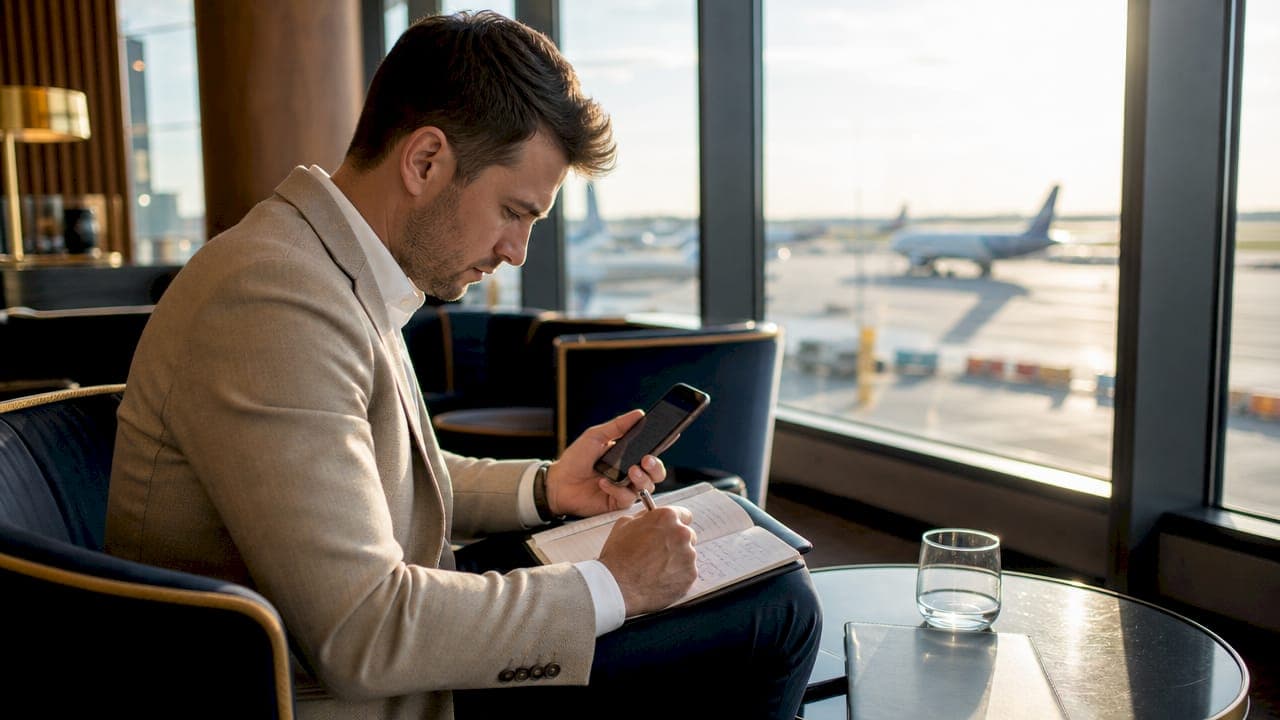
Arranging airport transfers for sports correspondents is the process of coordinating specialized, pre-booked ground transport that connects media professionals between airports, hotels, and event venues on a fixed, accountable schedule. Generic rideshares and official tournament shuttles consistently fail media teams under deadline pressure. The right transfer arrangement functions as a mobile office environment where correspondents edit footage, prep interviews, and coordinate with producers while in transit. Rigaglobaltravel specializes in exactly this kind of concierge-level transport for entertainment and media professionals, and the logistics framework below reflects what actually works at major sporting events.
How to arrange airport transfers for sports correspondents
Successful sports correspondent travel arrangements start with information, not bookings. Before you contact any transport provider, you need a complete picture of every moving part in your assignment.
The prerequisites fall into five categories:
- Flight details: Collect every flight number, arrival terminal, and scheduled landing time for all team members. Staggered arrivals across multiple flights require a provider with multi-vehicle dispatch capability, not a single car booking.
- Hotel and venue addresses: Confirm the exact addresses of your accommodation and the press or media facilitation center at the venue. Many stadiums route media to a separate entrance from general public gates.
- Accreditation requirements: Event shuttle services require journalists to present verified access credentials before boarding. Know your accreditation class before you book, because some transfer providers need this information to plan routing.
- Vehicle sizing: Standard rideshare vehicles cannot safely carry broadcast cameras, lighting rigs, and audio equipment. A full-size SUV or Sprinter van is the minimum for a two-person crew with gear.
- Contingency contacts: Identify a backup transport provider or a redundant private car contract before you travel. Flight diversions happen, and the time to solve that problem is before departure, not at an unfamiliar airport.
Pro Tip: Book your contingency vehicle at the same time as your primary transfer. Canceling an unused backup costs far less than scrambling for a car after a diversion.
How do you choose the right transport service for media teams?
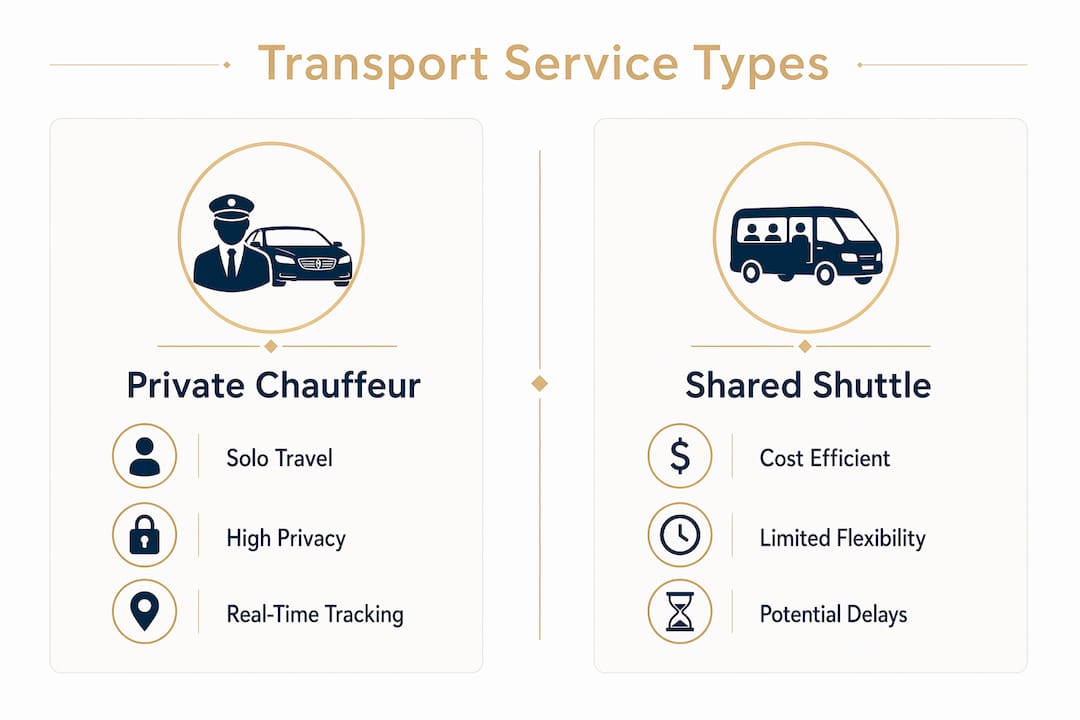
The three main options for journalist airport transfer services are private chauffeur, shared shuttle, and bundled multi-leg packages. Each has a specific use case.

| Service type | Best for | Key advantage | Key limitation |
|---|---|---|---|
| Private chauffeur | Solo correspondents, small crews | Fixed schedule, curbside meet-and-greet | Higher per-trip cost |
| Shared shuttle | Large media delegations, budget assignments | Lower cost per seat | Fixed departure times, no flexibility |
| Bundled multi-leg package | Full event coverage, airport to hotel to stadium | Single booking, coordinated handoffs | Requires advance planning |
Integrated transport bundles reduce scheduling risk and simplify management across the full assignment. This is the standard approach for major tournament coverage, where a correspondent may need four or five separate legs over several days.
The single most important service feature to verify is real-time flight tracking. Private airport services that include 60 minutes of complimentary wait time after actual landing time protect you from surge pricing and abandonment when your flight runs late. Rideshares offer neither.
Experienced media professionals avoid official tournament shuttles due to overcrowding, screening delays, and unpredictable departure times. A pre-booked private chauffeur meets you curbside, handles your equipment, and moves on your schedule, not the shuttle's.
Vehicle selection matters beyond comfort. Drivers trained in handling expensive broadcast equipment load and unload gear without damage and know which stadium entrances accept media vehicles. That knowledge is not available through a standard rideshare app.
Pro Tip: Ask your provider directly whether their drivers have worked press assignments at the specific venue or tournament. Venue familiarity cuts loading time and eliminates wrong-entrance mistakes.
For a deeper look at how private chauffeurs serve sportscasters, the operational differences from standard car services are significant.
Step-by-step process to book and manage your transfers
Executing a clean booking for sports event transportation solutions requires a defined sequence. Skipping steps creates gaps that surface at the worst possible moment.
-
Gather all travel and event itinerary details. Compile every flight number, landing time, terminal, hotel address, venue address, and press center location into a single document. Share this document with your transport provider at the time of booking, not the day before travel.
-
Select the appropriate transfer package and vehicle type. Match vehicle size to your crew count and equipment load. A two-person broadcast crew with a camera kit and tripod needs a full-size SUV at minimum. A four-person team with multiple cases needs a Sprinter van.
-
Provide special instructions for equipment and timing. Tell your provider exactly what equipment you are carrying, whether any cases are fragile or require climate control, and whether you need to arrive at a specific entrance. Written instructions prevent verbal miscommunication on the day.
-
Confirm access requirements and submit credentials if needed. Some venues require transport providers to register vehicles for media access. Verify this with your accreditation office and pass the relevant information to your driver service at least 48 hours before arrival.
-
Monitor flight status and communicate changes with your provider. A provider with real-time dispatch management handles flight diversions and delays without requiring you to make frantic calls from the gate. Confirm that your provider's dispatch desk is reachable 24 hours a day and that they track your flight automatically.
-
Plan backup options for last-mile failures. Redundant private car contracts covering distances beyond airline rerouting policies are now standard practice in sports media travel. Budget for this before the assignment, not after a diversion strands your team.
For broadcast teams managing multiple crew members across different arrival times, the broadcast crew shuttle coordination process adds another layer of planning worth reviewing.
What are the most common transfer problems for sports correspondents?
Transfer failures in sports media transportation follow predictable patterns. Knowing them in advance lets you build solutions into your booking rather than reacting under pressure.
- Flight delays and early arrivals: A provider without real-time flight tracking will either leave before you land or charge you for extended wait time. Confirm that your service tracks actual landing time, not scheduled landing time.
- Multi-flight team arrivals: When team members arrive on different flights, a single car booking fails. Synchronized multi-car dispatch with a professional dispatch desk is the only reliable solution for staggered arrivals.
- Accreditation gaps at event shuttles: Journalists who arrive without verified credentials cannot board government-run or tournament-operated shuttle services. This is not a recoverable situation at the gate. Confirm your accreditation status before you book any transfer that depends on shuttle access.
- Inadequate vehicles for equipment: A correspondent who books a standard sedan and arrives with a broadcast kit will face delays, potential equipment damage, and a rebooking fee. Specify your equipment load in writing at the time of booking.
- Inconsistent driver assignments: Changing drivers across legs of a multi-day assignment means re-explaining your schedule, your equipment, and your access requirements every time. Request consistent driver assignment across your full event coverage period.
"Transparency and accountability in transport services are critical to handle last-minute flight disruptions." — Sports media transport operations
The gap between a good transfer service and a bad one shows up entirely in the logistics framework, not the vehicle. Integrated flight tracking and multi-vehicle management reduce disruptions more than any single vehicle upgrade.
Key takeaways
Integrated, pre-booked private transfer services with real-time flight tracking are the most reliable option for sports correspondents managing multi-leg assignments at major events.
| Point | Details |
|---|---|
| Book integrated packages | Coordinate airport, hotel, and venue legs as a single package to reduce scheduling gaps. |
| Verify flight tracking | Choose providers that track actual landing time and include complimentary wait time after delays. |
| Size vehicles to your gear | Full-size SUVs and Sprinter vans protect equipment and fit full broadcast crews. |
| Confirm accreditation early | Submit media credentials to your transport provider at least 48 hours before arrival. |
| Build in redundancy | Hold a backup private car contract before travel to cover diversions and last-mile failures. |
Why I stopped trusting event shuttles at major tournaments
The first time I watched a correspondent miss a pre-match press conference because the official tournament shuttle was held for a credential check, I stopped treating official transport as a reliable option. That was not an edge case. It is the standard experience at any event large enough to require government-run shuttle coordination.
The real value of a pre-booked private chauffeur is not speed. It is predictability. When your driver knows your schedule, your equipment, and your access points before you land, the transfer becomes productive time rather than dead time. Editing, calls, and prep happen in the car. That is what professional chauffeur services for press events are actually selling: a controlled environment, not just a ride.
The mistake I see media professionals make most often is treating airport transfers as a commodity purchase. They book the cheapest available option and then spend the assignment managing the consequences. A driver who does not know the media entrance at a stadium, who cannot communicate with a dispatch desk when your flight diverts, or who shows up in a sedan when you have a full camera kit is not a transfer service. It is a liability.
The correspondents who cover the most demanding assignments consistently use the same providers across multiple events. That relationship is worth more than any per-trip discount.
— Sammy
Rigaglobaltravel's transfer services for sports media teams
Rigaglobaltravel provides limousine and chauffeur services built specifically for media and entertainment professionals who cannot afford transfer failures on assignment.
Every booking includes real-time flight tracking, 60-minute complimentary wait time after landing, and drivers experienced in handling broadcast equipment and press schedules. Vehicle options range from executive sedans to full-size SUVs and Sprinter vans, covering solo correspondents through full production crews. Multi-leg packages coordinate airport, hotel, and venue transfers under a single booking with consistent driver assignment throughout your event coverage. Rigaglobaltravel serves New York media assignments, Miami event coverage, and Los Angeles press trips. Contact Rigaglobaltravel to book a transfer package tailored to your next sports assignment.
FAQ
What is the best vehicle type for sports correspondent airport transfers?
Full-size SUVs and Sprinter vans are the standard choice for media teams with broadcast equipment. Standard sedans and rideshare vehicles lack the cargo space and driver training needed for sensitive gear.
How far in advance should I book airport transfers for a sports event?
Book at least 72 hours before your first arrival, and submit all flight details and equipment information at the time of booking. For major tournaments, booking one to two weeks out secures vehicle availability and allows time to confirm venue access requirements.
Do I need to provide my accreditation details to my transfer provider?
Yes, for events where media vehicles require registered access. Submit your accreditation class and any venue-specific credentials to your provider at least 48 hours before arrival to avoid gate delays.
What happens if my flight is delayed or diverted?
A provider with real-time flight tracking adjusts automatically and holds your vehicle without extra charges during the standard complimentary wait window. For diversions, a pre-arranged redundant private car contract is the only reliable backup.
Why do experienced correspondents avoid official tournament shuttles?
Official shuttles require credential verification at boarding, run on fixed schedules, and frequently experience overcrowding at major events. Pre-booked private chauffeurs offer curbside pickup, flexible timing, and direct routing to media entrances.