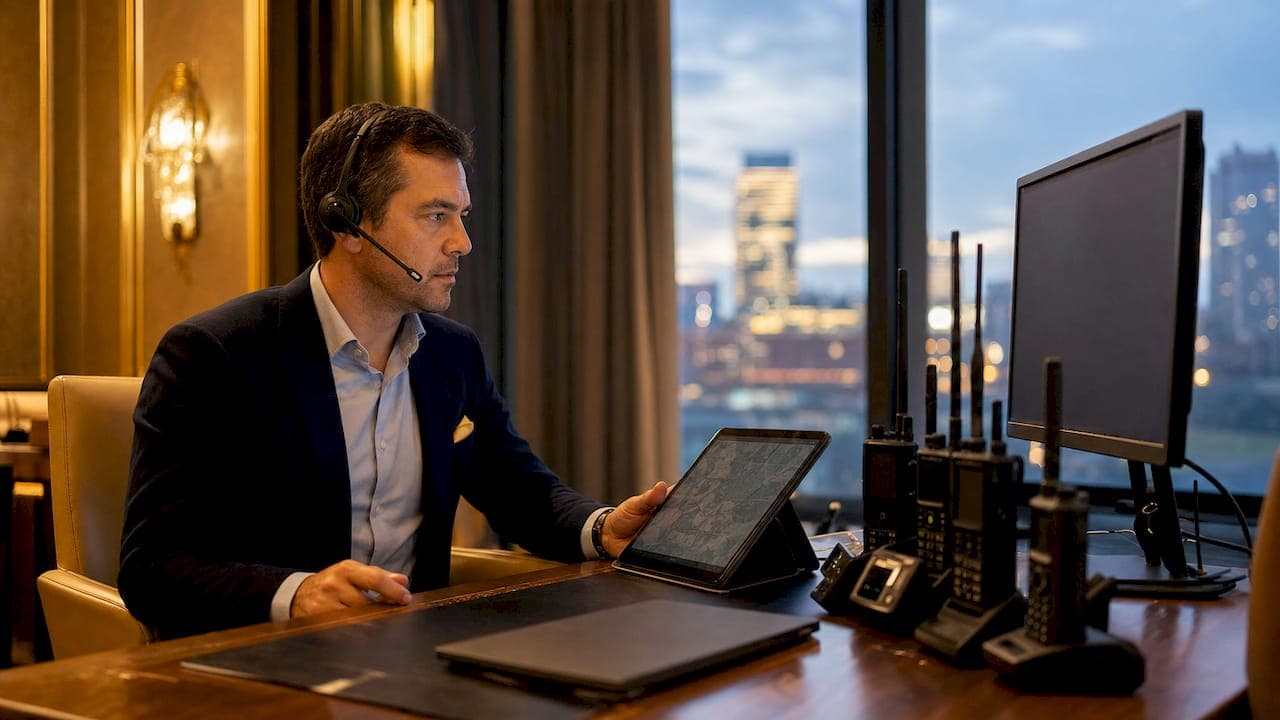
Sports anchor car service is a specialized transportation solution built around the precise timing and operational demands of broadcast talent during live and scheduled sports events. Unlike standard executive car services, this discipline treats every pickup and drop-off as a performance-critical moment. A missed call time does not just inconvenience a talent. It delays a live broadcast, disrupts production schedules, and puts network credibility on the line. Rigaglobaltravel works directly in this space, providing limousine and concierge transportation for sports anchors, broadcast crews, and entertainment talent across major markets.
What is the role of sports anchor car service during live events?
Sports anchor car service is defined by one non-negotiable constraint: the broadcast clock. Call times, rehearsal windows, and on-air segments run on fixed schedules with zero tolerance for delay. Every transport movement must be planned backward from those fixed points, not forward from a driver's availability.
Operational planning for this type of service covers several distinct layers:
- Call time alignment: Drivers receive confirmed pickup windows tied directly to the production schedule, not estimated arrival times.
- Dedicated staging areas: Vehicles hold at pre-assigned positions inside credentialed zones, not in general parking. Pre-assigned staging areas prevent retrieval delays caused by imprecise vehicle positioning.
- Drop-off precision: Anchors are delivered to specific entry points, not a general venue entrance. This matters at stadiums and arenas where the distance between a general drop-off and the broadcast booth can exceed ten minutes on foot.
- Communication protocols: Drivers confirm ETAs at multiple checkpoints. Coordinators receive real-time updates before, during, and after each movement.
The VIP transport coordinator role sits at the center of this structure. This person owns every movement, every confirmation, and every contingency. Without that single point of accountability, communication gaps become the primary failure point.
Pro Tip: Build your transport schedule from the broadcast rundown, not from the venue map. Anchors move on production time, not venue time.
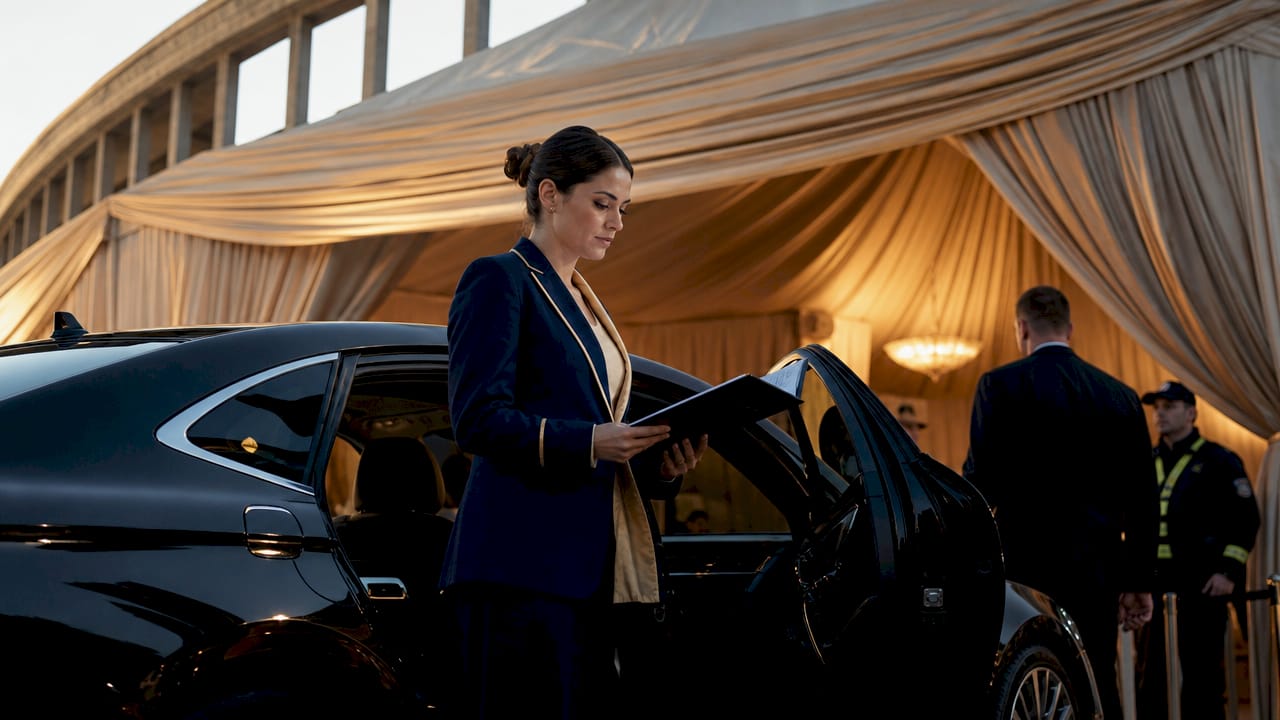
How does sports anchor car service differ from standard executive transport?
Standard executive car service operates on a request-and-dispatch model. A client books a vehicle, a driver is assigned, and the car arrives at the requested time. That model works for airport runs and corporate meetings. It does not work for live sports broadcasts.
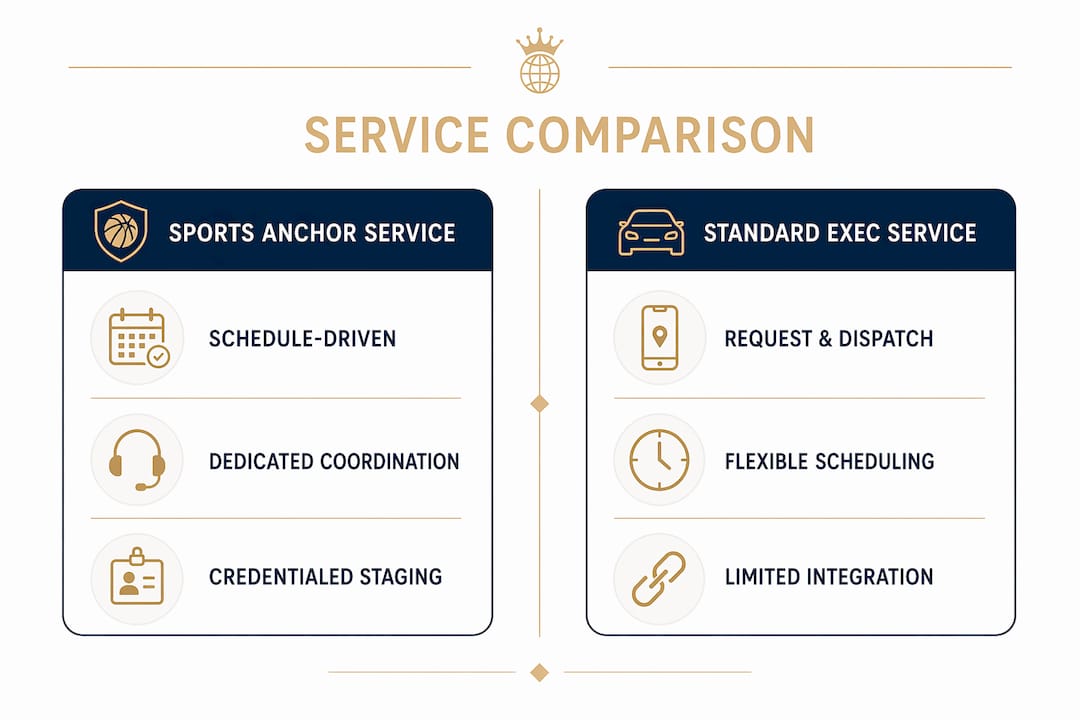
| Feature | Sports anchor car service | Standard executive car service |
|---|---|---|
| Scheduling basis | Production call times and broadcast windows | Client-requested pickup times |
| Staging | Credentialed, pre-assigned zones | General pickup areas or curb |
| Coordination | Integrated with production and event ops teams | Driver and client only |
| Contingency planning | Backup vehicles and alternate routes pre-planned | On-demand rescheduling |
| Scale | Multiple anchors, crew, and simultaneous movements | Single client or small group |
| Communication | Multi-layer: coordinator, driver, production | Driver to client |
The coordination complexity separates these two categories entirely. At a major sports event, a single network may move a lead anchor, two sideline reporters, a production executive, and a technical crew across multiple venues in the same two-hour window. Elite sports travel operations require an integrated logistics approach that supports broadcasters, athletes, and officials simultaneously. Standard car services are not built for that kind of parallel coordination.
Sports anchor transportation also integrates directly with the production team's logistics chain. Drivers receive schedule updates from production coordinators, not just from the talent. That direct line to the event's operational core is what makes the service reliable under pressure.
What logistical challenges does car service for sports events overcome?
Game day creates a specific set of obstacles that standard transport planning does not anticipate. Road closures, credentialed access points, and high-volume pedestrian traffic around major venues make standard routing unreliable. A driver without event credentials cannot reach a broadcast staging area. A vehicle without a pre-assigned spot gets held at a perimeter checkpoint.
The most common failure points in sports anchor transportation are:
- Traffic and access restrictions: Major events close arterial roads and redirect traffic hours before kickoff. Routes that work at 9 a.m. are blocked by noon.
- Shared staging zones: When multiple organizations use the same staging area without assigned positions, retrieval delays compound quickly.
- Communication gaps between teams: Production schedules change in real time. A driver who is not connected to that update chain misses the change.
- Multi-venue coordination: Anchors covering multiple venues in a single day require sequential routing that accounts for travel time between each stop.
NBC's approach to the 2026 Super Bowl to Winter Olympics transition illustrates how far specialized transport planning extends. NBC chartered two Bombardier Global 7500 jets to move anchor Mike Tirico 6,000 miles between events, with the flight departing California early morning and arriving in Italy by evening local time. That level of planning does not stop at the airport. Ground transport on both ends must match the same precision.
"At events with 20 or more VIP movements, one person should own VIP transport exclusively." — 2026 VIP transport guidance
VIP transport failure is most commonly caused by communication layer issues, not vehicle breakdowns. Real-time ETA updates, driver identity confirmation, and direct coordinator contact resolve the majority of on-day disruptions before they affect talent.
What best practices optimize sports anchor car service operations?
The most effective sports anchor transportation programs share four operational characteristics: a dedicated coordinator, schedule-driven routing, credentialed staging, and real-time communication tools.
-
Assign a dedicated VIP transport coordinator. For any event with 20 or more VIP movements, one coordinator should own transport exclusively. This person manages driver assignments, confirms ETAs, and communicates directly with production. Splitting this responsibility across multiple team members creates gaps.
-
Build routes around performance windows. Routing decisions must account for event-day road closures, credentialed access points, and venue-specific drop-off locations. Standard GPS navigation does not carry that information. Routes should be scouted and confirmed before event day.
-
Use real-time tracking and communication tools. Coordinated global visibility and real-time operational support are the standard for managing sports anchor travel disruptions. Coordinators need live driver location data and direct communication channels with both drivers and production teams.
-
Pre-assign exact pickup and drop-off points. Generic venue entrances create confusion. Every anchor movement should have a named, credentialed location for both pickup and drop-off. This applies to hotels, broadcast compounds, and stadium access points.
-
Plan charter and priority options for critical travel. When commercial transport schedules create risk around performance windows, charter options reduce that risk significantly. Ground transport on both ends of a charter movement must carry the same level of planning.
Pro Tip: Give every driver a printed movement sheet with exact staging coordinates, credential requirements, and a direct phone number for the production coordinator. Digital updates are fast, but paper does not lose signal.
The broadcast crew shuttle service layer adds another dimension at large events. Anchors and on-air talent move differently from technical crews, but both groups require coordinated, reliable transport. Separating those movement plans while keeping them synchronized is a core competency of specialized sports event transport.
Removing complexity through dedicated teams lets talent focus entirely on performance while transport runs behind the scenes. That is the operational goal of every well-run sports anchor car service program.
Key Takeaways
Reliable sports anchor car service depends on schedule-driven planning, dedicated coordination, and credentialed staging, not just vehicle quality.
| Point | Details |
|---|---|
| Schedule-first planning | Build every transport movement backward from broadcast call times, not driver availability. |
| Dedicated coordinator | Assign one person to own all VIP transport at events with 20 or more movements. |
| Credentialed staging | Pre-assign exact pickup and drop-off points inside credentialed zones to prevent retrieval delays. |
| Communication layers | Real-time ETA updates and driver transparency prevent most VIP transport failures before they occur. |
| Charter integration | Combine ground transport with charter options when commercial travel creates risk around performance windows. |
What I've learned working in entertainment transport
The biggest misconception I see from event organizers is that sports anchor car service is just a nicer version of a regular car booking. It is not. The vehicle is almost never the problem. The problem is always the information gap between the production team and the transport team.
I have watched well-funded events with premium vehicles fail because no one told the driver that the anchor's call time moved up by 20 minutes. The car was perfect. The communication was broken. That is the real operational challenge in this work.
What separates a reliable sports news anchor travel program from an unreliable one is not the fleet. It is the coordinator who sits between production and transport, absorbs every schedule change, and pushes that information to drivers in real time. That role is consistently undervalued and consistently underfunded until something goes wrong.
The other thing I would push back on is the idea that this level of coordination is only necessary for major networks or marquee events. A regional sports network covering a college football game has the same timing constraints as NBC covering the Super Bowl. The stakes are different. The operational requirements are identical.
Proactive planning, direct integration with event operations, and a single point of accountability on transport. Those three things solve 90 percent of the problems I see in sports anchor transportation. The rest is execution.
— Sammy
Rigaglobaltravel's approach to sports anchor transportation
Rigaglobaltravel provides luxury car service for sports anchors and broadcast talent across New York, Connecticut, Los Angeles, and Miami. Every movement is coordinated directly with production schedules, not dispatched on a standard request model.
The team at Rigaglobaltravel assigns dedicated coordinators for event-day movements, manages credentialed staging at major venues, and maintains direct communication lines with production teams throughout each event. For event organizers who need executive transportation for sports talent that runs on broadcast time, Rigaglobaltravel builds the transport program around your schedule from the ground up. Contact the team directly to discuss your event's anchor and talent transport requirements.
FAQ
What is sports anchor car service?
Sports anchor car service is a specialized ground transportation service built around broadcast call times and production schedules. It differs from standard executive car service by integrating directly with event logistics and production teams.
Why do sports anchors need dedicated car service?
Sports anchors operate on fixed broadcast windows with no tolerance for delay. Dedicated car service ensures pickup and drop-off points align with production schedules and credentialed venue access requirements.
How many VIP movements require a dedicated transport coordinator?
Events with 20 or more VIP movements require one dedicated coordinator who owns all transport communication and timing exclusively, according to 2026 VIP transport guidance.
What causes most VIP transport failures at sports events?
Communication layer failures cause most VIP transport incidents. Vehicle breakdowns are rare. Missing ETA updates, driver assignment gaps, and schedule changes that do not reach drivers are the primary causes.
How does Rigaglobaltravel support sports anchor transportation?
Rigaglobaltravel provides on-demand car service for anchors and broadcast talent, with dedicated coordinators, credentialed staging, and direct integration with production schedules across major U.S. markets.