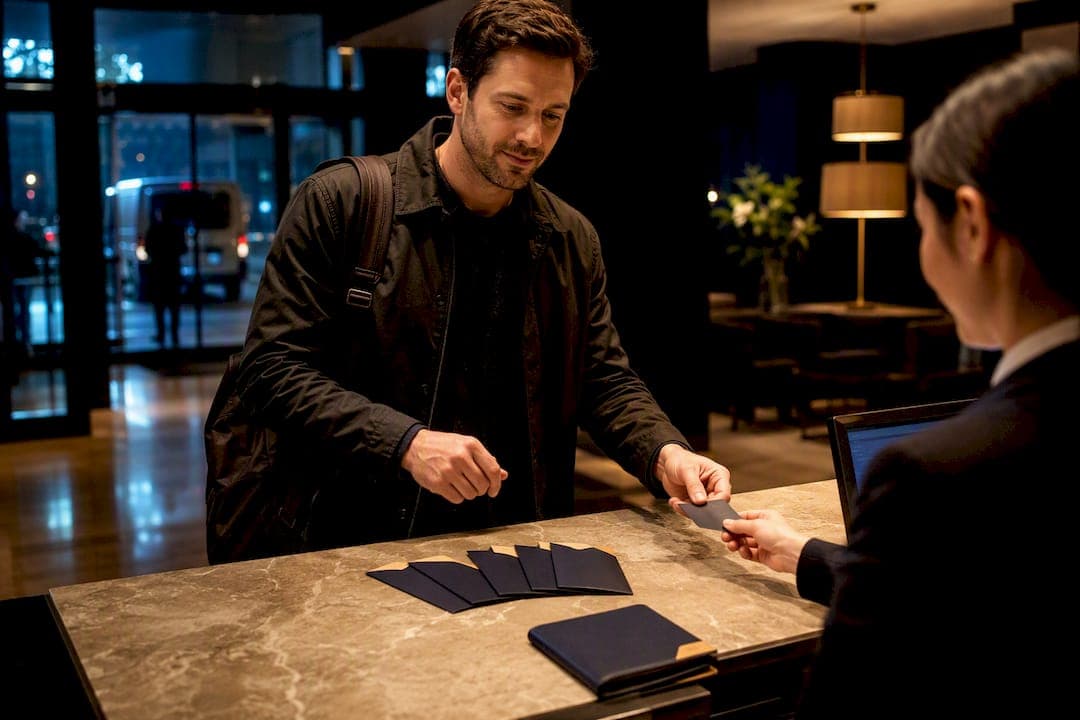
The right move is to master-bill a negotiated hotel block, and if the crew is large or the shoot runs long, pair it with a second property or serviced apartments under one rooming list. Lock in 24/7 hotel contact and a transport plan before the first cast or crew member checks in. That combination protects your budget, your schedule, and your commute times far better than booking rooms one at a time.
TL;DR:
- Locking in master-billed hotel blocks with flexible attrition and cancellation clauses ensures control and reduces risks for production schedules and budgets.
- Starting booking preparations six to twelve weeks in advance, depending on market size and shoot duration, is essential to securing preferred rates and accommodations.
- Using a hybrid lodging approach with primary hotels and serviced apartments for longer shoots minimizes capacity limitations and stabilizes crew housing.
- Coordinating hotel-to-set transportation with hotel logistics in advance keeps crew commuting within a 60-minute window and avoids scheduling bottlenecks.
- Managing hotel, transport, and billing through a single integrated system with clear communication drastically reduces process errors and increases operational efficiency.
Table of Contents
- What Is a Crew Hotel Booking, and Why Does It Work Differently From a Personal Reservation?
- Quick Operational Checklist for a Crew Hotel Block
- When to Start Bookings: Lead Times by Market and Production Size
- Contracting and Billing: RFPs, Master Billing, Guarantees, and Cancellation Terms
- Lodging Strategy: Single Hotel Versus Split Properties or Serviced Apartments
- Transfers and Commute Planning: Hotel-to-Set Logistics and the 60-Minute Guideline
- Managing Changes and Contingency Protocols for Rebooking
- Handling Special Requirements for Dietary, Accessibility, and Security Needs
- Communication Strategies With Hotels and Crew During the Booking Process
- Legal and Compliance Considerations in Crew Hotel Contracts
- Technology and Tools Used for Managing Crew Hotel Bookings
- A Concierge's View on Where Crew Hotel Bookings Actually Go Wrong
- How Rigaglobaltravel Supports Crew Hotel Blocks and Transfers
- Sources
What Is a Crew Hotel Booking, and Why Does It Work Differently From a Personal Reservation?
A crew hotel booking is a negotiated block of rooms held under a production's master account rather than a collection of individual reservations made by cast and crew on their own cards. The distinction matters more than it sounds. Individual bookings put the cancellation risk, credit exposure, and per-diem accounting on each traveler. A master-billed block puts all of that on the production, which is exactly where a location manager or production accountant wants it, because it centralizes control.
Hotels treat these bookings differently too. A block reservation triggers a hotel's group sales desk rather than its standard front-desk rate engine, which means access to production rate cards, extended-stay discounts, and negotiated terms that never show up on a public booking page. This is the operational reality behind "hotel block vs individual booking" decisions: the block isn't just cheaper, it's the only path to the contractual protections a production actually needs, like attrition relief and guaranteed room-type inventory.
Airline crew hotel programs use similar block logic, but the contracts, rate structures, and lodging goals for entertainment productions are built around shoot schedules, department call times, and equipment storage, not flight rotations. Keep that distinction in mind if you're researching general "crew lodging" advice online, since a lot of what ranks for this term is written for a different industry entirely.
Quick Operational Checklist for a Crew Hotel Block
Before you call a single hotel, get these four things settled internally. Skipping the order costs you leverage in negotiation and creates rework later.
- Lock the headcount and dates. Confirm shoot dates, total crew and cast numbers, and which departments arrive first, second, and last.
- Draft the rooming list and billing setup. Assign a master-billing contact, decide which costs route through direct invoicing versus per diem, and identify who signs off on room changes.
- Issue the RFP. Send hotels your production-specific needs: room types, equipment storage, loading zones, and a required 24/7 point of contact.
- Negotiate the operational clauses. Cancellation windows, shuttle support, laundry service, and storage terms should be in writing before you confirm the block.
Get these four steps right and everything downstream, from rooming lists to daily reconciliation, moves faster.
When to Start Bookings: Lead Times by Market and Production Size
Timing is where most productions lose leverage without realizing it. Wait too long and you're negotiating from a position of desperation instead of choice.
- Well-served hubs (major studio cities with dense hotel inventory) generally need six to eight weeks of lead time to secure block rates and preferred room types.
- Secondary or remote markets with fewer competing properties often require eight to twelve weeks or more, especially for blocks above 30 rooms.
- Short shoots (under two weeks) can usually work with a standard hotel block since turnover is fast and per-diem accounting stays simple.
- Longer shoots, often running 30 to 120 days for crew, tend to favor extended-stay rates or a hybrid mix that includes serviced apartments.
- Staggering arrivals by department (art department and construction first, then grip and electric, then cast closer to shoot day) reduces check-in congestion and keeps shuttle demand from spiking on day one.
That last point is easy to overlook but saves real friction. A hotel front desk handling 40 simultaneous check-ins on a Sunday afternoon is a bottleneck you created, not one the hotel created.
Contracting and Billing: RFPs, Master Billing, Guarantees, and Cancellation Terms
Master billing is the default for a reason: it keeps per-diem accounting clean and shifts credit risk off individual crew members and onto the production's account. Most production accountants will tell you this isn't optional once a shoot passes a certain size. It's simply how the numbers stay reconcilable at wrap.
Your RFP should specify:
- Room type mix (singles, doubles, suites for department heads)
- Loading zone and equipment storage access
- 24/7 front-desk and reservations contact, not just business hours
- Reporting cadence for occupancy and billing reconciliation
The sourcing and management process that works best follows a clear sequence: define requirements, issue the RFP, negotiate concessions, finalize the contract, then monitor daily during production rather than waiting until wrap to reconcile.
Before signing, get legal eyes on attrition clauses, cancellation notice periods, force majeure language, additional-insured and indemnity requirements, and how disputes over reconciliation get resolved. Hotels hosting production activity carry real legal exposure around rights, insurance, and operational disruption, and that exposure shows up in contract language you need reviewed, not skimmed.
Pro Tip: Never accept a cancellation window that mirrors a leisure traveler's policy. Productions shift by days, sometimes hours. Push for a 48 to 72 hour attrition-adjustment clause instead of the standard 24 hour hold.
Lodging Strategy: Single Hotel Versus Split Properties or Serviced Apartments
A single hotel block works cleanly when your crew count stays below a moderate size and the shoot runs for a few weeks or less. Above that, you start running into a practical ceiling: most hotels won't commit more than about half their total inventory to one production block, which protects their other business but limits how far your negotiating leverage stretches.
Once a shoot grows past that point, or extends past a month, a hybrid approach usually beats forcing everyone into one property:
- Above-the-line talent and department heads stay in a full-service hotel with amenities and proximity to production offices.
- Wider crew move into serviced apartments, which cuts catering costs and per-person accommodation spend on longer shoots, since apartment units come with kitchens.
- One accommodation liaison owns the entire rooming list across every property, so nobody falls through the cracks between vendors.
The tradeoff is coordination overhead. Two or three properties means two or three sets of check-in schedules, shuttle routes, and billing reconciliations instead of one. That overhead is manageable with a dedicated liaison. It becomes chaos without one.
Transfers and Commute Planning: Hotel-to-Set Logistics and the 60-Minute Guideline
Hotel selection and transport planning are the same decision, not two separate ones. Choosing a property based on room rate alone while ignoring the drive to set is how productions end up paying for lodging savings twice, once in the room rate and again in lost crew hours and safety risk.
Production guidance generally holds hotel-to-set commutes to around 60 minutes as the outer edge before fatigue and productivity losses start showing up on the call sheet. Treat that number as a hard filter when shortlisting hotels, not a nice-to-have.
Build the transport plan alongside the hotel contract, not after it:
- Stagger departure windows by call time instead of moving the entire crew in one wave.
- Confirm coach parking and loading-zone access with the hotel in writing, since not every property can accommodate a 45-foot bus.
- Coordinate early breakfast service or grab-and-go options for crew on 5 a.m. call times.
Pro Tip: Ask the hotel about their loading dock hours before you sign anything. A property with a beautiful lobby and a loading zone that closes at 10 p.m. will wreck your early-call mornings.
A well-run hotel-to-set transfer system, paired with shuttle scheduling like what's used for large-scale event shuttle planning, keeps the whole operation moving without daily improvisation.
Managing Changes and Contingency Protocols for Rebooking
Schedules move. Weather delays a shoot day, a location falls through, or an actor's availability shifts, and suddenly your rooming list is wrong. The productions that handle this well built the flexibility in before they needed it.
- Pre-negotiate flexible attrition and cancellation terms at the RFP stage, and budget a small buffer of extra nights for overruns rather than scrambling to add rooms mid-shoot.
- Keep one point of contact for all rebooking requests, on both the production side and the hotel side, so changes don't get lost between three different assistants making calls.
- Reconcile room counts daily, not weekly. A daily manifest check against actual occupancy catches billing errors while they're still cheap to fix.
This is also where a dedicated transport and lodging partner earns its keep. Coordinating production set transportation changes alongside hotel rebookings, instead of treating them as separate problems, is what keeps a schedule shift from turning into a billing dispute three weeks later.
Handling Special Requirements for Dietary, Accessibility, and Security Needs
Every crew hotel block eventually runs into a request that doesn't fit the standard room type grid, and the productions that plan for this ahead of time avoid scrambling later.
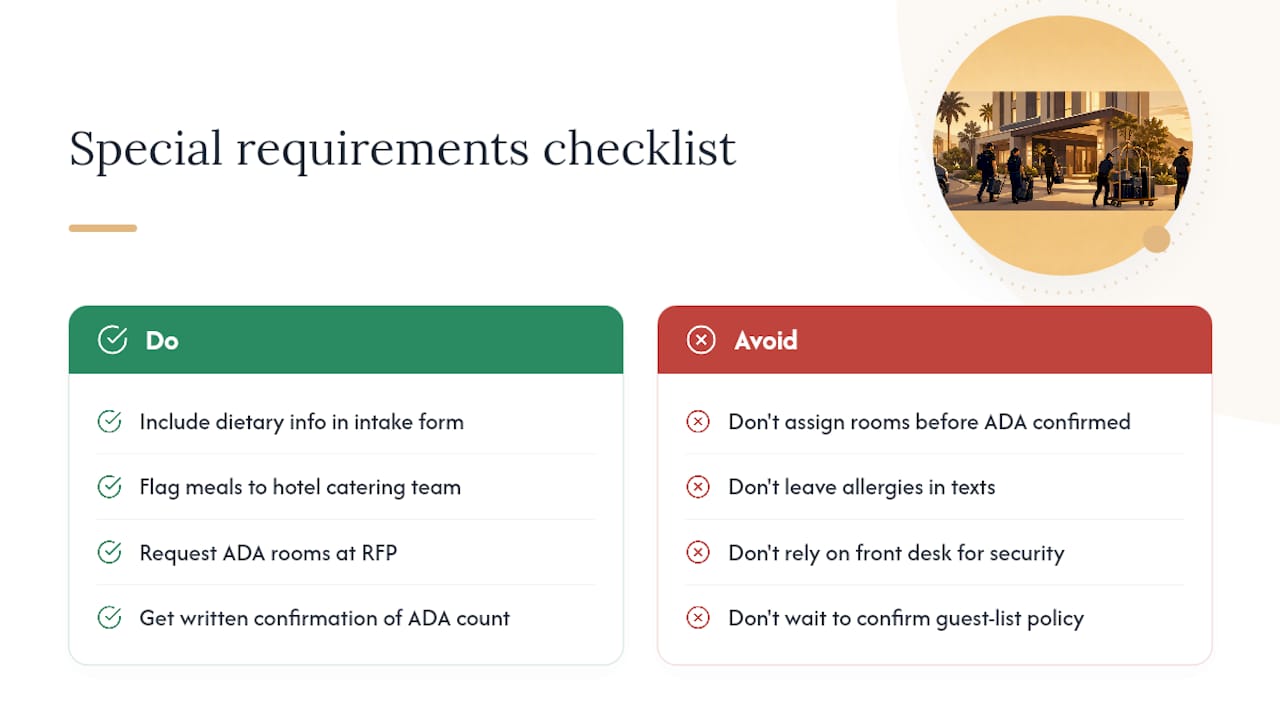
Dietary needs show up constantly on longer shoots. Get allergy and dietary information into the rooming list intake form, not as a verbal aside on move-in day, and flag it to the hotel's catering or room-service team in advance if the property handles any meal service.
Accessibility requirements need to be confirmed with the hotel before rooms are assigned, not after. ADA-compliant rooms are usually limited in number, so if a cast member or crew member needs one, request it at the RFP stage and get written confirmation of the room count the hotel can actually guarantee.
Security considerations vary by production profile. High-profile talent may need a private floor, controlled elevator access, or a discreet entrance away from the main lobby. Coordinate these requests directly with hotel security and general management, since front-desk staff often can't authorize floor restrictions or key changes on their own. For touring personnel or cast with public recognition, confirm the hotel's policy on guest list access and media inquiries before arrival, not during a press scrum in the lobby.
Build a standing intake form that captures all three categories for every rooming-list update. It sounds like overkill until the third time someone's severe nut allergy gets missed because the request lived in a text message instead of the master document.
Communication Strategies With Hotels and Crew During the Booking Process
The single biggest source of friction in a crew hotel block isn't the negotiation. It's what happens after the contract is signed, when a hundred small updates start flowing in from every direction.
Set one communication channel for hotel-facing updates and one for crew-facing updates, and don't let them blur together. The hotel needs a single production contact who can confirm changes fast, ideally someone with authority to approve minor rooming adjustments without escalating every request. Crew members, meanwhile, need a simple way to flag issues (a late check-in, a broken air conditioner, a wrong room type) without going through three layers of production staff first.
A daily or near-daily check-in with the hotel's reservations or group sales contact catches small problems before they become guest complaints. This is also where the location manager's role matters most: location managers are typically the ones negotiating directly with hotel management and managing the on-the-ground relationship, which makes them the natural owner of this communication loop rather than leaving it to whoever happens to answer the phone.
Put the essentials in writing, always. Verbal confirmations over a hotel front desk phone call are the number one cause of "but they told us it was fine" disputes at checkout. A short written confirmation, even just an email recap after a phone call, protects both sides.
Legal and Compliance Considerations in Crew Hotel Contracts
Hotel contracts for production blocks carry more legal weight than a standard leisure reservation, and treating them the same way is a common, expensive mistake.
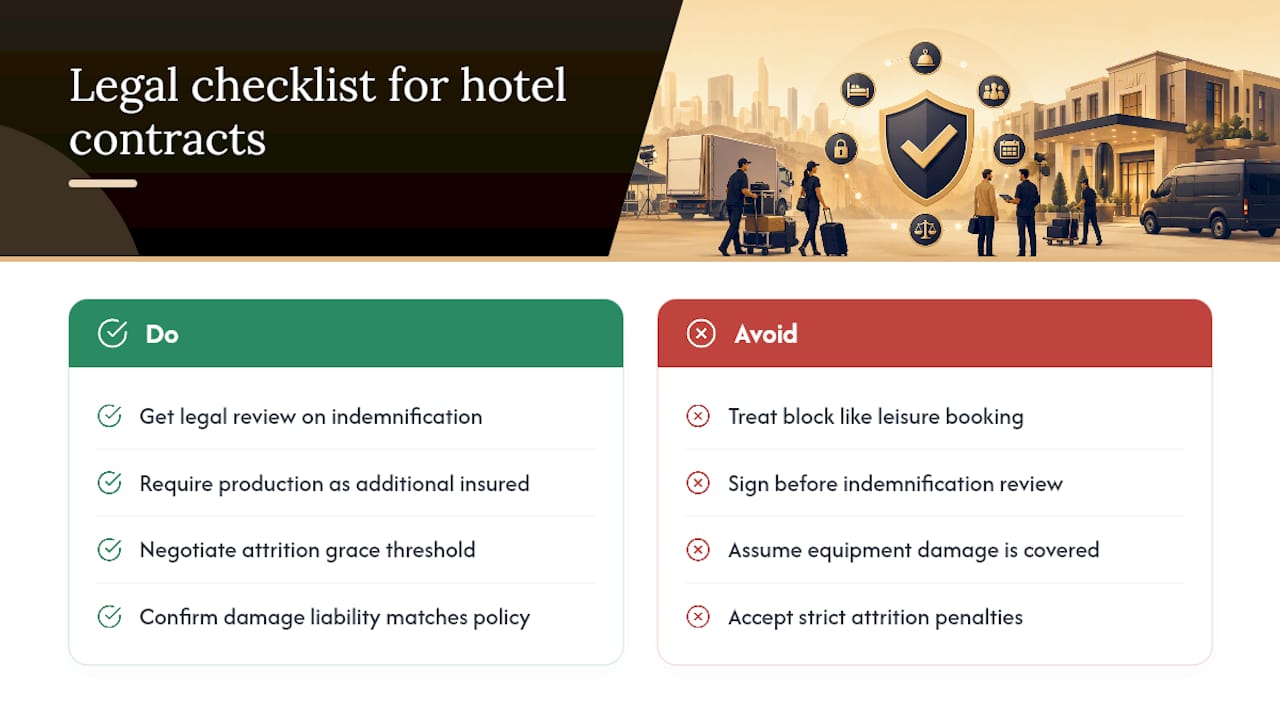
Get legal review on indemnification and additional-insured language before signing. Productions typically need to be named as additional insured on the hotel's liability policy, and the hotel may ask for reciprocal protection given the operational disruption a large crew presence can cause. Legal factors around rights, insurance, and guest-impact terms deserve a real read from counsel, not a quick skim from whoever's closest to the printer.
Attrition and cancellation clauses need particular attention. A standard hotel contract might penalize a production heavily for dropping below a committed room count, which is a real risk given how often shoot schedules shift. Negotiate a grace threshold, typically allowing some percentage of the block to go unused without penalty, before you sign.
Confirm who carries liability for property damage caused by equipment storage or loading activity, and make sure that language matches your production insurance policy rather than assuming it's covered by default. Finally, if the production is working with a partner who handles supplier relationships and contract terms on a regular basis, a resource like Timeshunters can offer useful context on contracting norms and liability protections worth checking against your own agreement.
Technology and Tools Used for Managing Crew Hotel Bookings
Most productions still run rooming lists on spreadsheets, and for smaller shoots that's genuinely fine. The trouble starts at scale, when a 40-room block across two properties needs daily reconciliation against a shifting call sheet.
Group booking platforms built for corporate and event travel can handle block reservations, real-time occupancy tracking, and centralized billing, which beats manually cross-checking a spreadsheet against hotel invoices every few days. Some production accounting software now integrates directly with these tools, pulling room charges straight into per-diem and cost-report line items instead of requiring manual entry.
For communication, a shared document or lightweight project tool, updated daily rather than weekly, keeps the rooming list, transport schedule, and special-requirements log in sync across departments. The specific tool matters less than the discipline of using one single source of truth instead of three people keeping separate versions.
The real technology gap in this space isn't booking software, it's the handoff between hotel logistics and ground transport. A concierge or travel management partner that runs both under one system avoids the double-entry and miscommunication that happens when the hotel block and the shuttle schedule are managed by two unrelated vendors who never talk to each other directly.
A Concierge's View on Where Crew Hotel Bookings Actually Go Wrong
Most productions don't lose money on room rates. They lose it on the gaps between systems, the point where the hotel block, the transport schedule, and the daily reconciliation stop talking to each other. A production accountant catches a billing error three weeks after wrap that a daily manifest check would have caught in a day. That's not a negotiation failure. It's a process failure, and it's completely avoidable.
The industry's obsession with getting the lowest room rate often distracts from the bigger cost driver: coordination overhead. A block booked at a slightly higher rate with a responsive 24/7 contact, flexible attrition terms, and integrated transport planning almost always beats a cheaper block that requires three phone calls to fix a single rooming error. Cheap rooms with expensive friction aren't actually cheap.
Sammy, drawing on experience coordinating limousine, shuttle, and concierge logistics for entertainment productions, has watched the same pattern repeat: productions that treat hotel booking and ground transport as one integrated workflow, RFP through daily reconciliation, spend less time firefighting and more time on the actual shoot. Rigaglobaltravel exists because that integration point, hotel logistics meeting transport logistics under one accountable contact, is where most productions are still underserved.
— Sammy
How Rigaglobaltravel Supports Crew Hotel Blocks and Transfers
Coordinating a hotel block, a shuttle schedule, and a billing reconciliation through three separate vendors means three separate points of failure. Some providers fold concierge support, master-billing facilitation, and chauffeured transfers into one accountable workflow, so your production office isn't the one stitching the pieces together at midnight.

That means a single 24/7 contact who understands production schedules, one invoice instead of three, and shuttle or coach coordination that's already synced to your rooming list and call times. This approach offers an alternative to managing hotel logistics and ground transport as two disconnected problems. Explore chauffeured transport options in Los Angeles or ground transportation in New York, and reach out to Rigaglobaltravel to map out a lodging and transport plan before your next block goes out for RFP.
Sources
- Film and Media Industry Demand on Los Angeles hospitality | Los Angeles Hospitality Authority
- Locationhousing