
Discreet transportation is defined as the movement of people or assets in a way that actively prevents public attention, protects client privacy, and reduces exposure risk through unmarked vehicles, trained personnel, and planned routes. The industry term for this practice is "secure transport," though "discreet transportation" describes the same operational philosophy with a stronger emphasis on invisibility over force. Understanding what discreet transportation means is critical for executives, entertainers, and event managers who need to move without drawing a crowd, leaking information, or creating a security gap. Rigaglobaltravel specializes in exactly this kind of service for the entertainment industry, where privacy is not a luxury but a professional requirement.
What does discreet transportation mean as a service?
Discreet transportation means moving a person or asset from point A to point B without anyone outside the operation knowing it happened. The goal is not speed or comfort alone. The goal is invisibility. Every decision, from the vehicle choice to the route to the driver's behavior, serves that single objective.
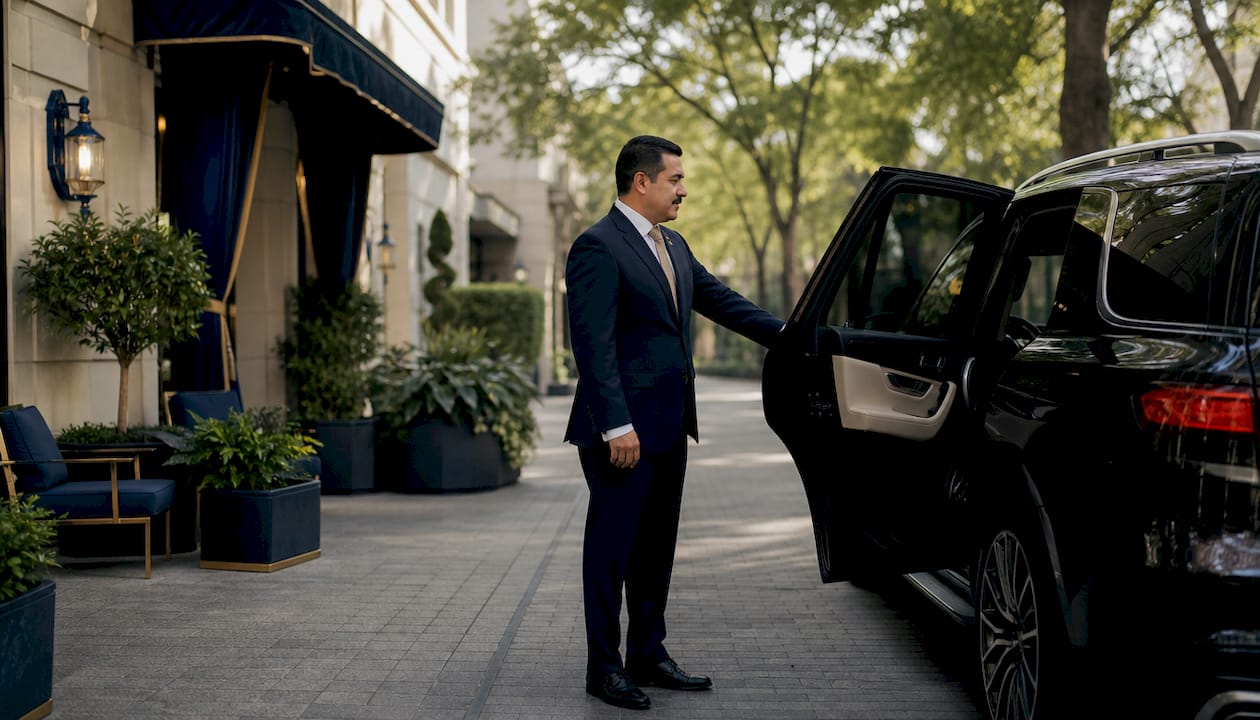
The concept applies across a wide range of situations. A recording artist leaving a venue after a sold-out show, a studio executive transporting an unreleased film reel, or a corporate client attending a confidential merger meeting all share the same need: arrival and departure without incident or exposure. Discreet transport delivers a "quiet professional" experience where the driver manages every moment with minimal visibility and no crowd draw.
This is meaningfully different from standard chauffeur service. A standard chauffeur prioritizes comfort and punctuality. A discreet transport operator prioritizes those things and treats every movement as a potential security event. The distinction matters most when the stakes are high.
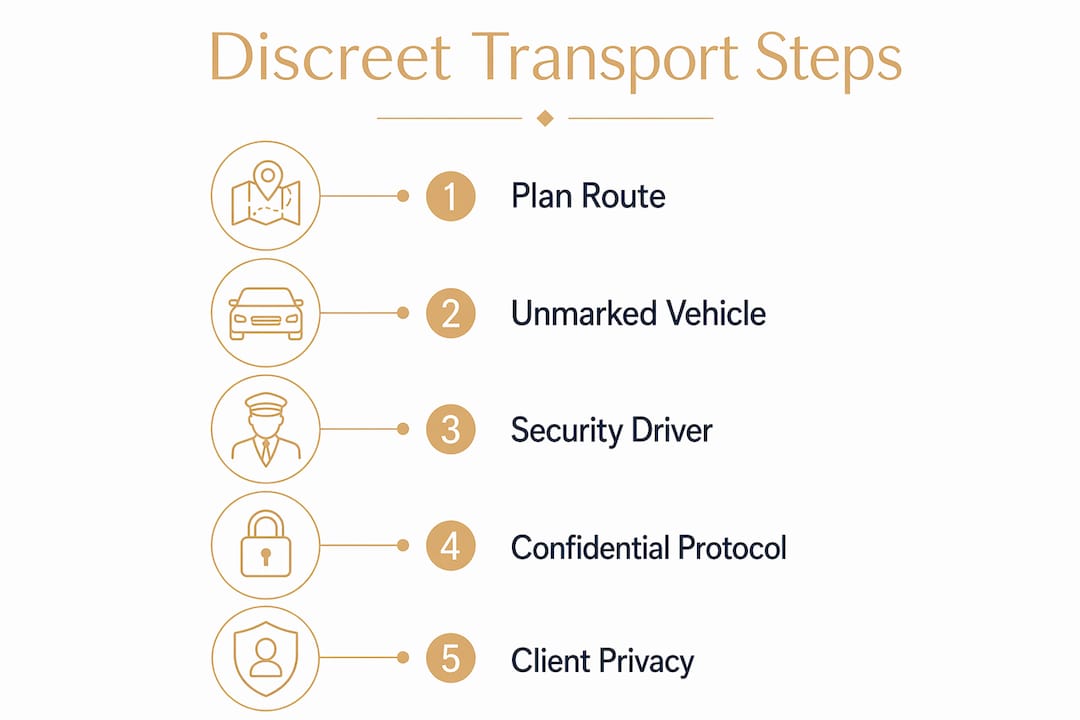
What are the key features of discreet transportation services?
The features that define discreet transport services fall into four clear categories: vehicles, personnel, planning, and information control.
Vehicles and equipment
- Unbranded, unmarked vehicles with no logos, livery, or identifying marks
- Enclosed transport for physical assets, which prevents photography and shields cargo from public view entirely
- Tinted windows and neutral colors that blend into normal traffic
- Clean, well-maintained interiors that avoid drawing attention through luxury signaling
Personnel
- Drivers trained as "quiet professionals" who manage arrivals and departures without attracting attention
- Staff who understand confidentiality agreements and never discuss client movements
- Personnel capable of operating under pressure without visible stress or erratic behavior
Advance planning
- Route reconnaissance conducted before the day of travel
- Counter-surveillance checks to identify and neutralize exposure risks in advance
- Alternate route planning for real-time adjustments
- Timing coordination to avoid peak crowd moments at venues or airports
Information control
- Client details shared only on a need-to-know basis within the operation
- Secure communication channels between driver, coordinator, and client
- No social media activity related to client movements by any team member
Pro Tip: Request a written confidentiality protocol from any transport provider before your first booking. A provider who cannot produce one in writing is not operating at the discreet transport standard.
How does discreet transportation work in practice?
The execution of a discreet transport service follows a structured sequence. Each step reduces exposure risk before the client ever enters the vehicle.
-
Initial briefing. The client or their representative shares travel details, risk tolerance, and any specific concerns. This information stays within the operation. Vetted personnel and live operation command are assigned based on the threat assessment.
-
Route planning and reconnaissance. The team surveys the route in advance, noting choke points, media presence, crowd patterns, and alternate exits. Advance coordination and risk assessment are the foundation of every successful discreet movement, not an afterthought.
-
Vehicle preparation. The assigned vehicle is checked, cleaned, and confirmed unbranded. For physical assets, enclosed transport is staged and locked before pickup.
-
Pickup execution. The driver arrives at a pre-agreed location, often a secondary entrance or private bay, not the main entrance. Timing is precise to minimize the window of exposure.
-
Transit management. The driver follows the planned route and monitors for any changes in real-time. If a situation changes, the alternate route activates immediately.
-
Arrival and handoff. The client or asset arrives at the destination through a controlled entry point. The operation closes with a debrief and confirmation that no exposure occurred.
This sequence applies whether the client is a celebrity managing VIP ground transport on short notice or a studio moving sensitive production materials across the city.
Pro Tip: For event-based transport, build a 30-minute buffer into every pickup window. Crowds and media presence shift quickly around live events, and that buffer gives the driver room to adapt without rushing.
What are the benefits of choosing discreet transport services?
The benefits of discreet transport go well beyond privacy for its own sake. Each benefit connects directly to a professional or financial outcome.
-
Media exposure prevention. Discreet transport protects against unwanted media attention and prevents sensitive information from leaking before a planned announcement or event. For entertainment clients, a single paparazzi photo at the wrong moment can undermine months of PR planning.
-
Asset protection. Enclosed, unbranded transport shields high-value physical assets from weather, road debris, and opportunistic photography. Timely arrivals protect project integrity and prevent knock-on delays for product launches or film releases.
-
Reputational risk reduction. Discreet transport safeguards personal and business information and reduces the chance of reputational damage from an uncontrolled public moment.
-
Client comfort and confidence. Knowing that every movement is planned and controlled reduces stress for the client. That confidence translates directly into better performance at meetings, events, and appearances.
-
Operational consistency. Unlike ride-sharing apps or standard taxi services, discreet transport providers use vetted drivers and premium vehicles every time. There is no variability in who shows up or what they know about your protocols.
The difference between a discreet transport service and a standard car service is the difference between a controlled environment and an open one. For anyone whose movements carry professional consequences, that difference is significant.
How to select a discreet transportation provider
Choosing the right provider requires asking specific questions, not just reviewing a vehicle fleet. The vehicle is the least important part of the operation.
What to look for in a provider
Verify that the provider uses an unbranded fleet. Any vehicle with a company logo, a magnetic sign, or a branded license plate frame defeats the purpose. Ask directly whether the fleet is marked or unmarked.
Confirm that drivers are trained beyond standard chauffeur certification. Discreet transport drivers operate as security-trained operators. Ask about their training background, how they handle media encounters, and whether they have experience with high-profile clients.
Request the provider's confidentiality protocol in writing. This should cover how client information is stored, who has access to it, and what happens if a breach occurs. Providers who treat this as a standard document rather than an unusual request are operating at the right level.
What to expect from the service
| Evaluation area | What a qualified provider delivers |
|---|---|
| Vehicle standards | Unmarked, enclosed options available; neutral colors; no branding |
| Driver qualifications | Security-trained, confidentiality-certified, experienced with VIP clients |
| Advance planning | Route reconnaissance, alternate plans, timing coordination |
| Information security | Written confidentiality agreement, need-to-know data sharing |
| Communication | Secure channels, single point of contact, real-time updates |
Clients seeking optimal privacy should verify unbranded fleets, confidential handling of client details, and comprehensive operational security protocols before committing to a provider. A provider who checks all five areas in the table above is operating at the professional standard.
Pro Tip: Ask for a reference from a client in a comparable industry. A provider with entertainment or executive clients who can speak to their confidentiality record is far more credible than one with only generic testimonials.
Key Takeaways
Discreet transportation works because it combines unmarked vehicles, security-trained drivers, advance route planning, and strict information control into a single coordinated operation.
| Point | Details |
|---|---|
| Core definition | Discreet transport means moving people or assets without public exposure, using unmarked vehicles and trained personnel. |
| Driver training matters | Security-trained "quiet professional" drivers are the most critical element, not the vehicle itself. |
| Planning prevents exposure | Advance route reconnaissance and counter-surveillance eliminate most risks before the trip begins. |
| Information control is non-negotiable | Written confidentiality protocols and need-to-know data sharing are baseline requirements for any qualified provider. |
| Benefits are professional, not just personal | Privacy protection, asset security, and reputational risk reduction all carry direct business value. |
Why discreet transport is more than a premium upgrade
I have seen clients treat discreet transportation as a status symbol, something they book because it sounds exclusive. That framing misses the point entirely, and it leads to poor decisions.
The real value of discreet transport is operational control. When you move without a plan, you hand control of your narrative to whoever happens to be watching. A paparazzi shot outside the wrong venue, a leaked location, a driver who mentions your name to the wrong person: these are not hypothetical risks. They are routine failures that happen when people treat transport as a commodity.
What I have found is that the clients who benefit most from discreet transport are not necessarily the most famous. They are the ones with the most to lose from a single uncontrolled moment. A studio executive moving unreleased materials, a talent manager coordinating a surprise appearance, a corporate client attending a sensitive negotiation: all of them need the same thing. They need the movement to be invisible.
The entertainment industry runs on timing and information control. White-glove studio transport and celebrity privacy protocols are not separate concerns from discreet transport. They are the same discipline applied to different contexts. Once you understand that, you stop asking whether discreet transport is worth it and start asking whether you can afford to skip it.
— Sammy
Rigaglobaltravel's approach to private client transport
Rigaglobaltravel provides discreet transport services built specifically for the entertainment industry, where confidentiality and timing are professional requirements, not preferences.
The fleet is unmarked, the drivers are vetted, and every movement is planned in advance with route reconnaissance and alternate options. Rigaglobaltravel operates across Los Angeles, New York, Miami, and Connecticut, covering studio runs, airport transfers, red carpet arrivals, and corporate events with the same operational standard. Clients receive a single point of contact, written confidentiality protocols, and real-time coordination from booking to arrival. For entertainment professionals who need discreet limousine service in Los Angeles or celebrity transport in New York, Rigaglobaltravel delivers the quiet professional standard every time.
FAQ
What does discreet transportation mean?
Discreet transportation means moving a person or asset from one location to another without attracting public attention, using unmarked vehicles, trained drivers, and planned routes to protect privacy and prevent exposure.
How is discreet transport different from a standard car service?
Standard car services prioritize comfort and punctuality. Discreet transport adds security-trained drivers, unbranded vehicles, advance route planning, and written confidentiality protocols to protect the client from any form of public exposure.
Who uses discreet transportation services?
Executives, entertainers, talent managers, and businesses moving high-value or sensitive assets use discreet transport. Any situation where a movement carries professional or reputational consequences qualifies.
What should I look for in a discreet transport provider?
Verify an unmarked fleet, security-trained drivers, a written confidentiality agreement, and documented advance planning procedures. Providers who cannot confirm all four in writing are not operating at the professional standard.
Is discreet transportation only for celebrities?
No. Discreet transport serves anyone whose movements carry risk, including corporate executives, legal professionals, and businesses transporting sensitive materials. The service is defined by the operational standard, not the client's public profile.