
Sports anchor hotel to venue transport is the coordinated ground transportation system that connects event hotels to sports venues on game day, covering everything from official shuttles to private car services. For the 2026 FIFA World Cup and other major events, this logistics layer determines whether fans arrive on time and stress-free or stuck in traffic paying surge prices. The right transport plan starts before you book your hotel. Rigaglobaltravel specializes in exactly this kind of coordinated event travel, serving fans and entertainment professionals across Los Angeles, Miami, and New York.
1. What are the most common sports anchor hotel to venue transport options?
The six most widely used transport modes for hotel to stadium travel are official event shuttles, charter buses, rideshare services, public transit, private car services, and walking or cycling for nearby hotels. Each serves a different traveler profile, budget, and group size.
Official event shuttles are the most structured option. For the 2026 FIFA World Cup, LA Metro shuttles run every 10 minutes at a flat $1.75 fare with no event surcharge. That pricing makes them the most budget-friendly choice for solo fans and families alike.
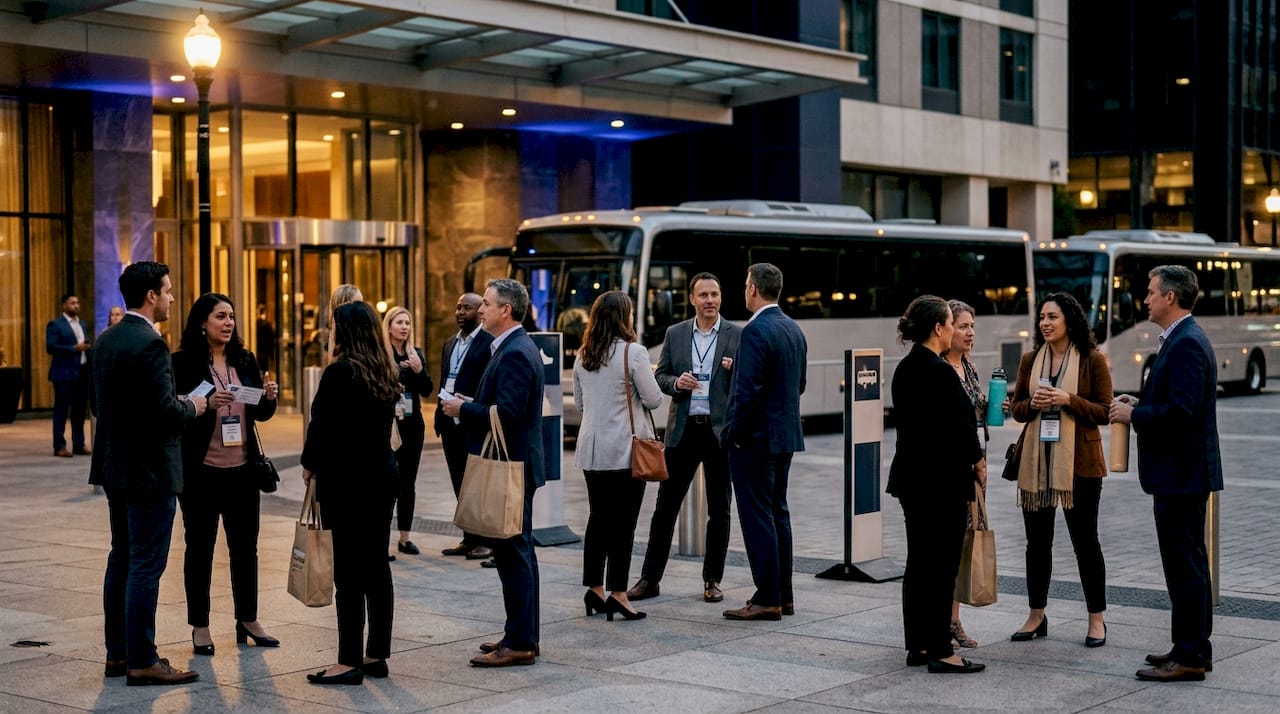
Charter buses and minibuses work best for groups of 15 or more. Charter buses provide direct, no-transfer routes from anchor hotels to venue drop-off points, removing the stress of navigation and parking. They are the standard choice for corporate groups and fan clubs.
Rideshare and taxi services offer flexibility but carry real risk on event days. Surge pricing during peak departure windows can multiply fares by three or four times the base rate. Pre-booking a rideshare or using a flat-rate car service removes that uncertainty entirely.
Public transit extensions during major events add capacity and extend operating hours. These services run on fixed routes and require fans to know the nearest stop to their hotel. They work well for fans staying along established transit corridors.
- Official event shuttles: lowest cost, fixed schedule, high reliability
- Charter buses: best for groups, direct routing, no transfers
- Rideshare: flexible but subject to surge pricing
- Public transit: affordable, requires route knowledge
- Private car services: premium comfort, fixed pricing, door-to-door
- Walking or cycling: viable only for hotels within one mile of the venue
2. How to choose the best hotel based on transit access to the venue
Hotel location is the single biggest variable in your game day transport plan. Hotels near stadiums often triple their prices on event weekends, while hotels 15 to 30 minutes away offer lower rates with solid transit access. That distance sweet spot is where experienced event travelers book first.
The key is to cross-reference hotel location against the official event transit map before booking. Experienced travelers prioritize hotels near shuttle hubs or designated pick-up zones, which eliminates the need for rideshare entirely. A hotel two blocks from a shuttle stop beats a hotel one block from the stadium at three times the price.
Transit maps for major 2026 events are published by host committees in cities including Los Angeles, Miami, Dallas, and New York. These maps show shuttle corridors, metro extensions, and designated drop-off zones. Booking a hotel on one of these corridors is the most reliable way to guarantee affordable venue shuttle services on match day.
Pro Tip: Search the official host committee website for your event city before booking your hotel. Download the transit map and filter hotel searches by proximity to marked shuttle stops, not just proximity to the stadium itself.
3. Key features and schedules of official shuttle services for major 2026 events
Official event shuttles for the 2026 FIFA World Cup follow a consistent operating model across host cities. Shuttles start 3.5 hours before kickoff and run up to 2 hours after the match ends, giving fans a wide window for arrival and a clear path home after the final whistle.
In Los Angeles, the LA Metro shuttle fare is $1.75 each way with no event surcharge. That flat rate applies regardless of match time or crowd size. Payment is accepted via cash, TAP card, or contactless tap-to-pay, which covers nearly every traveler.
Miami's Game Day Express Shuttle follows the same extended service model. Services run from 3.5 hours before to up to 2 hours after events, matching the LA Metro schedule. Miami's system is designed to absorb the volume of international fans arriving from South Beach and Brickell hotels.
| Feature | Detail |
|---|---|
| Service start time | 3.5 hours before kickoff |
| Service end time | Up to 2 hours after the match |
| LA Metro fare | $1.75 each way, no surcharge |
| Frequency (LA Metro) | Every 10 minutes |
| Payment methods | Cash, TAP card, contactless tap-to-pay |
The frequency of departures is what separates official shuttles from most alternatives. A 10-minute headway means fans never wait long, even when arriving close to kickoff. For game day VIP transport needs that go beyond standard shuttles, private car services fill the gap with fixed scheduling and direct routing.
4. Tips to avoid common transportation pitfalls before and after sports events
The most common mistake fans make is planning arrival transport without planning the return trip. Event-goers who neglect post-match plans face congestion, surge pricing, and long waits. The exit from a 70,000-seat stadium is a logistics problem that rewards anyone who plans for it in advance.
Rideshare surge pricing is the second most common pain point. Prices spike immediately after the final whistle when tens of thousands of fans open the same apps simultaneously. Pre-arranged pickups from a fixed location, or knowing the nearest shuttle return zone, eliminates that problem entirely.
- Book return transport before you leave the hotel, not after the game ends
- Identify the shuttle return zone at the venue before kickoff
- Avoid rideshare apps in the 30 minutes immediately after the event ends
- For groups, designate one person to manage the return transport plan
- Build a 45-minute buffer into your post-match schedule for exit congestion
Pro Tip: Screenshot the shuttle return zone map before you enter the stadium. Cell service is often unreliable inside large venues and immediately after events, so having the map saved offline saves real time.
Multi-leg trips that combine airport transfers, hotel check-in, and venue transport require a single coordinated itinerary. Fans who plan each leg connectedly report smoother event travel and far less stress on match day. Treating these as separate bookings is where most logistical problems start. For fans arriving from out of town, airport transfers for sports events are the first leg that sets the tone for everything that follows.
5. Comparing transport modes from anchor hotels to venues
Choosing the right mode depends on group size, budget, and how much flexibility you need. The table below covers the five main options across the criteria that matter most on game day.
| Transport mode | Cost | Capacity | Flexibility | Best for |
|---|---|---|---|---|
| Official event shuttle | Low ($1.75) | High | Low (fixed schedule) | Solo fans, budget travelers |
| Public transit extension | Low | High | Medium | Fans near transit corridors |
| Rideshare or taxi | Medium to high | 1–6 people | High | Small groups, flexible timing |
| Charter bus | Medium (per head) | 15–50+ people | Low (pre-booked) | Fan clubs, corporate groups |
| Private car service | High | 1–7 people | High | VIP travelers, entertainment professionals |
Environmental impact is a real consideration for large events. Official shuttles and public transit move far more fans per vehicle than rideshare or private cars, which reduces congestion around the venue significantly. Host committees for events like the FIFA World Cup actively promote shuttle use to manage traffic load near stadiums.
Accessibility is another factor that often gets overlooked. Official shuttles and metro extensions are required to meet ADA standards in the United States, making them the most reliable option for fans with mobility needs. Private car services like those offered by Rigaglobaltravel also accommodate accessibility requirements when booked in advance. Charter buses vary widely, so confirming accessibility features before booking is worth the extra step.
Key takeaways
The best hotel to venue transport plan combines an anchor hotel on an official shuttle corridor with a pre-arranged return trip, keeping costs low and eliminating game-day surprises.
| Point | Details |
|---|---|
| Book hotels on shuttle corridors | Hotels 15–30 minutes from venues offer lower rates and direct shuttle access. |
| Use official event shuttles | LA Metro and Miami Game Day Express run every 10 minutes at $1.75 with no surcharge. |
| Plan the return trip first | Post-match congestion and surge pricing hit fans who have no return plan. |
| Integrate all transport legs | Airport, hotel, and venue transport planned together reduces stress and cost. |
| Private services fill the gaps | For groups or VIP needs, fixed-rate car services eliminate surge pricing risk. |
Why I treat hotel selection and transport as one decision
I've watched fans spend weeks researching the best seats in the stadium and 20 minutes picking a hotel. That imbalance costs them every time. The hotel is not just where you sleep. It is the starting point of your entire event day, and its location determines every transport option available to you.
The fans who have the smoothest game days are the ones who opened the official transit map before they opened a hotel booking site. They filtered by shuttle stop proximity, not star rating. They knew their return zone before kickoff. That level of preparation sounds excessive until you're standing outside a stadium at 11:00 PM with 60,000 other people and no plan.
My strongest recommendation is to treat the anchor hotel and venue transport as a single planning problem. Pick the hotel that puts you on the right corridor. Book the return leg before you leave for the game. If you're traveling with a group or need reliability that public transit cannot guarantee, a private car service with fixed pricing and a dedicated driver is worth every dollar. The math changes completely when you factor in surge pricing, parking fees, and the time cost of standing in a rideshare queue at midnight.
— Sammy
Rigaglobaltravel for your event transport needs
Rigaglobaltravel provides chauffeured limousine and concierge transport for fans, entertainment professionals, and corporate groups attending major events across Los Angeles, Miami, and New York. Every booking includes fixed pricing, direct routing, and a professional driver who knows the venue approach and exit logistics.
For the 2026 FIFA World Cup and other major events, Rigaglobaltravel coordinates hotel pickup, venue drop-off, and post-match return as a single itinerary. That means no surge pricing, no waiting in rideshare queues, and no logistics surprises. Limousine service in Los Angeles and New York chauffeur service are available for individual travelers and groups. Visit Rigaglobaltravel to plan your event transport from hotel to venue and back.
FAQ
What is sports anchor hotel to venue transport?
Sports anchor hotel to venue transport is the coordinated ground transportation that connects event hotels to sports venues on game day, covering shuttles, private cars, and public transit. The "anchor hotel" refers to an officially designated or strategically located property tied to the event's transport network.
How much do official event shuttles cost for the 2026 FIFA World Cup?
LA Metro event shuttles cost $1.75 each way with no event surcharge, payable by cash, TAP card, or contactless tap-to-pay. Miami's Game Day Express Shuttle follows a similar low-cost model for World Cup matches.
How far in advance should I book hotel transport to a stadium?
Book your hotel based on shuttle corridor access before finalizing the reservation, and arrange private or charter transport at least two to four weeks before the event. Post-match return transport should be confirmed before you leave the hotel on game day.
How do I avoid rideshare surge pricing after a game?
Pre-arranged pickups from a fixed location or using official shuttle return zones are the most reliable ways to avoid surge pricing. Waiting 45 to 60 minutes after the crowd disperses also reduces rideshare rates significantly.
What transport option works best for large fan groups?
Charter buses and private car services are the best fit for groups, offering direct routing and fixed pricing without transfers. Dedicated shuttle services reduce parking and navigation stress for groups of any size traveling from anchor hotels to venues.