
Multi-city sports tour transport is the coordinated movement of athletes, staff, and fans across multiple event cities using multi-leg flights, charter buses, and ground transfers, all timed to protect recovery and keep equipment synchronized. This is the industry term for what sports travel professionals call "multi-leg event logistics," and understanding it separates a smooth tour from a chaotic one. Whether you follow a team through a playoff run or chase a World Cup bracket across three countries, the transport structure behind each leg determines how well you arrive. Rigaglobaltravel works in this space daily, managing ground logistics for high-profile clients who cannot afford a missed connection or a lost equipment case.
What does multi-city sports tour transport mean for each travel leg?
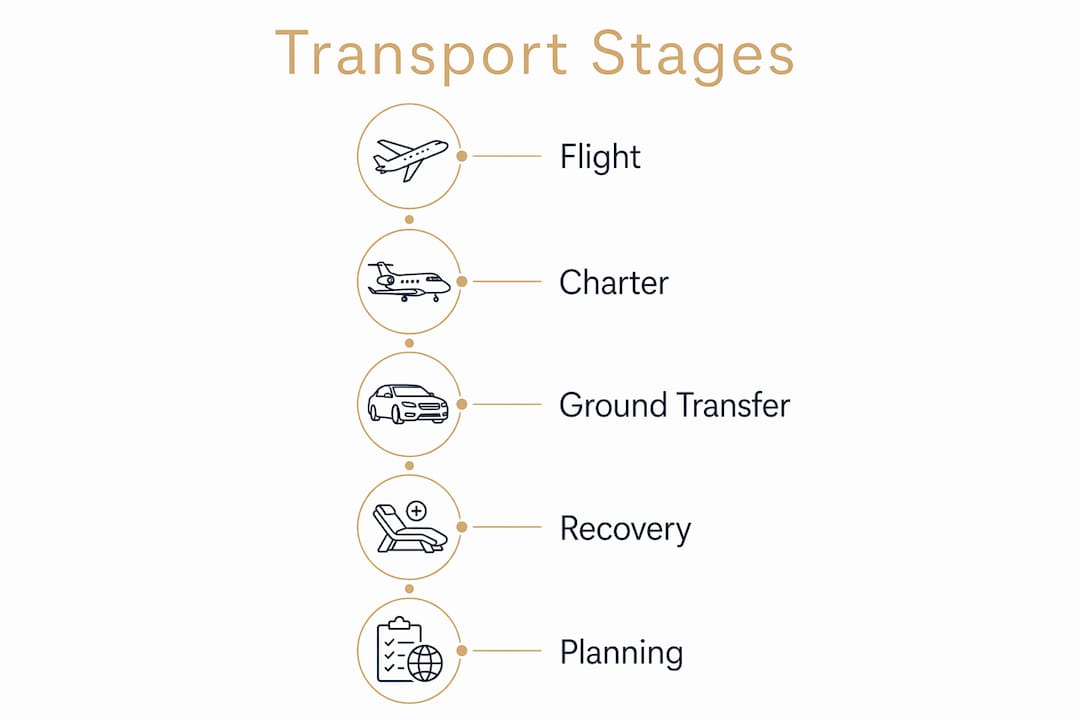
Multi-city sports tour transport covers three distinct movement types, and each one serves a different purpose in the overall itinerary.
Multi-leg flights form the backbone of any tour that crosses regional or international boundaries. Unlike round-trip tickets, multi-city flight bookings allow travelers to route through event cities without backtracking, which saves both time and money compared to separate one-way fares. Airlines and booking platforms support multi-leg itineraries specifically for this reason.
Charter buses handle regional travel within a roughly 300-mile service radius. Charter services for sports teams coordinate entire rosters, hotel logistics, and equipment transport under one contract, giving teams dedicated cargo space that standard coaches do not provide. The team stays together, gear stays accounted for, and scheduling stays precise.
Ground transfers cover the last mile: airport to hotel, hotel to venue, venue back to airport. This leg is the most time-sensitive and the most frequently mismanaged. A hotel-to-venue transfer that runs late can cost an athlete a warmup session or a fan their seat before kickoff.
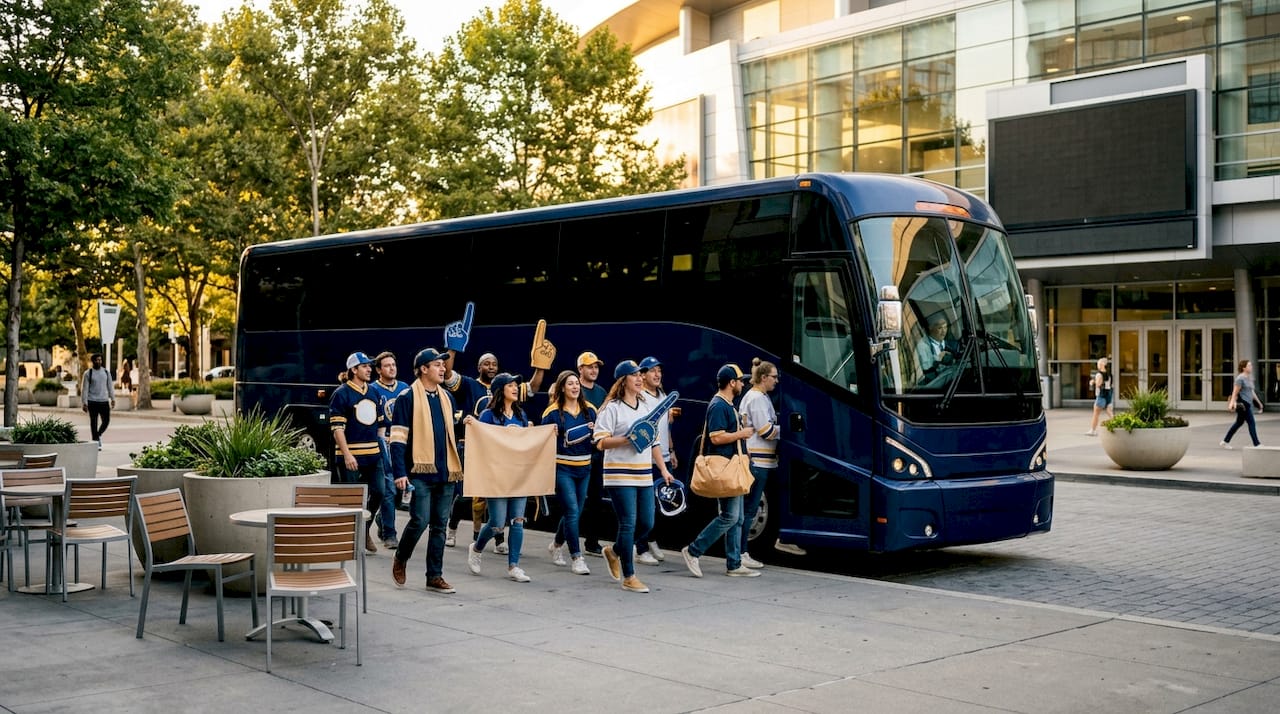
The three modes work in sequence. A long-haul flight gets you to the city. A charter or regional transit option gets the group to the host area. A ground transfer gets each person to the right door at the right time. Treating any one leg as an afterthought breaks the chain.
How does sports tour transport integrate recovery and performance?
Recovery is not a bonus feature in multi-city sports travel. It is a scheduling constraint that shapes every booking decision.
The standard recovery guideline calls for budgeting one day per 3–4 time zones crossed, with an additional 48–72 hours of recovery recommended after long-haul flights of eight or more hours across four or more time zones. That math changes departure windows, layover choices, and arrival targets for every leg of the tour.
Experienced travel planners build recovery into the itinerary using four practices:
- Schedule arrivals at least 48 hours before competition when crossing four or more time zones, giving the body time to reset its circadian rhythm before performance demands peak.
- Use purposeful layovers of 6–16 hours in airport hotels or lounges rather than rushing the fastest connection. Purposeful layovers designed for rest improve arrival-day energy far more than a two-hour transit sprint.
- Coordinate flight timing with match schedules so that post-match travel does not begin within the first hour after final whistle. Crowds, equipment handling, and adrenaline all extend the real departure window.
- Build 2–4 hour buffers after every match before any connecting flight. Booking without post-match buffers is the single most common failure point in sports tour itineraries.
Pro Tip: Book your post-match flight based on the realistic egress time, not the official match end time. Add at least two hours for crowd exit, equipment loading, and ground transfer to the airport.
Ignoring recovery buffers does not just affect athletes. Fans who push through back-to-back travel days without rest arrive at the next venue exhausted and miss the full experience they paid for.
What logistical challenges are unique to multi-city sports tours?
The biggest misconception in sports tour planning is that transport means moving people. Elite sports travel logistics require synchronizing a full performance ecosystem: athletes, coaching staff, medical personnel, training equipment, and recovery gear, all arriving at the same place at the same time.
- Equipment complexity: Medical kits, physiotherapy tables, training tools, and team uniforms travel on separate manifests from passengers. A charter bus setup for a sports team differs significantly from a standard coach because it must accommodate synchronized transport of medical and training gear alongside the roster.
- Real-time rerouting: Flight delays, weather cancellations, and sudden schedule changes are routine in multi-city tours. Major sports travel operations use 24/7 follow-the-sun support to handle disruptions without losing the thread of the itinerary. This capability proved critical during World Cup 2026 group travel coordination, where multi-city itineraries shifted on short notice.
- Accommodation synchronization: Hotels must be booked in proximity to venues, with check-in times aligned to arrival windows. A ground transfer that arrives at 2:00 AM to a hotel that cannot check in until 3:00 PM destroys the recovery plan.
- Technology tools: Time-zone scheduling software and flight monitoring platforms give travel managers visibility across all legs simultaneously, flagging conflicts before they become missed connections.
"Successful sports transport management requires overseeing a performance ecosystem where athletes, staff, medical gear, and training equipment all arrive synchronized. The misconception is focusing only on moving people when the entire support structure must travel as one unit."
The game-day VIP transport layer adds another coordination requirement for high-profile teams and media talent, where vehicle type, timing, and discretion all matter equally.
How can sports fans plan their own multi-city sports tour travel?
Sports fans planning multi-city event travel face the same core challenges as professional teams, just at a smaller scale. The principles of understanding multi-city sports trips apply whether you are following an NBA playoff bracket or attending three Champions League matches in two weeks.
Multi-city tickets vs. separate one-way fares is the first decision. Multi-city bookings route you through event cities in sequence, avoiding backtracking and often reducing total cost. Separate one-way fares give more flexibility but require manual coordination and typically cost more in aggregate.
Clustering event cities is the most underused planning tactic. Grouping events by geographic proximity reduces total flight time and cuts layover complexity. A fan attending matches in New York, Boston, and Philadelphia can use ground transport for all three legs rather than booking three separate flights.
| Planning approach | Best for | Key trade-off |
|---|---|---|
| Multi-city flight booking | Tours spanning 3+ cities across regions | Less flexibility to change dates |
| Separate one-way fares | Tours with uncertain schedules | Higher cost, more coordination |
| Regional ground transport | Cities within 300 miles of each other | Slower but simpler logistics |
| Charter group booking | Fan groups of 10 or more | Requires advance commitment |
Flexible tickets cost more upfront but pay back that premium when match schedules shift or a team advances further than expected in a tournament bracket. Locking in non-refundable fares around a bracket that has not been decided is a common and expensive mistake.
Pro Tip: Use local transit options like event shuttles, trains, and rideshares for same-day venue access. Many host cities run dedicated event shuttles that bypass traffic entirely and drop fans at the stadium gate.
For the final leg, airport transfer planning matters more than most fans realize. A pre-booked ground transfer with a confirmed pickup time removes the post-match scramble for a rideshare in a city where every other fan is doing the same thing at the same moment.
Key Takeaways
Multi-city sports tour transport requires coordinating flights, charters, and ground transfers as one system, with recovery time and equipment logistics built into every leg.
| Point | Details |
|---|---|
| Core definition | Multi-city sports tour transport links multiple event venues using multi-leg flights, charter buses, and ground transfers in sequence. |
| Recovery scheduling | Budget one day of recovery per 3–4 time zones crossed, and 48–72 hours after long-haul flights across four or more time zones. |
| Post-match buffers | Add 2–4 hours after every match before any connecting flight to account for crowds and equipment handling. |
| Performance ecosystem | Transport must synchronize people, medical gear, and training equipment together, not just move the roster. |
| Fan planning tactics | Cluster event cities geographically, use multi-city tickets, and pre-book ground transfers to avoid post-match chaos. |
What I have learned from watching sports tours go wrong
The tours that fall apart almost never fail because of bad flights. They fail because someone treated the transport legs as independent bookings rather than one connected system.
I have seen fan groups book three separate one-way fares for a three-city tour, each at the cheapest available time, with no buffer between match end and departure. The first leg worked. The second leg worked by luck. The third leg missed because a match went to extra time and the post-game crowd added 90 minutes to the exit. That is not bad luck. That is a planning gap that a 2-hour buffer would have closed.
The recovery piece surprises people the most. Fans assume they can push through fatigue because they are not competing. But arriving exhausted at a venue you have traveled across six time zones to reach is a waste of the entire investment. A purposeful 8-hour layover in a hotel near the connecting airport feels like lost time on paper. It shows up as energy, focus, and actual enjoyment at the next event.
My strongest advice: plan the tour around the matches, not around the cheapest fares. The fare savings from a tight connection rarely cover the cost of a missed event or a rebooking fee. And when the tour involves more than two cities or crosses multiple time zones, bring in a professional ground transport provider for the last-mile legs. That is where the itinerary either holds together or unravels.
— Sammy
How Rigaglobaltravel supports your sports tour ground logistics
Sports tours that reach New York, Los Angeles, Miami, or Connecticut need ground transport that matches the pace and precision of the rest of the itinerary.

Rigaglobaltravel specializes in luxury ground transport for entertainment and sports clients who need reliable, on-time service with no margin for error. From airport arrivals to venue transfers, every booking includes professional chauffeurs who understand event schedules and post-match timing. Rigaglobaltravel's celebrity and talent transport service extends to sports professionals, fan groups, and media teams traveling across major event cities. When your multi-city tour reaches its next stop, the ground leg should be the one thing you do not have to think about.
FAQ
What does multi-city sports tour transport mean?
Multi-city sports tour transport is the coordinated use of multi-leg flights, charter buses, and ground transfers to move athletes, staff, or fans between multiple event cities while managing recovery time and equipment logistics.
How many time zones can you cross before needing a recovery day?
The standard guideline calls for one recovery day per 3–4 time zones crossed, with 48–72 hours recommended after long-haul flights of eight or more hours across four or more time zones.
Why are post-match buffers important for sports tour flights?
Post-match crowds, equipment handling, and ground transfers routinely add 2–4 hours to the real departure window. Booking a flight based on the official match end time without that buffer is the most common cause of missed connections on sports tours.
What is the difference between a charter bus and a standard ground transfer?
A charter bus for sports teams provides dedicated cargo space for medical and training equipment alongside the full roster, coordinated under one contract. A standard ground transfer moves passengers only, without the specialized equipment capacity sports teams require.
When should a sports fan use a multi-city flight booking instead of separate one-way fares?
Multi-city bookings work best for tours covering three or more cities across different regions, where routing in sequence avoids backtracking and reduces total cost. Separate one-way fares suit tours with uncertain or flexible schedules where dates may shift.