
Most chauffeur services give you a free grace period ranging from a few minutes up to about half an hour for standard pickups, longer windows for airport arrivals, and unlimited waiting on hourly bookings since you're already paying for the driver's time. The clock usually starts at your scheduled pickup time for standard rides, but at actual arrival for flights, since providers track your arrival directly. Every operator sets its own exact numbers in the fine print, so the details below explain what to expect and where Riga Global Travel's own chauffeur wait time policy lands relative to the industry.
Here's what typically triggers billing once the free window closes:
- Per-minute or per-increment charges after the grace period ends
- No-show fees if the chauffeur can't reach you and departs
- Full fare charges for unreported cancellations close to pickup time
Key Takeaways
Predictable wait time outcomes depend less on the exact grace period minutes and more on whether an operator tracks arrivals and communicates delays before fees apply.
| Point | Details |
|---|---|
| Standard pickup grace period | Expect 10 to 30 minutes free, with the clock starting at your scheduled time, not chauffeur arrival. |
| Airport wait windows run longer | Flight and train pickups often get about 30 minutes free since arrival tracking removes the guesswork. |
| Hourly bookings absorb wait time | Waiting is included in your booked hours, so no separate fee applies during en-route stops. |
| Documentation settles disputes | Flight tracking logs and timestamped texts or calls are what operators use to grant refunds. |
| Riga Global Travel builds in tracking | Its airport transfers use real-time flight tracking and proactive dispatch outreach to reduce billing surprises. |
Table of Contents
- Wait Times at a Glance for Common Booking Types
- How Standard Pickup Wait Times Are Measured
- Why Airport and Train Pickups Get Longer Grace Periods
- Do En-Route Stops and Hourly Rides Get Billed Differently?
- How Wait Fees and No-Show Charges Actually Get Calculated
- How to Avoid Wait Fees When Plans Change
- Riga Global Travel's Approach to Wait Time and No-Shows
- How Wait Time Policies Shape Customer Experience
- Legal Considerations Around Chauffeur Wait Fees
- Best Practices for Chauffeurs Managing Wait Times
- What Actually Matters More Than the Grace Period Number
- Book Ground Transportation With Wait Time Built In
- Sources
Wait Times at a Glance for Common Booking Types
A quick reference before you book:
- Standard pickups (hotel, home, office): a brief free waiting period, clock starts at the scheduled time
- Airport, port, or train pickups: longer free waiting periods to accommodate travel delays, clock starts when the flight or train actually arrives
- Hourly and by-the-hour bookings: waiting is included in your booked hours, no separate fee
Regional operators and luxury services vary these windows, so confirm the exact terms in your booking confirmation before you travel.
How Standard Pickup Wait Times Are Measured
For a hotel, residence, or venue pickup, the wait clock almost always starts at your scheduled pickup time, not whenever the chauffeur physically arrives. A driver who shows up 15 minutes early doesn't start your grace period early. Most reputable operators build in a buffer so chauffeurs arrive ahead of schedule, then wait quietly until your requested time before the free window even begins.
Complimentary windows for standard pickups commonly run from several minutes up to around half an hour. After that, billing typically switches to per-minute charges or 15-minute increments. If you're running late, dispatch will usually attempt a call or text before declaring a no-show, and most companies will extend your wait if you respond and confirm a new arrival estimate.
- Grace period: 10 to 30 minutes is standard
- Billing: per-minute or 15-minute blocks after the grace period
- No-show trigger: typically follows one or more failed contact attempts
Pro Tip: Text your driver or dispatch the moment you know you're running late. A two-minute heads-up almost always buys you extra wait time without a fight over fees later.
Why Airport and Train Pickups Get Longer Grace Periods
Flights and trains run on schedules that airlines and rail operators control, not the passenger. That's why airport, port, and train station pickups typically carry longer complimentary wait times, especially for international arrivals that involve customs and baggage claim.
The FAA's guidance on weather-related delays makes clear how quickly arrival windows shift when storms or air traffic congestion hit. That unpredictability is exactly why chauffeur services build in longer buffers for airport runs than for a simple home pickup.
Most operators also link your booking to real-time flight or train tracking, so the wait clock starts when your flight actually lands, not when it was originally scheduled to land. That single change eliminates most disputes over airport wait fees. The DOT's air travel consumer guidance outlines what passengers can expect when flights are delayed or diverted, and that same delay data is what feeds your chauffeur's tracking system.
For serious delays, expect:
- Automated or dispatcher outreach once your flight status changes
- Rescheduling or a fresh chauffeur assignment if the delay stretches for hours
- A request for your new arrival details so tracking stays accurate
Do En-Route Stops and Hourly Rides Get Billed Differently?
Waiting during your ride works on a different logic than waiting for your ride to start. Here's the breakdown:
- Quick stops under five minutes (grabbing a coffee, dropping a bag) are usually free on point-to-point bookings.
- Longer stops, like a 20-minute retail run or a meeting that overshoots its window, are typically billed per minute or per increment once you cross the free threshold.
- Hourly and day-rate bookings absorb all of this automatically, since you're paying for the vehicle and driver's full time block regardless of how it's spent.
If you know a stop will run long, tell dispatch before you leave rather than after. Extending an hourly booking is a quick phone call. Getting billed retroactively for an unplanned 40-minute wait on a point-to-point fare is not.
How Wait Fees and No-Show Charges Actually Get Calculated
Two billing models dominate the industry: per-minute charges and per-increment blocks (often 15 minutes). Sample rates published by individual operators illustrate the range you'll typically see, though every company sets its own numbers. One example, a local operator's published wait time policy, shows the kind of specific per-minute charges and no-show windows that are common practice, not universal law.
No-show policies generally follow a pattern: the grace period expires, dispatch attempts contact by phone and text, and if there's no response after a set window (commonly 10 to 15 minutes past the grace period), the ride is marked a no-show and a fee or full fare applies. Terms of service pages, like one operator's published policies, commonly authorize charging the card on file for no-shows and excess wait time unless you've arranged otherwise in writing.
Documentation wins disputes. Flight tracking logs, text timestamps, and call records are what most operators actually look at before issuing a refund or waiving a fee.
Some providers also maintain formal accommodations for riders with disabilities, allowing fee waivers or adjustments with appropriate documentation, a pattern seen in Lyft's published wait-time policy. It's not universal, but it signals how flexible good operators can be when circumstances warrant it.
- Per-minute billing is more common on point-to-point rides
- Per-increment billing (15-minute blocks) shows up more with luxury and corporate fleets
- Refunds are far easier to secure with a timestamped record of your attempt to communicate
How to Avoid Wait Fees When Plans Change
Most wait fee disputes come down to one missing detail: communication. Here's how to stay ahead of it.
- Always enter your flight or train number and a direct cell phone at booking, so tracking and outreach work automatically.
- If you're delayed, call dispatch as soon as you know, not after you've already missed your window.
- Ask explicitly for a wait extension and get a name or confirmation number for the call.
- Keep your own record: screenshots of texts, call logs with timestamps, and your flight tracker's delay confirmation.
- If a fee still lands wrong, submit that documentation directly and reference your booking confirmation number.
Pro Tip: Screenshot your flight tracking app the moment you land, even if everything's going smoothly. If a dispute comes up later, that timestamp is worth more than any argument.
Riga Global Travel's Approach to Wait Time and No-Shows
Riga Global Travel treats airport and non-airport pickups differently, in line with the wider industry, and builds flight tracking directly into its airport transfer service so pickup timing follows actual arrival rather than the printed schedule. Hourly bookings include driver waiting time as part of the rate, which matters most to production crews and executives whose schedules shift by the hour, not the minute.
For productions and corporate accounts, the bigger value isn't the grace period itself, it's what backs it up:
- Proactive dispatch outreach before a delay becomes a dispute
- Transparent, itemized invoicing so wait charges never arrive as a surprise
- Custom retainer terms for productions with recurring, high-volume bookings
- Regional coverage, including Connecticut operations, for clients working across multiple markets
If your production or account needs a bespoke wait-time arrangement, that's a conversation Riga Global Travel has regularly, not an exception to the rule.
How Wait Time Policies Shape Customer Experience
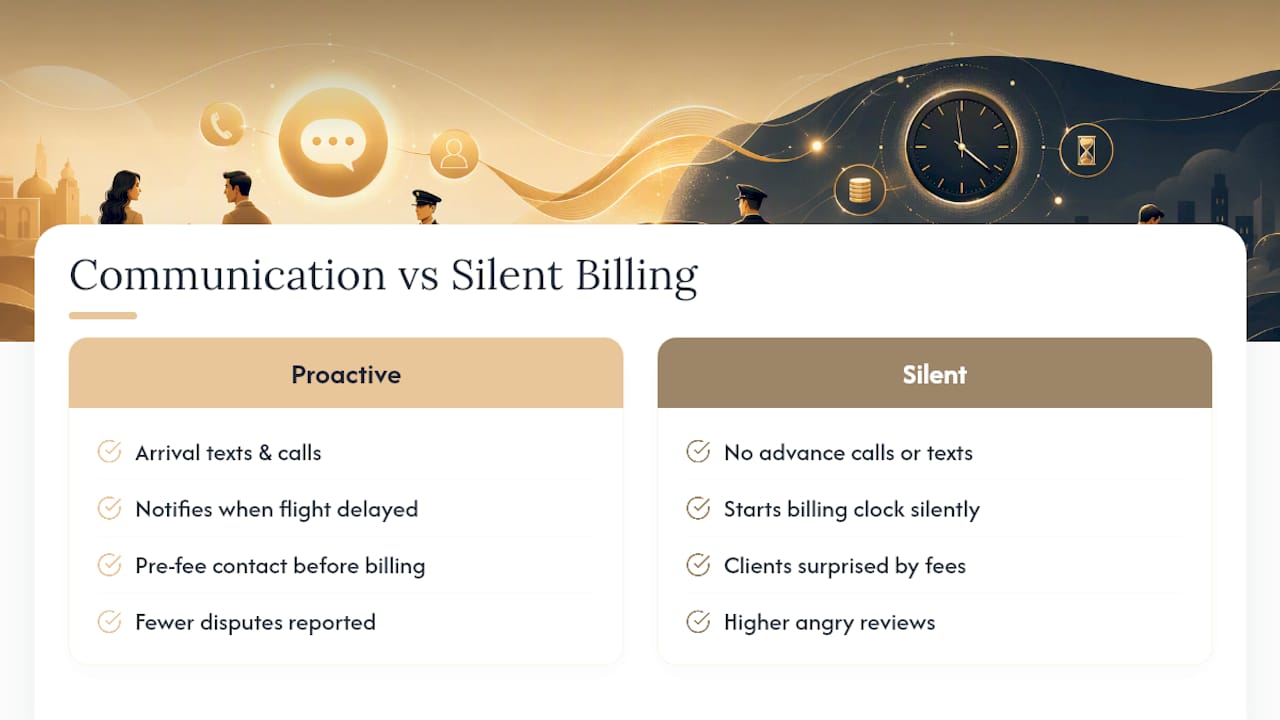
A generous grace period means nothing if the driver never tells you it's running out. The single biggest driver of bad reviews in ground transportation isn't the fee itself, it's the surprise. A client who gets a text saying "your flight's delayed, we've adjusted your pickup, no charge" walks away satisfied even when their flight is three hours late. A client who gets hit with an unexplained $45 wait charge on their invoice a week later walks away furious, even if the fee was technically justified under the terms they agreed to.
This is where the gap between policy and execution becomes obvious. Two companies can have the identical 30-minute airport grace period on paper and deliver wildly different experiences, because one calls you when your flight's delayed and the other just starts the billing clock silently. Corporate accounts and production companies, who often book dozens of rides a month, learn quickly which operators communicate and which ones don't. That reputation compounds. A single billing dispute handled badly can cost an operator a recurring account worth far more than the disputed fee.
Transparent terms and conditions language, especially around grace periods and per-minute billing, correlates directly with fewer disputes and better repeat-booking rates. The National Limousine Association encourages operators to build clear, proactive communication into their wait-time policies for exactly this reason: predictability, not generosity, is what actually earns trust.
Legal Considerations Around Chauffeur Wait Fees
Wait time and no-show fees are contractual, not regulatory. There's no federal law setting a mandatory grace period for chauffeur services, which means the specific minutes and dollar amounts you'll encounter come entirely from each operator's terms of service. That's why reading the fine print before you book matters more than assuming an industry standard applies.
What is regulated is the information those terms have to convey clearly, and how billing authorization has to work. If an operator's terms allow charging the card on file for wait fees or no-shows, that authorization typically has to be disclosed in the agreement you accept at booking, not introduced retroactively on an invoice. This is standard consumer-contract practice across the ground transportation industry, and it's why the Bureau of Labor Statistics' industry overview classifies chauffeured transport within a broader passenger transportation sector that operates under general consumer-protection and contract law rather than a dedicated wait-time statute.
Where things do get more regulated is around accessibility. Operators serving riders with disabilities often maintain documented waiver or refund processes for wait charges, reflecting broader accommodation expectations that apply across the transportation industry. If you have a documented condition that affects boarding time, ask about this directly. It's a reasonable request, not a special favor.
The practical takeaway: your rights here come from the contract you agreed to at booking, so save that confirmation email. It's your strongest evidence in any dispute.
Best Practices for Chauffeurs Managing Wait Times
The best chauffeurs treat wait time as a communication problem first and a billing problem second. A driver who texts "I've arrived and I'm parked out front" the moment they're in position starts building goodwill before the grace period even matters. One who sits silently for 25 minutes and then calls to say "your fee just kicked in" has already lost the client, regardless of whether the charge was fair.
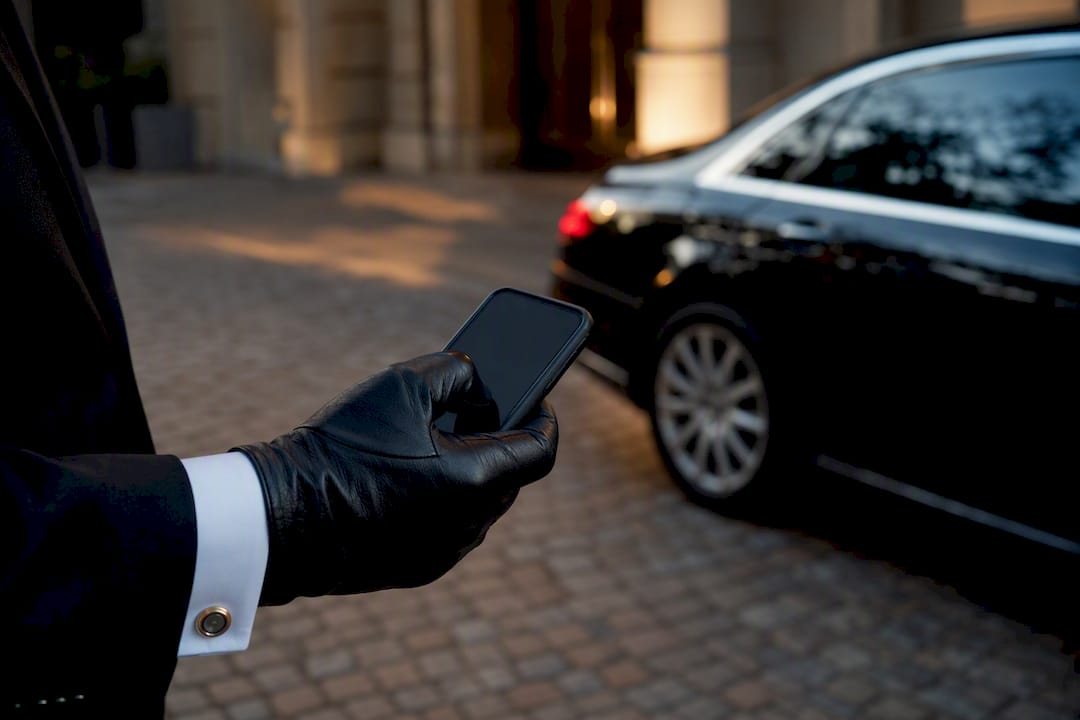
Good dispatch teams stagger their outreach: a text at arrival, a call attempt near the halfway point of the grace period, and a final call before any no-show designation. That rhythm gives clients multiple chances to respond without feeling hounded, and it gives the chauffeur a paper trail if a dispute happens later.
On the balancing side, chauffeurs and dispatchers who manage high-volume corporate or production accounts learn to weigh strict fee enforcement against the value of the relationship. A first-time 12-minute overage on a client who books rides five times a week is rarely worth the billing fight. Waiving it costs the company a few dollars and buys real loyalty. The chauffeurs who last in this industry aren't the ones who enforce every minute on the clock. They're the ones who know which minutes are worth enforcing.
Clear scheduling also prevents most problems before they start. Building in traffic buffers, confirming pickup addresses the night before, and flagging potential delays to dispatch early all reduce the odds that a wait-time policy ever needs to be invoked at all.
What Actually Matters More Than the Grace Period Number
Most guides treat the grace period like it's the whole story: memorize the minutes, compare them across companies, done. That misses what actually determines whether a wait fee dispute goes badly. It's not the number of minutes in the policy. It's whether the operator tells you the clock is running before it becomes a problem.
I'd argue the conventional advice, "find the company with the longest free wait time," is backwards. A 45-minute grace period from an operator who never calls you is worse than a 20-minute window from one who texts the moment your flight lands and proactively extends without you asking. Communication closes the gap between a fair policy and a good experience. The policy is just the fallback.
What you should actually prioritize when booking: ask how the company handles flight tracking and delay communication, not just how many minutes are free. Get that answer in writing if the booking matters, a production schedule, an executive pickup, anything with real cost if it goes wrong. The minutes on paper rarely cause the dispute. The silence in between does.
Book Ground Transportation With Wait Time Built In
If you've read this far, you already know the real risk isn't the grace period, it's booking with an operator who can't tell you where your driver actually stands. Riga Global Travel builds flight and train tracking into every airport pickup and keeps dispatch proactive on delays, so wait time stops being a guessing game for productions, executives, and corporate accounts juggling tight schedules.

Hourly and day-rate bookings include driver waiting time as part of the rate, and corporate accounts can arrange custom retainer terms that spell out wait-time handling in writing before the first ride ever happens. That matters most for production companies coordinating dozens of pickups across a shoot schedule, where one bad wait-time surprise can throw off an entire day.
If you're booking in Los Angeles, start with the Los Angeles limousine and airport service page to see current availability and request a quote with your flight details attached. For New York productions and executives, the New York service page covers the same tracking and dispatch setup. Either way, get your booking confirmation in writing before travel day, and you'll have the exact grace period and billing terms on hand if anything shifts.
Sources
- Air Travel Consumer Reports and passenger rights | U.S. Department of Transportation
- Weather and NextGen FAQ | Federal Aviation Administration
- National Limousine Association (NLA)
- Transportation and warehousing: industry overview | BLS