
The fastest way to remove friction from an international talent arrival is a production-grade ground transport service that pairs live flight tracking with a curbside meet-and-greet and the right vehicle already staged. That's it. That's the whole international talent arrivals process boiled down to what actually prevents a blown call time: someone watching the flight before it lands, a single point of contact who knows the manifest cold, and a vehicle sized for the traveler and their gear.
For productions moving performers and crew through LAX, JFK, Newark, LaGuardia, or Miami, the non-negotiables are the same every time:
- Real-time flight monitoring that accounts for immigration and customs delays, not just wheels-down time.
- One named coordinator the production can call, not a dispatch queue
- Curbside or gate-adjacent meet-and-greet, staged where airport rules actually allow it
- The correct vehicle class booked in advance: sedan or SUV for talent, Sprinter or mini-coach for departments
Riga Global Travel builds arrivals around this model. If you're booking now, confirm your point of contact and lock the flight number today.
Key Takeaways
A reliable international talent arrivals process depends on flight tracking, a single point of contact, terminal-specific staging knowledge, and vehicles matched to the traveler before the plane lands.
| Point | Details |
|---|---|
| Lock the manifest first | One shared, version-controlled document prevents duplicate bookings and lost seats. |
| Track flights actively | Monitor gate, taxi time, and customs delays, not just scheduled landing time. |
| Match vehicle to role | Sedans and SUVs for talent, Sprinters or mini-coaches for crew and equipment. |
| Confirm curb access ahead | Terminal staging permits vary by airport and change without notice. |
| Riga Global Travel fit | Offers flight-tracked meet-and-greet, a mixed production fleet, and 24/7 coordination for entertainment productions arriving in the U.S. |
Table of Contents
- Immediate Pre-Arrival Checklist You Can Run Now
- Pre-Arrival Planning: Booking Windows and Manifest Control
- Day-Of Arrival: Flight Monitoring, Terminals, and Vehicle Handling
- Contingency Playbook: Delays, Late Wraps, and Multi-Stop Pickups
- Riga Global Travel: What to Expect and What to Ask For
- Quarantine and Health Protocols for Arriving Talent
- Accommodation Arrangements and Arrival-Day Coordination
- Local Transportation Beyond the Airport Run
- Cultural Orientation and Support for Arriving Talent
- What the Data Actually Says About Arrival Risk
- Book Riga Global Travel for Your Next International Arrival
- Sources
Immediate Pre-Arrival Checklist You Can Run Now
Before you touch a vehicle booking, get the traveler data locked down. Every production that avoids arrival-day chaos does these four things, in roughly this order, at least 48 to 72 hours out for domestic connections and further out for anything routed through a secondary international gateway.
- Collect and secure traveler details. Passport name (exactly as it appears on the document, not the call sheet nickname), flight number, arrival terminal, hotel or set address, and a working mobile number. Store this in one shared, access-controlled document, not scattered texts.
- Match vehicle type to traveler role. A lead actor gets a sedan or SUV with privacy glass; a six-person camera department gets a Sprinter. Decide this before the airport, not curbside.
- Negotiate grace time in writing. Confirm how many minutes of wait time is built into the rate, and what happens after that, before the traveler ever boards.
- Name one production POC and one driver/agent contact. Two phone numbers, no dispatch hold music, no "let me check and call you back."
Then confirm the staging protocol at the specific arrival terminal. Some terminals allow curbside pickup; others push private vehicles to a designated lot, and finding that out after the plane lands is how a principal ends up standing in a rideshare queue.
Pro Tip: Text the traveler's flight number to your ground transport coordinator the moment it's ticketed, not the morning of. A flight number entered into a tracking system 10 days early catches equipment swaps and route changes that a same-day glance would miss.
Pre-Arrival Planning: Booking Windows and Manifest Control
Production travel doesn't behave like corporate travel, and treating it that way is where most arrival plans start to leak. Crew schedules shift, call sheets move by a day, and a wrap date that looked solid three weeks ago can slide overnight. Production travel coordination requires longer lead times and more frequent changes than typical corporate itineraries, which means the booking window has to build in slack the same way a shooting schedule does.
For talent and department heads, book ground transport as soon as the flight is ticketed, ideally two to three weeks out. For crew flying into secondary or international gateways, or anyone traveling with heavy equipment cases, push that further out. Freight-adjacent bookings and specialty vehicle requests fill up faster than a standard sedan reservation, and last-minute substitutions rarely match the original spec.
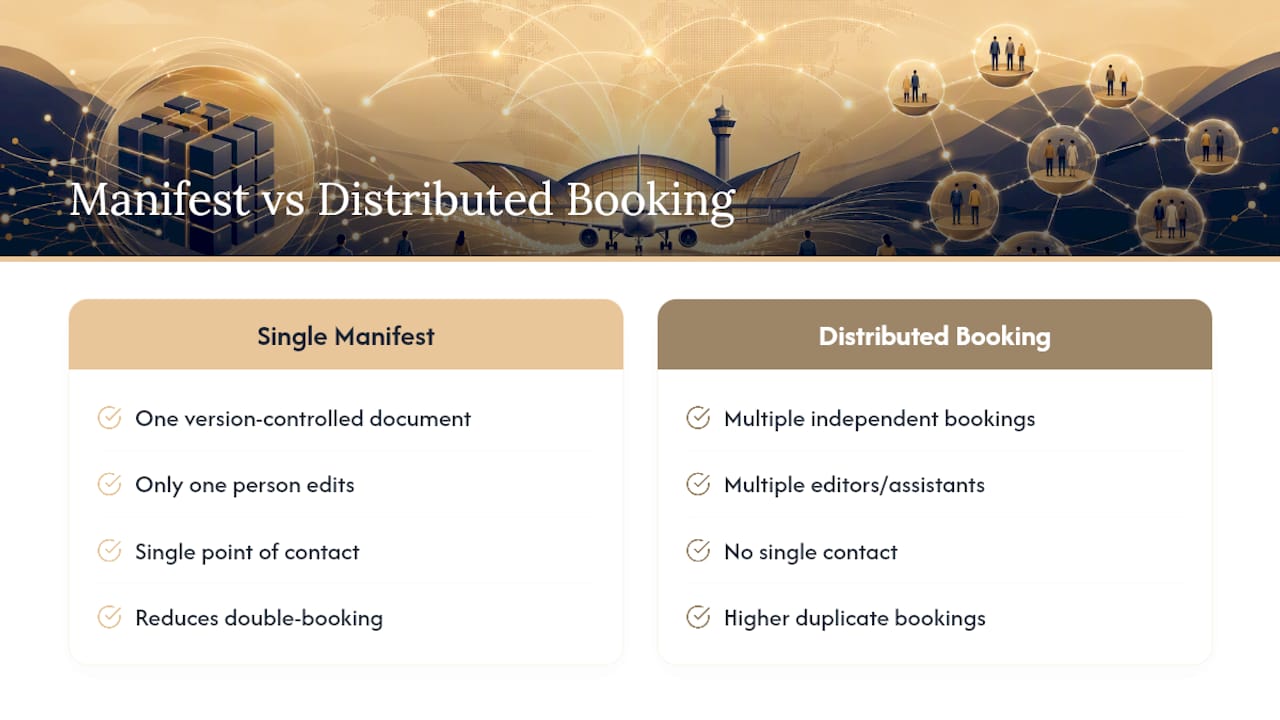
The single biggest failure point isn't the booking itself. It's duplication. When three different assistants each book a car for the same actor because nobody checked a shared list, someone gets stranded and someone gets billed twice. A version-controlled travel manifest, one document everyone references and only one person edits, closes that gap. A single point of contact managing a consolidated manifest helps reduce double-booking and rebooking friction compared to distributed booking across multiple assistants or departments.
Block-book vehicles and hotel holds against the call sheet itself, not against individual flight confirmations, and choose refundable or changeable options wherever the budget allows. A locked-in, non-changeable rate looks efficient on a spreadsheet until the shoot schedule moves and the booking becomes dead weight.
Finally, fold ground transport into whatever travel management workflow already tracks flights for the production. Notification flows (delay alerts, gate changes, rebooking confirmations) should reach the driver and the coordinator simultaneously, not sequentially. Factor driver hold fees and potential overtime into the production budget line up front. It's cheaper to plan for a two-hour buffer than to negotiate an overtime rate at 11 p.m. curbside.
Day-Of Arrival: Flight Monitoring, Terminals, and Vehicle Handling
On arrival day, the work shifts from planning to execution, and execution lives or dies on how well someone is watching the flight. A competent agent isn't just checking if the plane landed; they're tracking gate assignment, taxi time, and how long immigration and customs processing is running that day, because international arrivals carry real variability even after wheels-down.
Each major terminal has its own rhythm:
- LAX (Tom Bradley International Terminal): TBIT is one of North America's busiest international arrival points, and pre-booked private cars typically meet passengers curbside specifically to avoid the LAX-IT rideshare lot, which can add 20 to 30 minutes on a busy day.
- JFK (Terminal 4): International arrivals concentrate here, and curb congestion during peak banks makes a pre-confirmed staging spot worth arranging ahead of time rather than circling.
- Newark (EWR): A strong option for productions based in Manhattan or northern New Jersey, with somewhat less curb pressure than JFK on most days.
- LaGuardia (LGA): Mostly domestic, but relevant for connecting crew arriving from a coastal gateway before the final international leg.
- Miami (MIA): Heavy Latin American and European traffic; customs processing times swing widely depending on the hour.
Meet-and-greet protocol should be decided before landing, not negotiated at the gate. Some talent prefers a driver holding a discreet sign near baggage claim; others want the greeter at the jet bridge or gate to avoid public terminal exposure entirely, a choice terminal-specific meet-at-gate protocols can meaningfully reduce at high-traffic international terminals. Either way, luggage assistance should be handled by the greeter, not left for the traveler to manage alone through a crowded hall.
Vehicle selection follows the traveler, not the budget line. A principal gets a sedan or SUV; department shuttles run on a Sprinter or mini-coach; production-focused transfer operators built around film and TV work typically maintain a broader fleet mix specifically to flex between talent and crew needs on the same arrival day. Camera packages, wardrobe cases, and anything oversized should trigger a separate freight-capable vehicle rather than cramming gear into the trunk of a talent car. Confirming curbside staging rights ahead of time also matters more than most productions realize. Airports issue specific permits governing where charter and specialized transport vehicles may stage, and a driver without the right clearance can get pushed to a remote lot minutes before your talent lands.
Contingency Playbook: Delays, Late Wraps, and Multi-Stop Pickups
Ground transfers are consistently the most fragile link in a production travel plan, more fragile than the flight itself, because a delayed plane is predictable while a scrambling ground team often isn't. Build the contingency plan into the booking before anyone needs it.
- Set hold-time and overtime terms in writing at booking. Define exactly how long a driver waits at the agreed rate before overtime kicks in, and what the overtime rate is.
- Build a same-day reassignment process. When a call sheet shifts and three arrivals suddenly overlap, someone needs the authority to reroute a vehicle from one pickup to another without waiting for sign-off.
- Separate equipment moves from passenger moves early. Decide in advance whether gear travels in its own freight vehicle or a passenger van with cargo space, and flag anything crossing international shipping rules (an ATA carnet situation) to whoever on the production handles customs paperwork.
- Keep an escalation ladder with two names, not one. If the primary coordinator doesn't answer within five minutes, the second contact takes the call. A short template text ("Flight delayed 45 min, hold at curb, will confirm gate") beats a phone call nobody has time to take.
None of this replaces good planning. It just means a late wrap or a diverted flight doesn't turn into a lost afternoon.
Riga Global Travel: What to Expect and What to Ask For
Riga Global Travel runs limousine and concierge service built specifically around entertainment industry logistics, not adapted from a general airport shuttle model. That distinction shows up in the details: flight-tracked meet-and-greet at major U.S. gateways, a fleet that ranges from executive sedans to Sprinters and mini-coaches for larger crew moves, and 24/7 account coordination so a delayed flight at 1 a.m. still reaches a real person.
When your production requests a proposal, ask for specifics, not generalities:
- Exact scope of the flight monitoring (which data feed, how far ahead of landing alerts trigger)
- Confirmed staging and curb access rights at the arrival terminal, not just "we'll figure it out"
- Whether drivers sign NDAs and are briefed on production etiquette before the pickup date
- The written wait-time and overtime policy
- Vehicle specs by traveler type, confirmed against your actual manifest
Riga's entertainment-focused celebrity and talent transportation service covers exactly this kind of coordination for New York arrivals, and the city-specific Los Angeles limousine service page details LAX-specific staging.
| Point | Details |
|---|---|
| Lead with the answer | Book a production-grade transfer with flight tracking and a named coordinator before anything else. |
| Confirm curb access early | Terminal staging rules vary; verify permits before the driver arrives. |
| Match vehicle to traveler | Sedans and SUVs for talent, Sprinters or mini-coaches for crew and gear. |
| Riga Global Travel option | Offers flight-tracked meet-and-greet, a mixed fleet, and 24/7 coordination for entertainment productions. |
Quarantine and Health Protocols for Arriving Talent
Health-related entry requirements for international arrivals have changed substantially over the past few years, and most current U.S. entry does not involve quarantine holds for typical commercial travelers. That said, productions still need a plan for the occasional traveler flagged for secondary screening, or a performer arriving with a known health condition that requires coordination with a physician on standby.
Build this into the transport plan by having your driver or agent prepared for extended wait times without treating them as an emergency. A traveler pulled for additional screening at customs can add 30 minutes or more to an arrival window, and the driver should already know to hold rather than assume something went wrong. Productions working with talent who have documented medical needs should loop in whoever handles production insurance before arrival day, not after, so the ground transport team knows whether a medical escort or accessible vehicle is required. This is a coordination question, not a transportation one, but it belongs on the same checklist as the flight number and hotel confirmation.
Accommodation Arrangements and Arrival-Day Coordination
The car that meets the plane should already know exactly where it's going, and that means hotel or housing confirmation needs to be locked before the traveler boards, not sorted out in the car. Productions booking block rooms for cast and crew should share the confirmed address and check-in contact with the ground transport coordinator at the same time the flight manifest goes out, not as an afterthought.
For longer stays, some productions arrange furnished corporate housing instead of a hotel, particularly for principals on multi-week shoots. Either way, the driver needs a name to ask for at check-in and a working number for whoever handles the property, so a late-night arrival doesn't turn into standing in a lobby waiting for someone to find a key. If the accommodation itself requires security clearance or a private entrance, that information belongs in the same manifest document as the passport name and flight number, so nothing gets lost between departments.
Local Transportation Beyond the Airport Run
Airport pickup is the highest-stakes leg, but it's rarely the only one. Talent and crew on location typically need daily transport to set, wrap-day returns, off-hours trips for meals or fittings, and occasional after-hours moves that don't fit a fixed schedule. Treating these as one-off bookings, arranged fresh each time, is how productions end up paying premium last-minute rates for a ride that could have been part of the original ground transport plan.
The more efficient approach folds daily set transport, shuttle runs for larger departments, and on-call availability into the same vendor relationship used for the airport pickup. A provider already familiar with your call sheet, your talent's preferences, and your production's etiquette requirements moves faster on a Tuesday afternoon than a new booking would. Reliant Transportation is one option productions use for coordinated shuttle and set-transport needs alongside airport transfers, particularly on larger crew moves where a single fleet relationship simplifies scheduling.
Cultural Orientation and Support for Arriving Talent
International performers and crew arriving for a U.S. shoot are navigating more than jet lag. Unfamiliar tipping norms, different traffic patterns, time zone adjustment, and basic questions about local dining or pharmacy access can slow someone down in the first 48 hours in ways that have nothing to do with the production schedule itself.
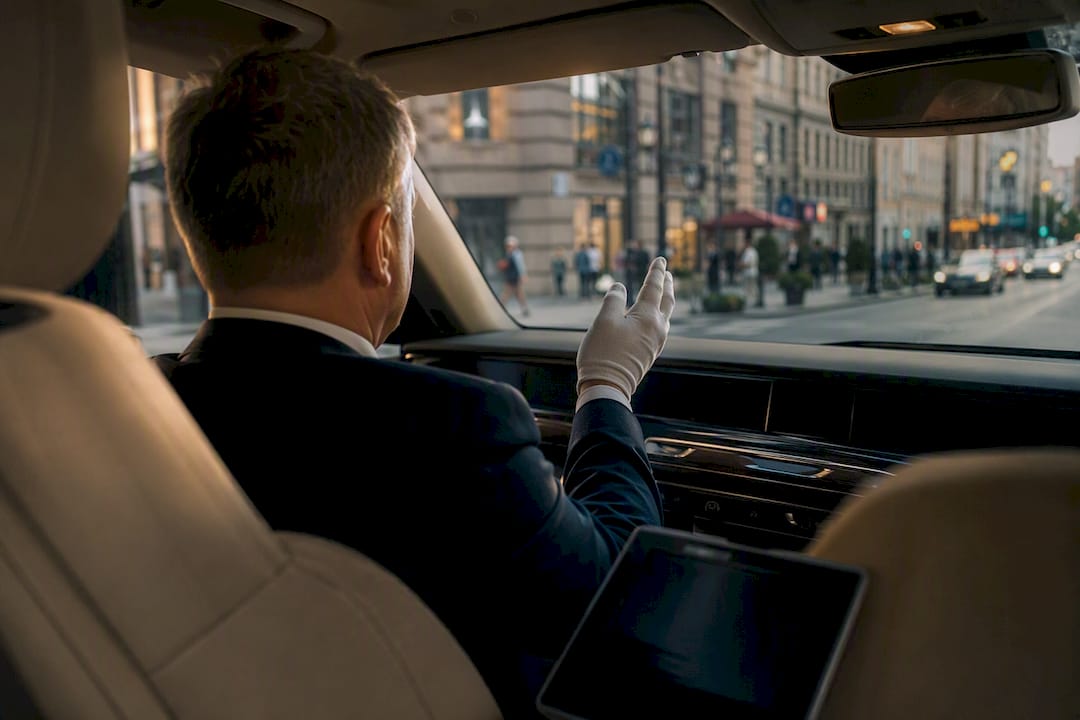
A driver who's also a genuine local resource, someone who can answer "where's a decent coffee near the hotel" or "how do I get a SIM card here," does more for a talent's first impression than a silent airport transfer ever will. This is part of why entertainment-specific ground transport providers train chauffeurs differently than a standard car service does: the job includes light concierge support, not just navigation. Productions that flag cultural or logistical support needs in advance, dietary restrictions, mobility considerations, a preferred language for the greeter, give their transport provider the chance to actually prepare instead of improvising at the curb.
What the Data Actually Says About Arrival Risk
Most guidance on international talent arrivals still reads like it was written for a corporate executive catching a connecting flight, and that framing undersells how much can go wrong on a production day specifically. The conventional advice, book a car, track the flight, done, treats the airport-to-set transfer as a single event instead of what it actually is: the most fragile link in the entire production travel chain, more fragile than the flight itself because a plane delay is predictable and a scrambling ground team often isn't.
What gets underrated is manifest discipline. Productions spend real money on flight tracking apps and fleet upgrades while three different assistants quietly book the same car for the same actor because nobody owns one shared document. That's not a technology problem. It's a process problem, and it's the cheapest one to fix.
If there's one thing to prioritize first, it's naming a single point of contact before the plane takes off, not after it lands. Everything else, terminal choreography, vehicle class, contingency triggers, works only when one person actually owns the manifest.
— Sammy
Book Riga Global Travel for Your Next International Arrival
Riga Global Travel is the option built for exactly the scenario this article covers: international talent and crew landing at a major U.S. airport with a production schedule that can't absorb delays. Where a standard car service hands you a confirmation number and hopes the flight lands on time, Riga assigns flight-tracked coordination and a single point of contact who already knows your manifest before the wheels touch down.
That difference matters most at the terminals covered in this piece: LAX's TBIT, JFK's Terminal 4, Newark, LaGuardia, and Miami all have their own staging quirks, and Riga's teams work those curbs regularly rather than learning them on your production's arrival day. The fleet runs from executive sedans and SUVs for talent up through Sprinters and mini-coaches for full departments, with vehicles matched to your call sheet in advance rather than assigned same-day.
If you're planning arrivals into New York, check the New York limousine service page for city-specific staging details, or request a quote directly through Riga Global Travel with your flight numbers and manifest ready to share.
Sources
- Tom Bradley International Terminal LAX arrival guide | LAXToGo
- Film production crew travel guide | Worldgo
- Efficient airport transfer for film crews NYC | Empire Limo Transfer
- Permits and opportunities | Sacramento airports