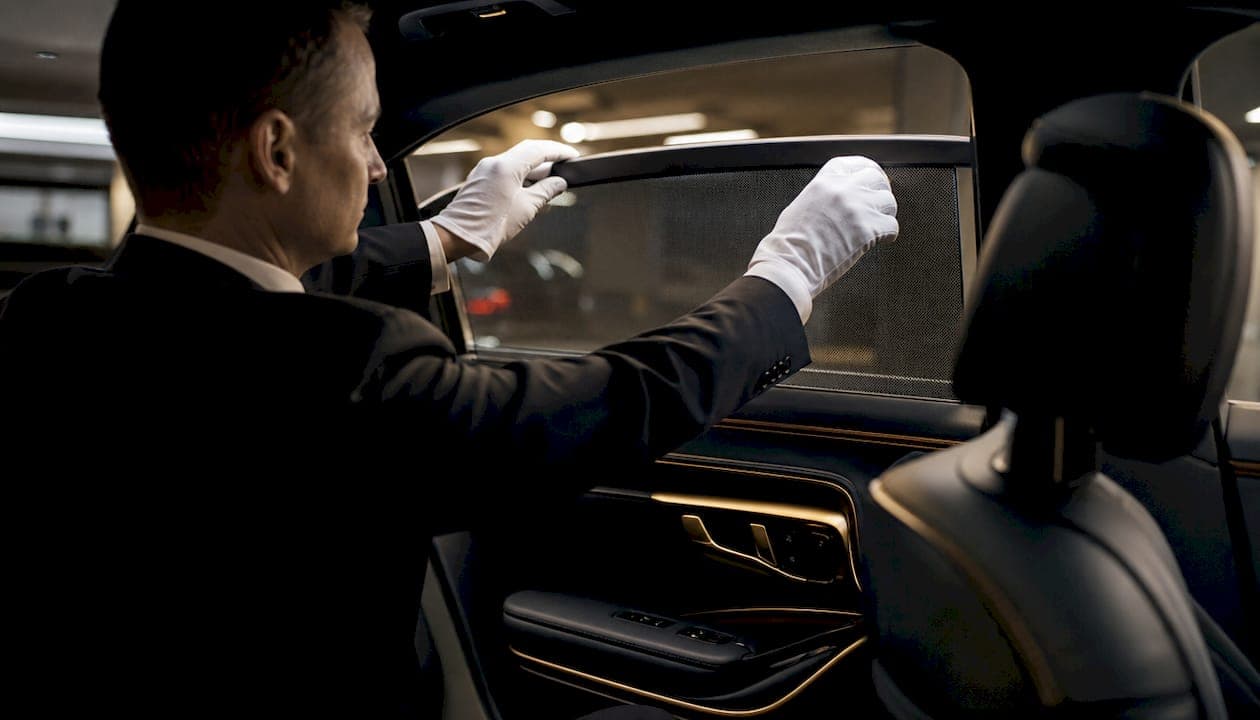
Celebrity privacy transportation relies on four layers working together: vetted personnel, unmarked vehicles chosen to blend in rather than stand out, layered security coordination with the client's own protective team, and encrypted communications that limit who knows the route before it's driven. No single tactic protects a high-profile client. The combination does.
- Personnel: background-checked chauffeurs and protective drivers bound by nondisclosure agreements
- Vehicles: low-profile SUVs and sedans, tinted glass, no branding
- Logistics: flexible staging, alternate pickup points, decoy routing
- Technology: compartmentalized comms, geofenced telematics, live traffic and flight data
- Legal: NDAs, data retention limits, contract-based confidentiality
Riga Global Travel builds its celebrity and talent transportation services around exactly this model, coordinating directly with client security teams rather than treating ground transport as a separate, disconnected leg of the trip.
Pro Tip: Ask any prospective provider to walk you through a contingency scenario, not just their standard pickup process. How they handle a blown route tells you more than their fleet photos ever will.
Key Takeaways
Reliable celebrity privacy transportation depends on vetted staff, low-profile vehicles, layered security coordination, and contracts that limit information exposure without pretending to eliminate all risk.
| Point | Details |
|---|---|
| Personalization drives risk reduction | Match vehicle type, staffing, and staging to each client's exposure level and itinerary volatility. |
| Vetting is non-negotiable | Background checks and signed confidentiality agreements should cover every staff member with client contact. |
| Coordination prevents cascading failures | Dispatch teams need real-time flight and traffic data, backup vehicles, and a documented escalation procedure. |
| Technology helps only when compartmentalized | Encrypted comms, managed burner numbers, and geofenced telematics reduce leak risk when access stays limited. |
| Riga Global Travel builds proposals around this model | Its celebrity and talent transportation service pairs vetted chauffeurs with direct coordination with client security teams. |
Table of Contents
- What Makes Celebrity Privacy Transportation Personalized?
- What Security Measures Protect Celebrities During Transport?
- How Do Dispatch Teams Keep Privacy Plans Reliable?
- What Technology Keeps Celebrity Transportation Discreet?
- What Do NDAs and Contracts Actually Protect?
- How Do You Choose a Celebrity Transportation Provider?
- What Does an Operator Actually See From the Driver's Seat?
- Need Discreet, Security-Minded Celebrity Transport?
- Sources
What Makes Celebrity Privacy Transportation Personalized?
Personalization is the single most important risk-reduction step in celebrity privacy transportation, because a generic transport plan is a predictable one, and predictable is exactly what exposes a client to cameras, crowds, or worse.
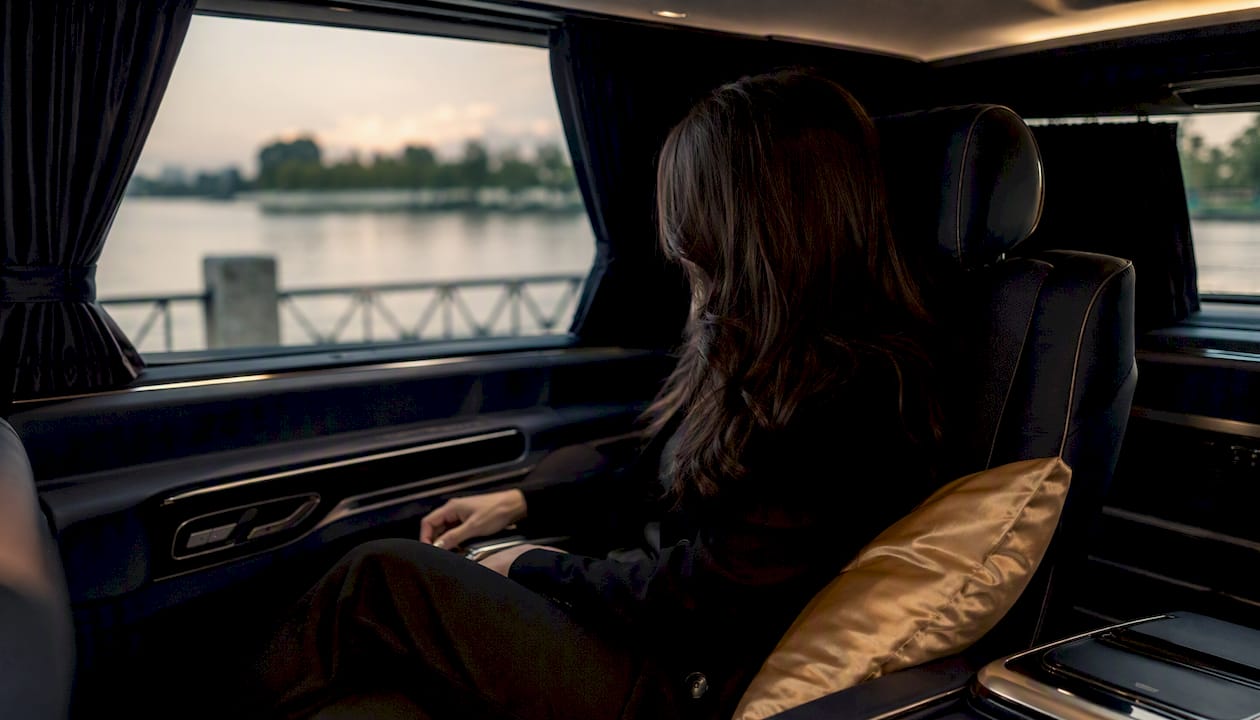
A real intake process digs into specifics: how recognizable is this client right now, is the itinerary likely to shift on short notice, what venues are involved, and does arrival timing need to dodge a known camera position or a scheduled crowd. Vehicle selection follows from those answers. A solo executive slipping into a hotel side entrance needs a sedan that disappears into valet traffic. A touring artist with an eight-person team needs a Sprinter van and a chase vehicle. A film unit moving between set and hotel might need a small coach. Staff roles shift too. Sometimes the job calls for a standard chauffeur; sometimes it calls for a protective driver trained in evasive routing and coordinated with a security lead.
A solid personalization checklist includes:
- Itinerary flexibility built into the contract, not added as an afterthought
- Pre-identified staging locations away from public entrances
- Decoy vehicle usage for high-exposure events
- Entourage size confirmed before vehicle assignment, not the day of
Pro Tip: If a provider quotes you a vehicle type before asking about your itinerary's exposure risk, that's a sign they're selling inventory, not planning security.
What Security Measures Protect Celebrities During Transport?
The core security controls in professional celebrity transport are staff vetting, deliberate route planning, secure staging, and backup vehicles held in reserve. Miss any one of these and the other three matter less.
Driver and staff vetting starts with background checks and extends into confidentiality agreements that cover not just clients but anything witnessed during a job. Riga Global Travel's approach to private chauffeurs treats discretion as a trained skill, not a personality trait.
Route and timing tactics matter just as much. Operators plan alternate routes in advance, adjust departure windows around traffic surges, and use decoy staging at airports where paparazzi tend to camp near known VIP exits. Vehicle tactics reinforce all of it: unbranded paint, tinted glass, and luggage handling procedures that keep bags out of frame rather than stacked in plain view on a curb.
Emergency planning rounds out the picture:
- Backup vehicles staged within minutes of the primary route
- Alternate pickup points identified before departure, not improvised mid-trip
- Real-time rerouting authority given to the driver or dispatch, not locked behind approval chains
- Direct coordination lines with venue security or local law enforcement when needed
The U.S. Secret Service's approach to protective operations, built on advance site surveys and layered communication protocols, mirrors much of what private operators now build into standard proposals.
Any serious proposal should show you vetted staff records, a written contingency plan, and a clear communications chain.
Pro Tip: Ask for a sample contingency plan before signing anything. A provider without one on hand probably improvises in the field, and improvising is where privacy leaks start.
How Do Dispatch Teams Keep Privacy Plans Reliable?
Coordination is what turns a privacy plan on paper into a privacy outcome on the ground, and pressure is exactly when weak coordination shows.
Dispatch teams track flight status in real time and adjust staging windows accordingly. Bureau of Transportation Statistics data on travel-time variability and airport congestion is exactly the kind of input serious operators build buffer time around, rather than guessing. Redundancy matters too: spare vehicles, backup drivers, and multiple staging points mean one delay doesn't cascade into a canceled plan. Coordination with client security teams, venue staff, and production crews closes the loop, since transportation is only as private as the weakest link in that chain.
Before booking, ask whether the provider offers:
- 24/7 monitoring during active engagements
- A documented escalation procedure for delays or route changes
- Written staging plans shared with your security lead in advance
Pro Tip: A provider that can't name their escalation contact by title, not just "we'll figure it out," probably hasn't tested their own process under pressure.
What Technology Keeps Celebrity Transportation Discreet?
Secure, compartmentalized communication and careful data handling are what actually reduce leak and tracking risk. Fancy tracking apps mean nothing if the wrong person has access to them.
That means encrypted messaging for route details, managed burner numbers issued per engagement, and device hygiene rules for staff who might otherwise text personal phones with pickup times. Telematics get used carefully too: limited telemetry sharing, geofencing around staging zones only, and strict data retention limits so historical route data doesn't sit around indefinitely. Live flight tracking and traffic feeds, the same industry shift Forbes has documented toward low-visibility tactics, help minimize how long a client spends exposed at a curb or gate.
Pro Tip: Technology backfires when it's overly visible. A driver checking a public flight tracker app on a personal phone in front of a client is a privacy risk, not a solution.
What Do NDAs and Contracts Actually Protect?
NDAs and confidentiality contracts reduce the risk of internal leaks, but no contract makes privacy airtight.
Standard elements include nondisclosure clauses for every staff member with client contact, prohibitions on photography or recording, and clear data handling and retention rules for manifests, call logs, and itineraries. Enforcement has real limits. Lawsuits over leaked information are possible but slow, and public interest arguments or jurisdictional gaps can weaken a case. Serious operators document chain of custody for sensitive data, tracking who accessed a manifest and when.
- NDAs signed by every staff member, not just drivers
- Photo and recording prohibitions built into employment terms
- Data retention limits stated explicitly, not left vague
- Documented access logs for manifests and route sheets
The Secret Service's public guidance on protective communications offers a useful benchmark for how seriously an operator should treat information control, even outside government contexts.
Pro Tip: Ask what happens to your itinerary data 30 days after the trip. If the answer is "we keep it," that's a retention policy problem, not a privacy solution.
How Do You Choose a Celebrity Transportation Provider?
Prioritize demonstrated privacy protocols, vetted staff, documented contingency planning, and contract terms you can actually read and understand. Everything else is secondary.
During vetting, ask for:
- Proof of background checks on drivers, not just a verbal assurance
- A sample contingency plan for route disruption
- References from production companies or talent agencies, not just individual clients
- Confirmation of insurance coverage appropriate to high-profile transport
- A signed NDA template you can review before booking
On the first call, ask how they handle a last-minute itinerary change and how many backup vehicles they keep staged during an active engagement. Vague answers on either question are a red flag.
Riga Global Travel structures proposals around exactly this checklist, and readers ready to move forward can reach out through the celebrity and talent transportation page for a privacy-focused quote.
Pro Tip: A provider who answers contingency questions with specifics, not reassurances, has probably faced the scenario before.
What Does an Operator Actually See From the Driver's Seat?
The best privacy work is invisible by design: a decoy vehicle pulling away from a side entrance while the real pickup happens two blocks over is routine, not dramatic. Riga Global Travel's operational teams build that kind of staging into standard planning, drawing on years of coordinating with production and security staff across entertainment industry engagements.
Need Discreet, Security-Minded Celebrity Transport?
Most transportation companies sell you a car. Riga Global Travel builds a privacy plan around your itinerary, then puts a vetted chauffeur and a low-profile vehicle behind it.
Bookings run through per-event reservations, hourly and day-rate arrangements, or standing corporate accounts for production companies and talent agencies that need recurring transport coordination. Fleet options range from sedans to Sprinter vans, matched to entourage size and exposure risk rather than assigned by default. Clients working in Los Angeles can review studio and airport transfer capabilities directly, and productions based in New York can request a proposal through the celebrity and talent transportation page today.