
Most sports executives treat transportation as an afterthought. They book cars at the last minute, rely on rideshares for VIP arrivals, and assume anything with wheels will do the job. That assumption costs them. The role of limo service for sports executives extends well beyond getting from point A to point B. It touches scheduling precision, athlete privacy, recruiting impressions, and real-time logistics coordination under some of the most high-pressure conditions in professional sports. This article breaks down exactly how limo services function as operational tools, not status symbols, and what decision-makers need to know to use them well.
Table of Contents
- Key Takeaways
- The role of limo service for sports executives explained
- Why limo services outperform standard transportation options
- How sports programs are formalizing limo partnerships
- How to get more from your limo service investment
- My take on what executives still get wrong
- How Rigaglobaltravel supports sports executives on the move
- FAQ
Key Takeaways
| Point | Details |
|---|---|
| Logistics over luxury | Limo services function as operational infrastructure for sports executives, not just perks. |
| Punctuality is non-negotiable | Coordinated timing and door-to-door service prevent costly delays on game days and event travel. |
| Privacy drives productivity | Limousine interiors create secure environments for in-transit strategy sessions and confidential conversations. |
| Partnerships are formalizing | Athletic departments increasingly sign multi-year agreements with limo providers to manage ongoing travel needs. |
| Chauffeur quality matters | Advanced-trained chauffeurs handle executive etiquette, security protocols, and multilingual communication. |
The role of limo service for sports executives explained
When people picture a limousine pulling up to a stadium, they picture celebrity arrivals and postgame celebrations. The actual operational picture looks very different. Sports executives depend on coordinated, reliable transport that accounts for door-to-door timing, VIP drop-off logistics, and last-minute schedule changes that come with every game day.
Here is what limo services actually cover in a sports executive's logistics plan:
- Game day scheduling coordination: A limo provider that works with sports organizations builds schedules around tip-off times, warmup arrivals, and postgame commitments. Timing is planned in windows, not estimates.
- Safe and discreet transport for athletes and executives: High-profile athletes need vehicles that avoid crowd exposure and maintain personal security. Limo services offer privacy as a default, not an upgrade.
- Professional chauffeur conduct: Chauffeur duties include greeting clients, assisting with luggage, defensive driving, and professional passenger handling. In sports contexts, those duties extend to respecting confidentiality and adapting to last-minute routing changes.
- Integration with broader team travel plans: For multi-city road trips, recruiting visits, and major events, limo providers coordinate vehicle types, fleet sizes, and timing across the full itinerary.
- Special event demands: Award ceremonies, draft nights, and league meetings require a completely different logistical setup than regular season travel. A limo provider embedded in the team's travel program handles both.
Standard limousine service packages include licensed chauffeurs, fuel, tolls, insurance, and full door-to-door service. Sports organizations that work with a contracted provider get that baseline plus sport-specific customization.
Pro Tip: When vetting a limo provider for sports use, ask specifically about their experience with same-day routing changes and how they handle parallel vehicle dispatch. A provider who hesitates on that question has not worked at the operational speed sports travel demands.
Why limo services outperform standard transportation options
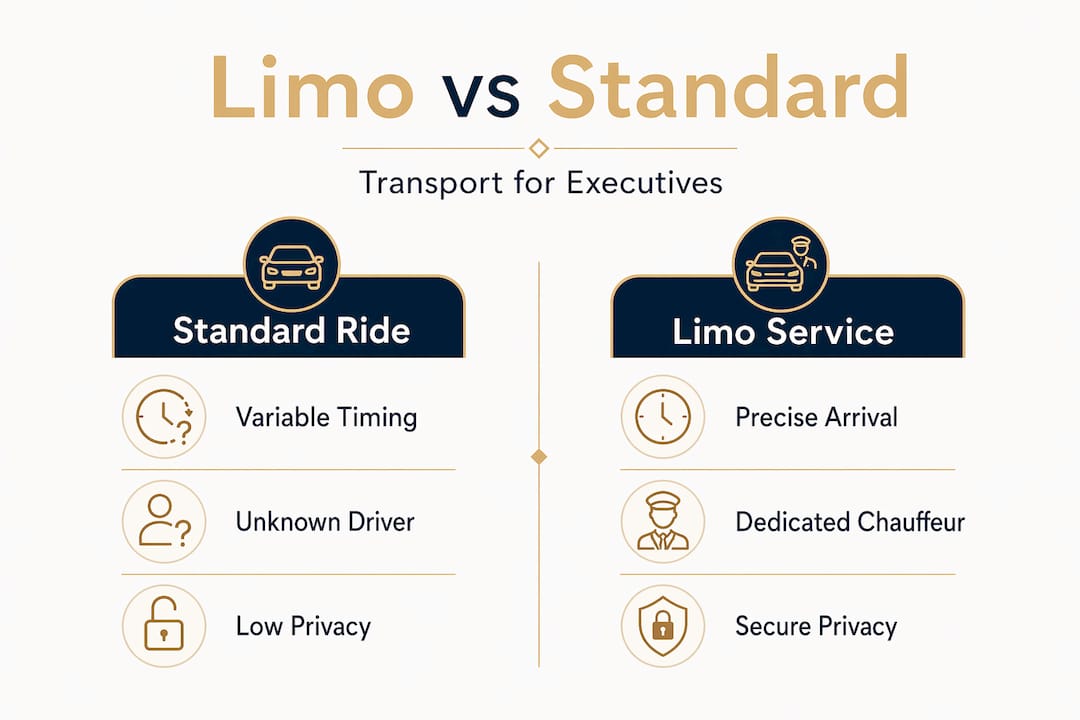
Rideshares are convenient for individuals with flexible schedules. Sports executives do not have flexible schedules. Neither do the athletes, coaching staff, and VIP guests who travel with them. The comparison between standard transportation and limo service for athletes is not a question of comfort. It is a question of operational reliability.
| Factor | Standard Transportation | Limo Service for Sports Executives |
|---|---|---|
| Punctuality | Variable, surge-dependent | Scheduled, pre-planned with buffers |
| Privacy | None | Standard in all vehicles |
| Driver vetting | Algorithm-based rating | Licensed, professionally trained chauffeurs |
| Fleet flexibility | Single vehicle type | SUVs, sedans, coaches, multi-vehicle coordination |
| En-route productivity | Distracting, no control | Ideal for strategy discussions |
| Emergency rerouting | Passenger-managed | Dispatcher-managed in real time |
The privacy dimension deserves specific attention. Sports executives hold sensitive conversations that cannot happen in a rideshare. Conversations about trades, coaching changes, athlete contract negotiations, and scouting decisions need a controlled environment. Limousine interiors provide exactly that. The route is known, the driver is vetted, and the vehicle is not shared with strangers.
Stress reduction is a real operational benefit, not a soft one. When an executive knows transportation is handled, that mental bandwidth goes back into preparation and decision-making. It sounds obvious until you watch a general manager scrambling for a car outside an arena with thirty minutes before a critical meeting.
Pro Tip: For recruiting visits specifically, the vehicle a prospect rides in sends a message about organizational standards. Luxury transport for sports executives signals professionalism and seriousness long before anyone sits down at a negotiation table.
How sports programs are formalizing limo partnerships
The shift happening right now in sports is a move from ad-hoc bookings to structured, multi-year agreements. Athletic departments formalizing partnerships through long-term contracts is no longer unusual. UNC Wilmington Athletics did exactly this, establishing a three-year agreement with Carolina Limo and Coach starting in 2026 to cover team travel and recruiting logistics.
That model makes sense for several reasons. A contracted provider learns the organization's rhythms, personnel preferences, and scheduling patterns. The result is fewer coordination gaps and faster problem-solving when plans shift.
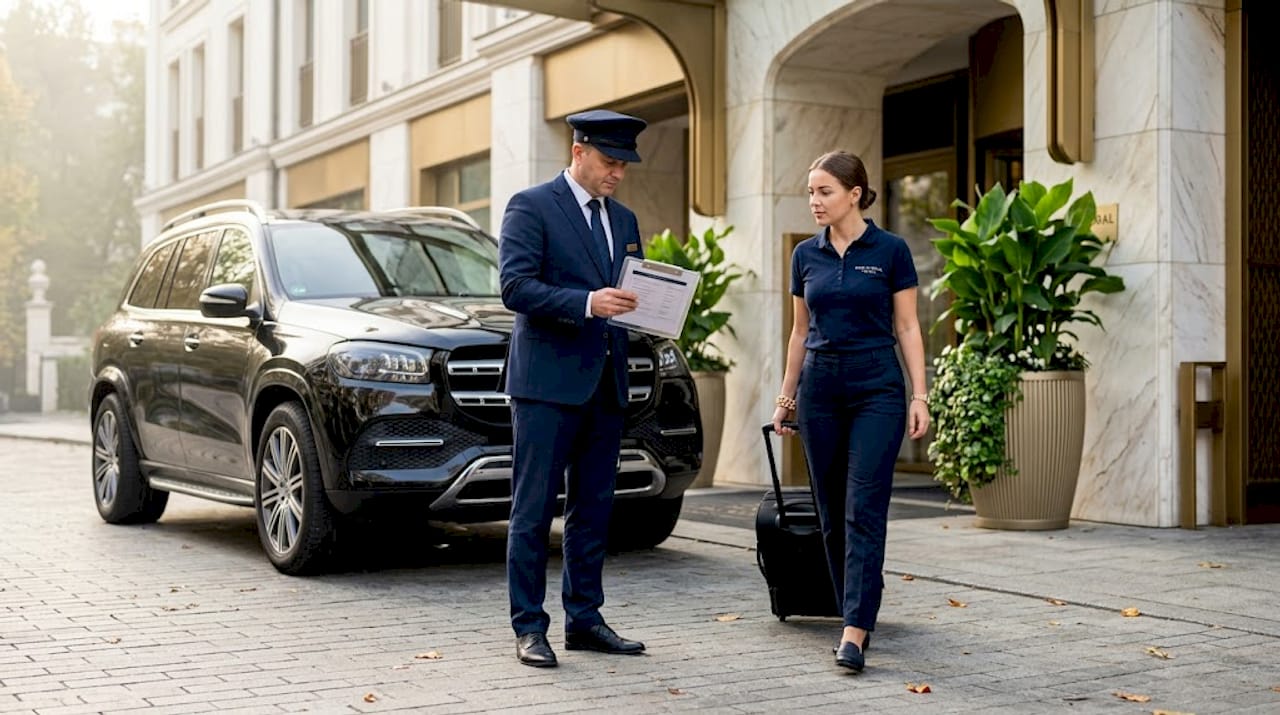
Here is what an integrated limo partnership typically covers for a sports program:
| Service Area | Operational Role |
|---|---|
| Regular season travel | Scheduled airport pickups, hotel transfers, arena arrivals |
| Recruiting visits | Prospect and family transport, campus tours, impression management |
| Major event support | Draft nights, championships, media obligations |
| Executive travel | League meetings, ownership gatherings, sponsor events |
| Emergency logistics | Injury transport coordination, last-minute rerouting |
The training component of these partnerships is also worth examining. Chauffeurs serving major sports events now undergo advanced specialized training that includes executive etiquette, multilingual communication, and event-specific protocol. Blue Nile Livery completed this kind of advanced preparation specifically for FIFA World Cup 2026 demands in Boston, a direct example of how transportation providers are scaling professionalism to match high-stakes sports events.
Multi-vehicle coordination is another area where structured partnerships pull ahead. Leading providers now use proprietary dispatch platforms that track vehicles in real time and automate ETA updates during major events. That is the operational infrastructure sports travel needs. A sports executive cannot be waiting on a phone call to find out where a car is.
How to get more from your limo service investment
The decision to use luxury transport for sports executives is only as good as the execution behind it. Selecting the right provider is step one. Managing the relationship effectively is the work that follows. Here is a practical framework for sports executives and travel coordinators:
-
Vet the provider's sports experience directly. Ask for examples of team travel contracts, event logistics they have handled, and references from organizations in your sport. General corporate transportation experience is not the same as managing the real-time demands of sports travel.
-
Establish a single point of contact on both sides. Communication between a sports organization and a limo provider breaks down when requests go through multiple people. Assign one team coordinator and require the provider to name one account manager. That pairing resolves issues in minutes instead of hours.
-
Build contingency protocols into the contract. Game delays, flight diversions, and schedule changes happen constantly in sports. Your service agreement should specify exactly how last-minute changes are handled, including maximum response times and backup vehicle guarantees.
-
Use on-site coordinators for major events. For championship games, draft nights, or large-scale tournaments, the best limo providers deploy a coordinator on location who manages vehicle dispatch in person. This eliminates the lag that remote coordination creates.
-
Leverage multilingual chauffeur capability for international events. If your organization hosts or attends international competitions, multilingual chauffeur teams are not a luxury feature. They are a practical communication tool for international athletes, executives, and guests.
-
Review performance data after each event. Request timing reports, on-time arrival percentages, and incident logs after major travel periods. The best transportation solutions for sports teams are built through feedback, not assumptions.
The overall scheduling coordination required for sports events mirrors the precision any high-stakes hospitality operation demands. Treating transportation as a performance metric, not just a service, changes how providers respond to your needs.
My take on what executives still get wrong
I have worked with sports organizations long enough to see the same pattern repeat. An executive invests in everything around the experience and under-invests in how people actually move through it. The transport becomes the one uncontrolled variable in an otherwise tightly managed operation.
The assumption I hear most often is that limo services are about image. They are not. In my experience, the executives who get the most out of these services treat them as a functional tool in their operational stack. They share itineraries in advance, communicate roster changes immediately, and hold their provider to the same performance standards they apply to any other vendor.
What I rarely see discussed openly is the compounding effect of consistent, quality transport on recruiting. A prospect who gets picked up in a well-maintained vehicle by a professional, communicative chauffeur has already formed an impression of the organization before they step on the practice floor. I have heard coaches say that moment set the tone for the entire visit. That is not marketing. That is logistics doing the work of relationship-building without anyone noticing.
The executives who win on transportation are the ones who stop treating it as a cost center and start treating it as part of the product they deliver to athletes, partners, and guests.
— Sammy
How Rigaglobaltravel supports sports executives on the move
Sports organizations and their executives need a transportation partner who understands the difference between scheduled and managed travel. Rigaglobaltravel specializes in luxury ground transportation built specifically for high-performance clients in entertainment and sports. Every booking comes with professional chauffeurs, full itinerary coordination, and the flexibility sports travel actually demands.
Whether you are moving a coaching staff to a recruiting event, coordinating VIP arrivals at a championship, or managing executive travel across a full season, Rigaglobaltravel builds a transportation program around your schedule, not the other way around. The benefits of limo services in high-demand environments come down to one thing: knowing the car will be there, on time, every time. Connect with Rigaglobaltravel to see what a properly managed executive transportation program looks like for your organization.
FAQ
What is the role of limo service for sports executives?
Limo services provide coordinated, reliable, and private transportation that supports game day scheduling, recruiting logistics, athlete security, and executive travel across a full sports season.
Why do sports executives use limos instead of rideshares?
Limo services offer pre-scheduled timing, professional chauffeurs, privacy for strategic discussions, and fleet flexibility that standard rideshare platforms cannot match for sports travel demands.
How do limo partnerships benefit athletic departments?
Multi-year limo contracts give athletic departments consistent, trained service for team and recruiting travel, reducing coordination costs and improving the experience for athletes and staff.
What should sports executives look for in a limo provider?
Prioritize providers with documented sports travel experience, real-time dispatch systems, named account managers, and clear contingency protocols for last-minute schedule changes.
How do limo services support athlete privacy during travel?
Limousine vehicles provide private, controlled environments where athletes and executives can travel without public exposure, making them suitable for confidential conversations and secure movement around high-profile venues.