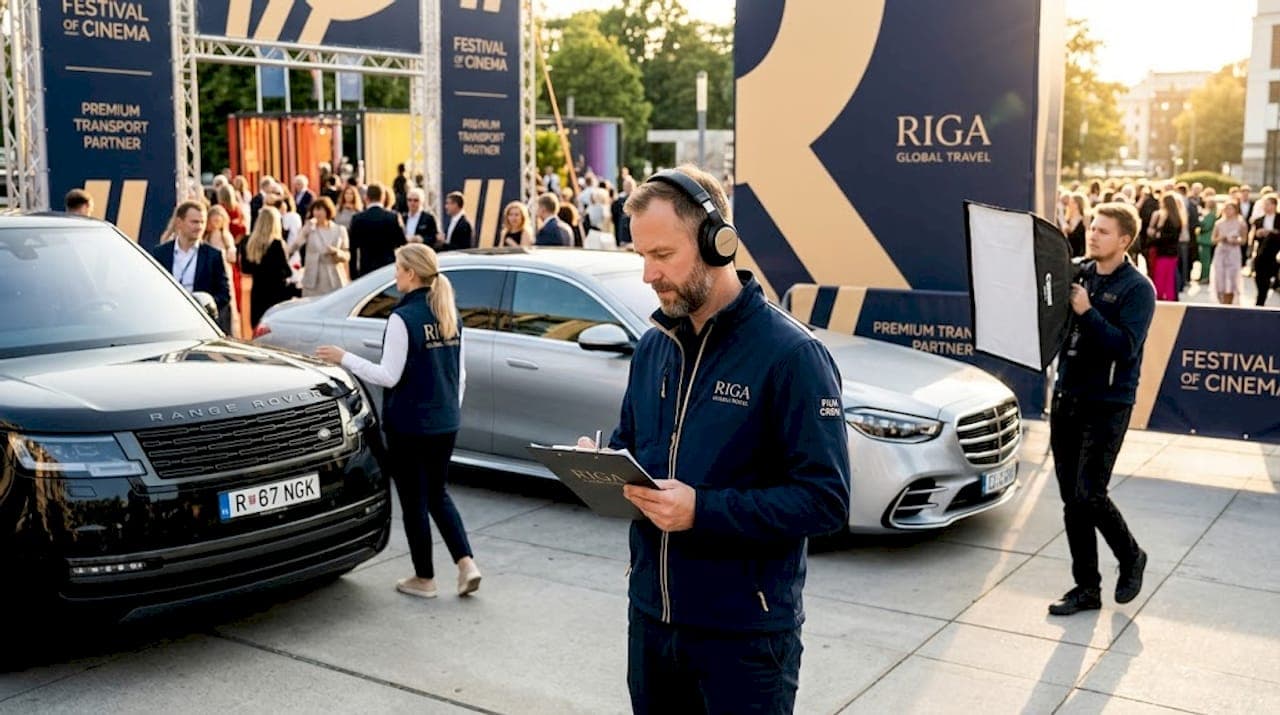
The vehicles behind a camera are never an afterthought. Every choice made about luxury vehicle types in the film industry signals wealth, power, character, and status before a single line of dialogue is spoken. From a Rolls-Royce gliding through a corporate thriller to a Lamborghini tearing through a chase sequence, premium cars in movies carry as much narrative weight as casting decisions. This guide covers the major categories of luxury vehicles used in cinema, what makes each one work on screen, and how production professionals evaluate them.
Table of Contents
- Key takeaways
- 1. Luxury vehicle types in the film industry: selection criteria
- 2. Modern luxury sedans and SUVs
- 3. Exotic performance cars and their cinematic roles
- 4. Prestige and ultra-luxury vehicles as narrative status symbols
- 5. Comparison of luxury vehicle types for film use
- My perspective on choosing luxury vehicles for film
- How Rigaglobaltravel supports luxury vehicle sourcing for film
- FAQ
Key takeaways
| Point | Details |
|---|---|
| Vehicles serve narrative roles | Every luxury vehicle on set communicates character identity, wealth level, and story tone to the audience. |
| Category selection matters | Different luxury vehicle types serve distinct cinematic functions, from corporate sedans to exotic performance cars. |
| Logistics shape final choices | Insurance, camera rigging, staging, and scheduling often determine which vehicle actually makes it to set. |
| Ultra-luxury doubles as brand integration | Prestige vehicles like Rolls-Royce and Maybach function as both props and marketing assets in major productions. |
| Production prep is non-negotiable | Camera-ready preparation and period accuracy matter more than brand recognition alone for effective on-screen impact. |
1. Luxury vehicle types in the film industry: selection criteria
Before any vehicle gets within a mile of a production set, it passes through a rigorous evaluation process. Vehicle selection is driven by how well the car communicates character and serves the story visually, not simply by brand prestige. A director choosing between a Bentley and a Cadillac Escalade is essentially making a character decision.
The key criteria production teams use:
- Narrative relevance: Does the vehicle fit the character's wealth level, profession, and psychological profile?
- Period and visual accuracy: Does the car match the era, color palette, and visual tone of the film?
- Camera readiness: Can the vehicle be rigged for interior shots, process trailers, or motion capture without compromising safety?
- Insurance and staging compliance: Specialized insurance coverage for picture cars is required, distinct from general production liability.
- Modification potential: Does the vehicle allow for paint changes, decals, or interior adjustments without permanent damage?
Pro Tip: When a vehicle cannot be safely rigged for interior camera work, production teams often use a second hero unit dressed identically for driving close-ups. Build this into your vehicle sourcing plan from day one.
Vehicle choice also feeds into what professionals call the "picture car" pipeline. Every detail, from wheel finish to tinted glass, gets chosen for camera impact. Story hierarchy drives the process, with the lead character's vehicle often receiving the most preparation time and the highest day rate.
2. Modern luxury sedans and SUVs
Modern luxury sedans and full-size SUVs are the workhorses of high-end vehicle in films, particularly in contemporary thrillers, prestige dramas, and corporate narratives. These vehicles do not draw attention to themselves the way an exotic car does. That subtlety is precisely the point.
Commonly featured vehicles include the Mercedes S-Class, BMW 7 Series, Range Rover, and Cadillac Escalade. Each communicates a slightly different flavor of power. The Mercedes S-Class reads as European executive authority. The Cadillac Escalade signals American corporate dominance or, depending on context, organized crime. The Range Rover threads the needle between wealth and capability.
Production advantages of this category:
- Large interior cabins make camera rigging significantly easier
- Standard availability means replacements and doubles are accessible
- Neutral color options integrate into diverse visual palettes
- Rear passenger staging works well for dialogue-heavy scenes
Pro Tip: If your script calls for a motorcade or convoy, modern luxury SUVs are far easier to coordinate in multiples than exotics. Sourcing three matching Escalades is a straightforward logistics exercise. Sourcing three matching Lamborghinis is not.
The Range Rover in particular has become one of the most recognizable top luxury cars in Hollywood for scenes involving government officials, high-net-worth individuals, and security details. Its combination of visual weight and real-world credibility makes it a reliable visual shorthand for any production.
3. Exotic performance cars and their cinematic roles
Exotic cars do something no other category can: they physically accelerate a scene before a single edit. A Lamborghini Huracán or Ferrari 488 Spider on screen creates immediate tension and energy. These vehicles tell the audience exactly what kind of scene they are watching.
- Chase sequences: Exotic performance vehicles are the default for high-speed pursuit scenes. Their low-slung profiles photograph dramatically, especially from ground-level camera rigs.
- Villain character vehicles: Exotic vehicles like the McLaren 720S and Lamborghini Huracán frequently signal menace and unchecked power.
- Wealth flex moments: A protagonist arriving at a venue in a Porsche 911 Turbo S communicates success differently than arriving in a sedan.
- Brand integration scenes: Manufacturer partnerships often place specific models in aspirational film moments.
The production challenges with exotic cars are real. Low ground clearance makes trailer mounting difficult. The engines generate significant exhaust heat near camera equipment. Insurance premiums for exotics run considerably higher than for standard luxury vehicles, and production insurance complexities multiply when stunt work is involved.
A well-documented example of logistics overriding aesthetics: the Audi R8 was replaced by an Audi Q7 in Iron Man because filming requirements demanded a vehicle that could actually accommodate the production setup. The lesson for any production coordinator is that the most visually striking choice is not always the one that survives contact with the call sheet.
4. Prestige and ultra-luxury vehicles as narrative status symbols
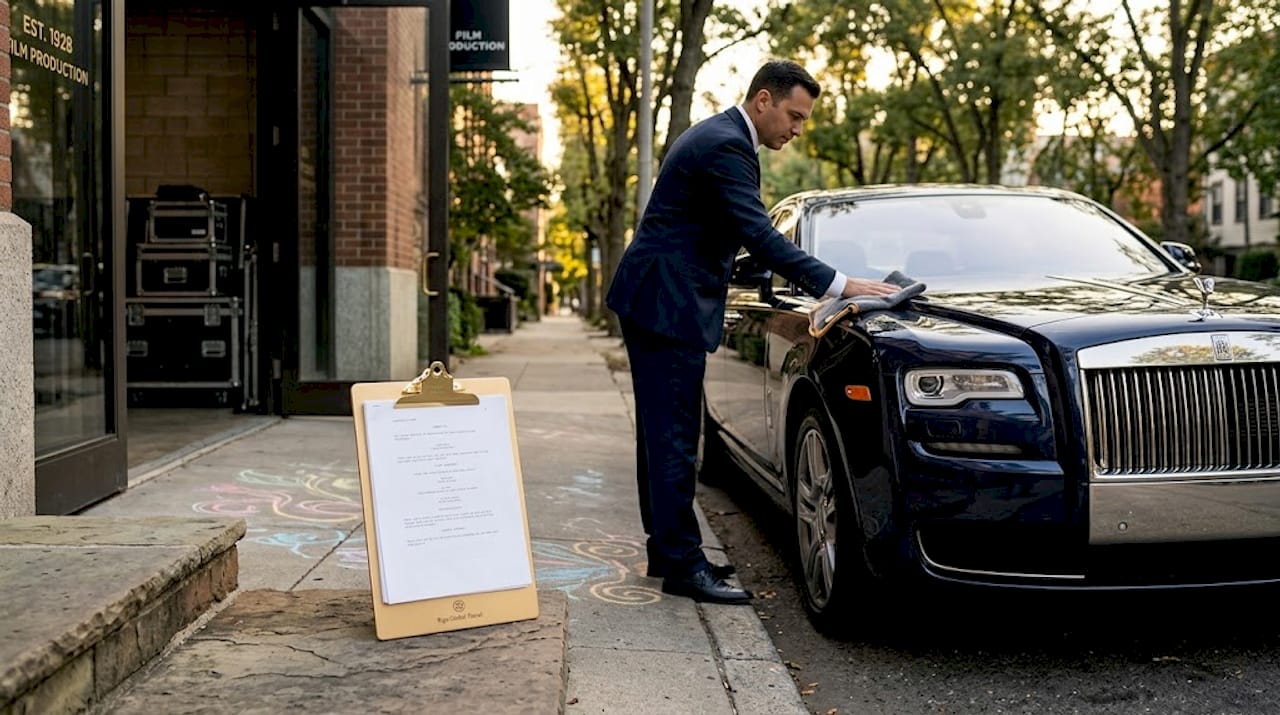
If exotic cars signal aggression and speed, ultra-luxury vehicles signal something more dangerous: absolute control. The Rolls-Royce Ghost, Bentley Flying Spur, and Mercedes-Maybach S-Class communicate a level of wealth that does not need to be proven. These vehicles assume their own status.
Key production characteristics of ultra-luxury vehicles:
- Hero car treatment: Ultra-luxury vehicles function as branded character props with dedicated staging and camera-ready prep on every call sheet.
- Manufacturer integration: Brand partnerships with Rolls-Royce, Bentley, and Maybach often include loan agreements with specific usage restrictions.
- Special film editions: Campaign-linked vehicles such as the special edition Mercedes-Maybach S 580 created for The Devil Wears Prada 2 are one-of-a-kind configurations that blur the line between cinematic prop and marketing artifact.
| Vehicle | Cinematic function | Key production note |
|---|---|---|
| Rolls-Royce Ghost | Old money, untouchable power | Manufacturer loan terms often restrict stunt use |
| Bentley Flying Spur | Refined wealth, European prestige | Strong visual presence in static and slow-moving scenes |
| Mercedes-Maybach S-Class | Corporate authority, modern oligarchy | Special editions created specifically for film tie-ins |
The Maybach S 580 Night Series created for The Devil Wears Prada 2 illustrates how far manufacturers will go to integrate their vehicles into high-profile productions. It is not just product placement. It is a co-authored storytelling element.
5. Comparison of luxury vehicle types for film use
Not every production has the same budget, timeline, or visual language. Understanding how luxury vehicle categories compare on key production factors helps coordinators make faster, smarter decisions.
| Vehicle category | On-camera impact | Day rate complexity | Camera rigging ease | Best use case |
|---|---|---|---|---|
| Modern luxury sedans/SUVs | Moderate to high | Lower | High | Corporate scenes, motorcades, dialogue interiors |
| Exotic performance | Very high | Higher | Low to moderate | Chase scenes, villain reveals, aspirational arrivals |
| Ultra-luxury/prestige | Highest | Variable with loan | Moderate | Hero car scenes, status moments, brand integrations |
Visual impact and logistical complexity move in the same direction as vehicle prestige increases. A modern luxury SUV is the easiest to source, rig, insure, and replace. An ultra-luxury hero car from a manufacturer partnership requires negotiating loan terms, navigating usage restrictions, and coordinating dedicated staging on set.
Multi-day holds and flexible scheduling for rental vehicles are standard practice in the industry because productions rarely shoot in linear sequence. A scene featuring an Escalade in act one and a Rolls-Royce in act three may be filmed back to back on the same day. Your vehicle coordinator needs to build that flexibility into every sourcing agreement.
The cost question is straightforward in one direction: exotic and ultra-luxury vehicles cost more per day, carry higher insurance premiums, and require more production prep time. The tradeoff is always between visual payoff and operational friction.
My perspective on choosing luxury vehicles for film
I've worked alongside enough productions to say this plainly: the biggest mistakes in vehicle selection come from prioritizing brand recognition over narrative fit. A Lamborghini is not always the right car for the villain. Sometimes a perfectly maintained, all-black Mercedes S-Class is more threatening because it looks like it could belong to someone with actual institutional power.
What I've found consistently is that productions that get vehicle selection right treat it the same way they treat casting. They ask what the car says about the character, not just what it says about the budget. The vehicle-as-character-tool perspective changes how you evaluate every option on the list.
The other thing I've learned: technology is shifting what's possible on set. Electric luxury vehicles now require different rigging protocols and create new audio considerations during interior shoots. You can't assume a vehicle you've worked with before behaves the same way as its newer generation counterpart.
My advice is to involve your vehicle coordinator and transportation captain in pre-production story meetings, not just logistics calls. The earlier vehicle decisions are made with narrative input, the fewer expensive late-stage changes you'll face.
— Sammy
How Rigaglobaltravel supports luxury vehicle sourcing for film
When a production needs access to the right vehicle at the right time, logistics coordination is where projects succeed or stall. Rigaglobaltravel works directly with film and television productions to source, stage, and deliver luxury vehicles across every category covered in this guide.
Whether you need a fleet of matching executive SUVs for a corporate thriller, a single ultra-luxury hero car for a prestige drama, or a lineup of exotics for a high-energy sequence, Rigaglobaltravel brings the industry contacts, scheduling experience, and operational precision to get the right vehicle to set on time. The team understands production call sheets, insurance requirements, and the difference between a background plate car and a hero unit.
For film professionals who cannot afford a late vehicle or a sourcing gap mid-shoot, working with a logistics partner who specializes in entertainment industry needs is not optional. It is part of how professional productions protect their shooting schedule.
FAQ
What are the main luxury vehicle types used in film?
The primary categories are modern luxury sedans and SUVs, exotic performance vehicles, and ultra-luxury prestige cars. Each serves a distinct narrative and production function depending on character and scene requirements.
Why is insurance so important for luxury cars on set?
Picture cars require specialized coverage separate from general production liability, including hired and non-owned auto policies that cover multi-week shoots and stunt use.
Which vehicles define luxury films most recognizably?
The Rolls-Royce Ghost, Bentley Flying Spur, and Mercedes-Maybach S-Class are among the most recognizable famous movie car brands for signaling extreme wealth and status on screen.
Can exotic cars always be rigged for interior camera work?
Not reliably. Low ground clearance and engine heat create real camera mounting challenges. Productions often use a dedicated camera car or process trailer alongside the exotic to achieve interior driving footage safely.
How do vehicle placements affect a film's marketing value?
Memorable on-screen exposure has driven real consumer interest for featured vehicles, with some models seeing measurable sales increases following major film appearances.