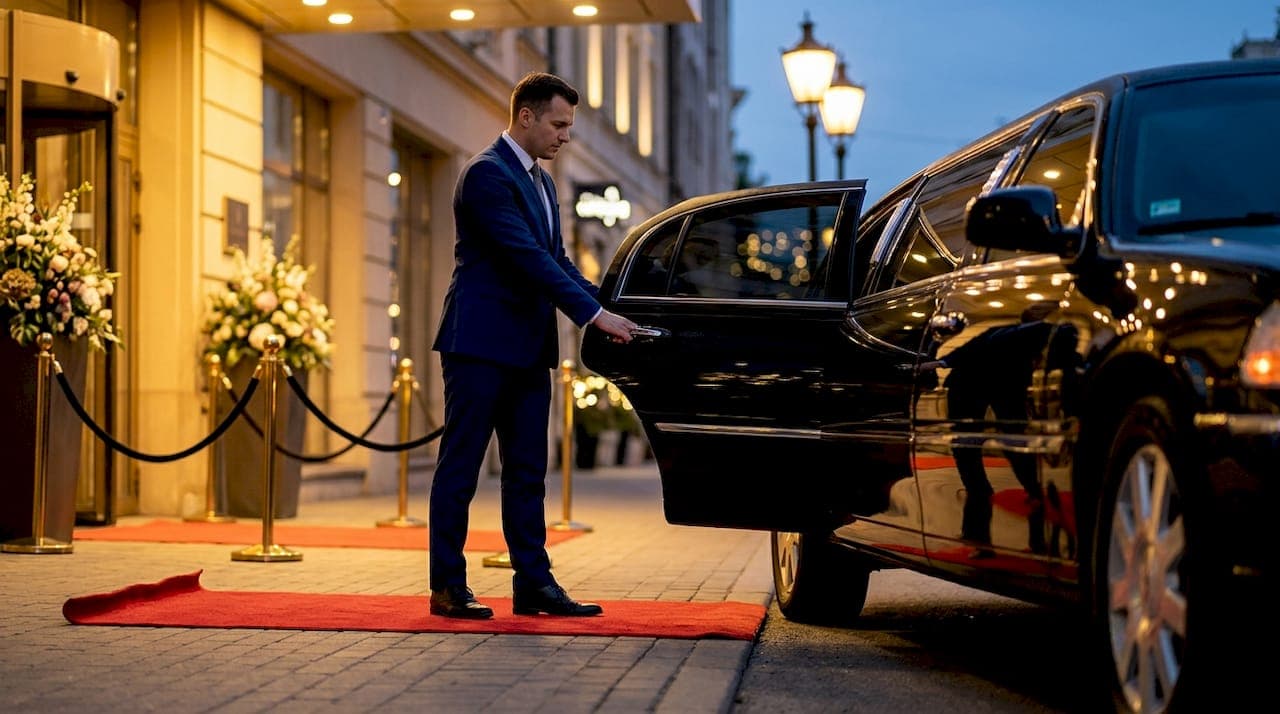
Coordinated black car service for red carpet events is defined as the integrated management of luxury vehicles, professional chauffeurs, security teams, and venue logistics to deliver VIP guests safely and on schedule. When you plan black car service for red carpets, the margin for error is essentially zero. A late arrival, a miscommunicated route, or a chauffeur who steps out of the vehicle at the wrong moment can unravel hours of preparation. The most successful event planners in the entertainment industry treat transportation not as a vendor relationship but as a core operational discipline, on par with security and production.
What are the prerequisites for planning black car service for red carpets?
Before a single vehicle is dispatched, you need a complete operational picture of the venue and its surroundings. Arrival security is the highest-risk phase of any red carpet event, requiring comprehensive coordination among transport, security, and event teams. That coordination starts weeks before the event, not the morning of.
Here is the foundational checklist every event planner should complete before booking vehicles:
- Venue access audit: Walk every entry point, loading zone, and potential drop-off lane. Identify which gates accept oversized vehicles like Mercedes-Benz Sprinters or Cadillac Escalades.
- Municipal coordination: Major events like the Oscars involve road closures beginning up to two weeks prior, with full traffic re-routing in effect the night before. Contact your local DOT early.
- Security threat assessment: Work with close protection teams to identify risk levels for each VIP guest. This determines vehicle type, route priority, and chauffeur briefing depth.
- Chauffeur vetting: Services like EmpireCLS put drivers through rigorous background checks and specialized training academies before they ever approach a red carpet. Confirm your provider meets the same standard.
- Technology stack: Real-time GPS dispatch, two-way radio channels, and a centralized event management platform are non-negotiable for live coordination.
- Stakeholder alignment: Schedule a joint briefing with venue operations, municipal liaisons, security leads, and your transportation provider at least 72 hours before the event.
Pro Tip: Request a dedicated event coordinator from your black car provider, not just a dispatcher. That single point of contact can resolve conflicts in seconds that would otherwise take minutes to escalate.
Understanding entertainment industry limo benefits before you finalize your vendor selection will also sharpen your expectations for what a professional provider should deliver.
How do you design arrival choreography and vehicle staging?
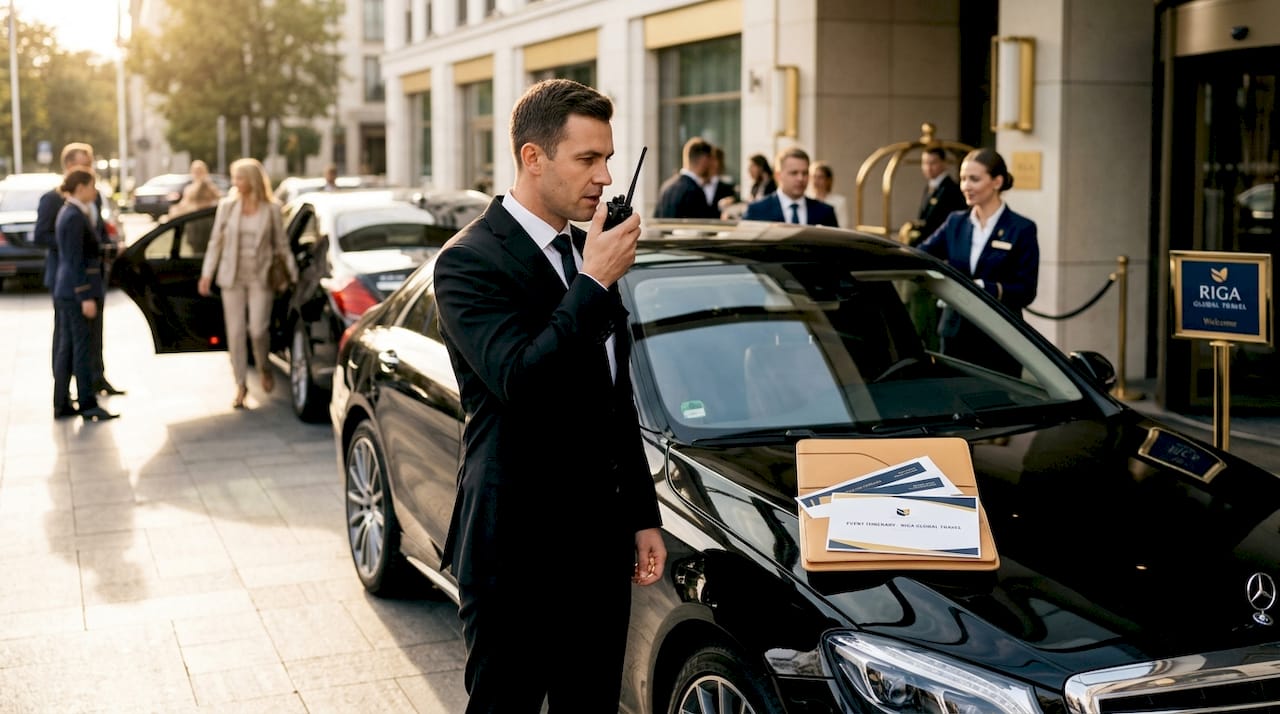
Arrival choreography is the sequencing of vehicles, guests, and security personnel into a timed, rehearsed flow. Vehicle staging and close protection function best as a unified arrival operation rather than separate tasks. When they are separated, gaps appear. Those gaps become security vulnerabilities and media disruptions.
Follow this sequence to build a working choreography plan:
- Map the arrival corridor. Define the exact path from the public road to the red carpet curb. Mark every checkpoint, gate, and hand-off point on a venue diagram shared with all team leads.
- Assign timing windows. Each VIP receives a specific arrival window, typically three to five minutes. Overlapping windows cause vehicle stacking and crowd surges. A tiered zone model with designated drop-off zones, access routes, and timing windows prevents conflicts among VIP, staff, and general attendee transportation.
- Stage vehicles in sequence. Vehicles should enter the staging area in reverse arrival order so the first guest to arrive is in the first vehicle to pull forward. Coordinate with your dispatch team to hold vehicles at a secondary staging point until the curb is clear.
- Brief chauffeurs on carpet protocol. At events like the Oscars, chauffeurs remain in the vehicle at the Dolby Theatre drop-off point. This minimizes carpet wear and keeps the egress lane open. Your chauffeurs must follow the same rule without exception.
- Integrate media and security cues. Coordinate with the red carpet producer and close protection leads so the vehicle door opens only when the security perimeter is confirmed and the media position is set.
- Build contingency routes. Every arrival plan needs a primary, secondary, and tertiary route. Multi-route planning with authorized mid-stream switches prevents schedule collapse when traffic or incidents arise. Designate one person with authority to call a route change in real time.
The detail that most planners underestimate is the departure sequence. Arrivals get all the attention, but a chaotic post-event exit is what VIP guests remember. Build your departure logistics into the same choreography document from the start.
Which vehicle types work best for special event transportation?
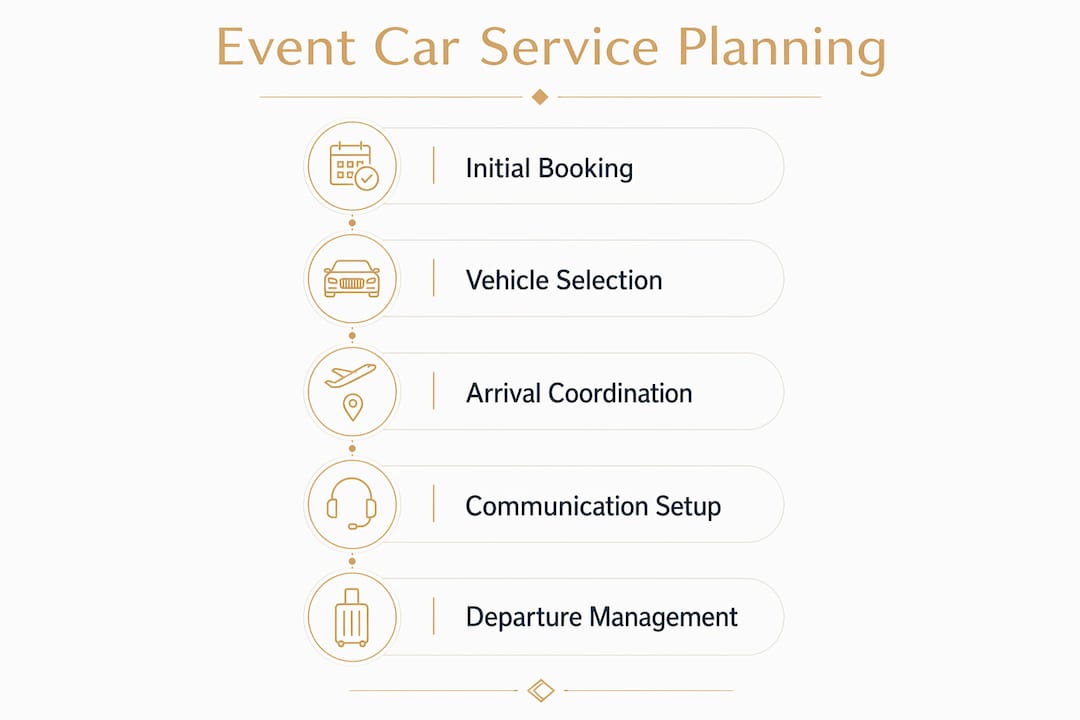
Vehicle selection shapes the guest experience before they ever step onto the carpet. The right choice depends on group size, security requirements, studio preferences, and the event's aesthetic.
| Vehicle type | Best for | Key advantage | Consideration |
|---|---|---|---|
| Cadillac Escalade | Solo VIPs and couples | High visibility, celebrity recognition | Fuel-powered, higher emissions |
| Mercedes-Benz Sprinter | Groups of 6 to 12 | Spacious, discreet, flexible interior | Larger footprint in tight staging areas |
| Electric sedan (e.g., Tesla Model S) | Eco-conscious studios | Zero emissions, quiet arrival | Range planning required for long transfers |
| Stretch limousine | Formal galas and premieres | Classic red carpet aesthetic | Slower to maneuver in congested drop zones |
| Armored SUV | High-threat VIP protection | Ballistic protection, reinforced doors | Heavier, requires specialized chauffeur |
Luxury SUVs like the Cadillac Escalade are the most common choice for red carpet arrivals, valued for their elegance and interior comfort. Studios increasingly request electric vehicles for environmental reasons, which means your provider's fleet composition matters as much as their service reputation.
When evaluating private car services, ask specifically about:
- Fleet age and maintenance records
- Chauffeur-to-event ratio on the night
- Backup vehicle availability within 15 minutes
- Whether the provider has prior red carpet event experience with named entertainment clients
The cost of black car service for a red carpet event varies significantly by market, vehicle type, and event duration. Executive transportation services in Los Angeles or New York typically price red carpet packages as event-day rates rather than hourly, factoring in staging time, standby hours, and post-event departure coverage.
How do you manage communication among chauffeurs, security, and event staff?
VIP transport failures typically stem from communication breakdowns rather than vehicle or driver issues. That single finding should reframe how you allocate your planning time. Most planners spend 80% of their preparation on vehicles and 20% on communication. The ratio should be closer to equal.
Effective communication management during a red carpet event requires:
- A unified command channel. All team leads, including transportation dispatch, security, venue operations, and the red carpet producer, must share one primary radio channel with a designated incident commander.
- Timing window confirmations. Each chauffeur confirms their vehicle's position and guest status at three checkpoints: departure from origin, entry to the staging zone, and approach to the drop-off curb.
- Escalation paths. Define in writing who makes the call when a VIP is running late, a route is blocked, or a security incident occurs. Ambiguity during a live event costs time you do not have.
- Chauffeur conduct standards. Professional chauffeurs trained for red carpet work understand that silence, discretion, and vehicle readiness are their primary responsibilities. EmpireCLS chauffeurs, for example, complete a three-week training academy covering emergency response and event etiquette.
- Post-event debrief protocol. Capture every deviation from the plan in a written debrief within 24 hours. This record becomes the foundation for the next event's planning.
Pro Tip: Assign a dedicated runner, a junior coordinator with a radio, to physically walk between the staging area and the red carpet entrance every 10 minutes during peak arrivals. No app replaces eyes on the ground.
For planners coordinating events in Los Angeles specifically, reviewing essential LA event transportation tips will surface city-specific nuances around permit timing and LAPD coordination that generic guides miss.
What common challenges arise and how do you troubleshoot them?
Even the most detailed plan meets resistance on event day. The planners who handle it best are those who have already decided how they will respond before the problem occurs.
- Road closures and traffic delays. Build your timing windows with a 20-minute buffer beyond your calculated travel time. Coordinate with the Los Angeles DOT or your city's equivalent to receive real-time signal timing updates on event day.
- Security incidents. If a close protection team calls a hold on arrivals, your dispatch must immediately freeze the staging queue. Vehicles should not advance to the curb without security clearance, regardless of timing pressure.
- Communication breakdowns. Assign a backup communication channel before the event starts. If the primary radio system fails, every team lead should already know the fallback, whether that is a group SMS thread or a secondary frequency.
- Chauffeur non-compliance. A chauffeur who exits the vehicle at the red carpet curb creates both a security gap and a media disruption. Strict chauffeur instructions are small but critical rules that preserve the event's smooth operation and guest security. Brief every driver individually, not just as a group.
- Post-event departure congestion. Stagger departure windows by 10 to 15 minutes per VIP tier. Segmenting access routes by tier, separating VIP, staff, and general attendee lanes, prevents bottlenecks when hundreds of guests exit simultaneously.
The best red carpet transportation plans are not the ones that never face problems. They are the ones where every problem has already been assigned an owner and a response.
Understanding championship event car service structures can also give you a useful framework for sequencing departures, since championship events face similar high-volume, time-compressed exit challenges.
Key takeaways
Successful red carpet black car service requires unified coordination of vehicles, chauffeurs, security, and communication protocols planned weeks before the event.
| Point | Details |
|---|---|
| Start coordination early | Municipal permits and road closures require lead times of up to two weeks before the event. |
| Unify staging and security | Treat vehicle staging and close protection as one operation to eliminate arrival gaps. |
| Vet your chauffeur provider | Confirm drivers have completed formal training programs and background checks before booking. |
| Build three contingency routes | Primary, secondary, and tertiary routes with a named decision-maker prevent schedule collapse. |
| Fix communication first | Most VIP transport failures trace back to communication breakdowns, not vehicle or driver failures. |
What I've learned planning red carpet transportation that no checklist captures
After years of coordinating luxury car service for entertainment events, the lesson that took longest to internalize is this: the vehicle is almost never the problem. The Cadillac Escalade arrives on time. The chauffeur is trained and professional. The breakdown happens in the 30-second gap between the security team confirming the perimeter and the car door opening. Nobody owns that gap.
The planners I respect most in this industry treat that gap as a formal handoff, documented in the run-of-show with a named person responsible for the cue. It sounds bureaucratic until the moment a photographer breaks through the rope line and you need someone to make a decision in two seconds.
I also think the industry underestimates how much chauffeur briefing quality varies between providers. A Hollywood chauffeur service guide will tell you what good looks like, but the real test is asking your provider to walk you through exactly what their drivers are told before a red carpet event. Vague answers are a red flag. Specific answers, including what happens if a guest refuses to exit the vehicle or if a route is blocked, tell you the provider has done this before.
The final thing I would push back on is the assumption that more vehicles equals better service. Oversized fleets create staging congestion that undermines the very experience you are trying to create. Match your fleet size precisely to your guest count, build in two backup vehicles, and stop there.
— Sammy
How Rigaglobaltravel supports event planners at the red carpet
Planning high-profile red carpet arrivals demands a transportation partner who understands the entertainment industry from the inside. Rigaglobaltravel provides luxury black car and limousine services built specifically for event planners coordinating VIP arrivals, premieres, and award shows.
From Cadillac Escalades to executive sedans, Rigaglobaltravel's fleet is maintained to the standard that entertainment clients expect. Experienced chauffeurs are briefed on red carpet protocols, staging procedures, and close protection coordination before every event. Concierge support is available throughout the planning process, from initial route mapping to post-event departure logistics. For event planners who need a trusted transportation partner for their next red carpet, Rigaglobaltravel delivers the precision and discretion the moment requires.
FAQ
What is black car service in the context of red carpet events?
Black car service refers to pre-arranged, chauffeur-driven transportation in high-end vehicles, coordinated with security and venue logistics to deliver VIP guests professionally. For red carpet events, it includes staging protocols, timed arrivals, and chauffeur conduct standards specific to the entertainment industry.
How far in advance should you book black car service for a red carpet event?
Book your transportation provider a minimum of four to six weeks before the event to allow time for route planning, municipal coordination, and chauffeur briefings. Major events like award shows may require lead times of two to three months.
Why do chauffeurs stay in the vehicle at red carpet drop-offs?
Chauffeurs remain in the vehicle at red carpet curbs to keep the egress lane clear and enable rapid departure if a security situation develops. This protocol, standard at events like the Oscars at the Dolby Theatre, also prevents unauthorized individuals from entering the secured arrival zone.
What causes VIP transportation failures at events?
Communication breakdowns between dispatch, security, and event staff are the primary cause of VIP transport failures, not vehicle or driver issues. Clear escalation paths and a unified command channel resolve most problems before they affect the guest experience.
How is the cost of black car service calculated for red carpet events?
Executive transportation services for red carpet events are typically priced as event-day flat rates rather than hourly fees, covering staging time, standby hours, and post-event departures. Pricing varies by market, vehicle type, and the complexity of the coordination required.