
When your talent is late to the booth, nothing else matters. The ability to coordinate limousine service for sports commentators is one of the most underestimated logistics challenges in live sports media, yet it directly affects broadcast quality, commentator performance, and your crew's professional reputation. This guide gives you a practical, field-tested framework for managing sports event transportation from initial planning through post-event review. Whether you are coordinating for a single analyst or an entire commentary crew, you will find specific steps here that work.
Table of Contents
- Key takeaways
- Understanding unique commentator transport needs
- Preparing to coordinate: your pre-event checklist
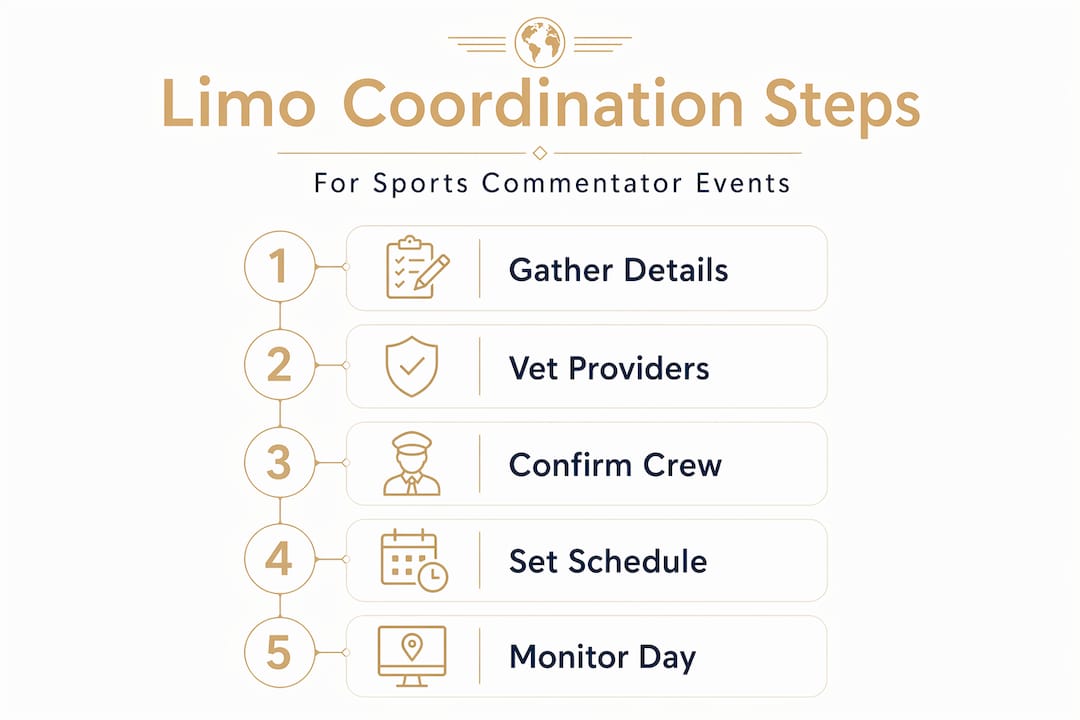
- Step-by-step event day coordination
- Troubleshooting common coordination challenges
- Evaluating service quality after the event
- Why transport coordination is more important than it looks
- How Rigaglobaltravel handles sports commentator transport
- FAQ
Key takeaways
| Point | Details |
|---|---|
| Punctuality is non-negotiable | Commentators operate on rigid broadcast schedules, making on-time arrival the single most critical metric. |
| Preparation beats improvisation | Collecting full talent rosters, event schedules, and equipment needs before booking protects you from day-of chaos. |
| Communication is your real tool | Real-time contact with chauffeurs and talent prevents small delays from becoming broadcast emergencies. |
| Backup plans save broadcasts | Every coordinated transport plan needs a contingency vehicle and alternate route confirmed before event day. |
| Post-event review builds quality | Feedback from commentators and drivers creates the institutional knowledge that makes future coordination faster and smoother. |
Understanding unique commentator transport needs
Sports commentators are not standard event passengers. They operate under hard broadcast deadlines, carry equipment, and often need to review notes or prepare on the road. That last point matters more than most coordinators realize. Vehicle amenities for media professionals typically include WiFi, climate control, spacious seating, and minimal distractions, because arriving mentally prepared is as important as arriving on time.
The logistical profile of a commentary crew also differs from a typical executive group. You may have lead commentators, color analysts, producers, and technical staff traveling to the same venue but at staggered times. Each person has a different call time, pickup location, and level of flexibility. The luxury car service for commentators you hire must be capable of managing multi-stop, multi-vehicle coordination without treating each booking as an isolated transaction.
Privacy is another factor that gets overlooked during planning. A commentator reviewing game footage or discussing broadcast strategy in a vehicle does not want that conversation overheard. Choosing a chauffeur service with a track record in confidentiality and professional discretion is not an afterthought. It is part of the service standard.
Key features to prioritize when selecting vehicles for commentary teams:
- Adequate headroom and seating space for extended travel without fatigue
- Reliable in-vehicle WiFi for reviewing video clips and statistics
- Charging ports for laptops, tablets, and phones
- Climate control that can be individually adjusted
- A driver who understands quiet professionalism during transit
Pro Tip: Ask your limousine provider whether their chauffeurs have experience with media or entertainment clients specifically. A driver who knows not to engage in conversation unless invited makes a real difference to a commentator preparing for a live broadcast.
Preparing to coordinate: your pre-event checklist
Preparation is where most coordination failures are actually born. By the time event day arrives, your decisions are already made. The question is whether you made them deliberately or let them happen by default.
Start by collecting the following information before you contact any limousine provider:
- Complete talent roster with names, titles, and individual call times
- Pickup addresses for each person, including hotel names and suite numbers when applicable
- Drop-off destinations and any intermediate stops at production facilities
- Equipment inventory, because a heavy camera case changes your vehicle size calculation
- Estimated event duration and likely departure windows for post-event transport
Once you have that data, you can begin evaluating executive limo service sports providers with realistic specifications. Professional chauffeurs for sports and media transport undergo background checks, hold proper certifications, and receive specialized training, which means vendor vetting should always include asking for documentation, not just references.
Pricing is a real planning variable. Limo rentals in major metro areas cost between $160 and $350 or more per hour depending on vehicle type and service level. For multi-vehicle coordination across a full event day, your budget planning should account for wait time charges, fuel surcharges, and any after-hours premiums that apply to late-night departure windows following evening games.
| Planning element | What to confirm |
|---|---|
| Vehicle type and capacity | Matches your crew size and equipment load |
| Service level agreement | Punctuality guarantees, cancellation terms, overtime rates |
| Communication protocol | Who calls whom and at what intervals on event day |
| Contingency vehicle | A confirmed backup, not a verbal promise |
| Route pre-approval | Primary and alternate routes identified before event day |
Pro Tip: Always negotiate your service level agreement in writing before the event, not the morning of. Include specific language about what happens if a vehicle arrives more than ten minutes late. Knowing the remedy in advance removes the emotional negotiation from a high-stress moment.
Step-by-step event day coordination
Event day coordination is an active job, not a monitoring task. Your role is to keep information flowing between chauffeurs, commentators, production staff, and venue contacts in real time.
-
Send a confirmation message to every commentator the evening before. Include pickup time, vehicle description, driver name, and a direct contact number. Do not assume that people remember what you sent them two weeks ago.
-
Brief all chauffeurs one hour before first pickup. Confirm the full sequence of pickups, expected traffic conditions, parking protocols at the venue, and who to call if any commentator does not appear within three minutes of scheduled pickup.
-
Activate your tracking setup. Real-time traffic monitoring and flight tracking reduce friction during disruptions and give you advance warning when adjustments are needed. Many premium transport providers include this technology as a standard feature.
-
Manage the pickup sequence by priority. Lead commentators with the earliest on-air responsibilities travel first. Technical crew members with more flexible arrival windows can follow in staggered vehicles.
-
Monitor group travel cohesion. Keeping commentary teams together during transport promotes focus and reduces the logistical complexity of tracking multiple individuals across a crowded city.
-
Confirm arrival with venue contact upon each drop-off. A simple check-in message closes the loop and prevents the scenario where your commentator is dropped at the wrong entrance and nobody knows for fifteen minutes.
-
Stay reachable throughout the event. Post-event pickups require the same active management as arrivals. Wrap times shift, post-game interviews run long, and a commentator waiting curbside alone after midnight is a failure of coordination.
Pro Tip: Set a group text or app channel for all commentators and the lead chauffeur. A single message sent to the group when there is a traffic reroute keeps everyone informed without the need for individual calls during a high-stress moment.
Troubleshooting common coordination challenges
No event day goes exactly as planned. The coordinators who look calm are the ones who anticipated problems before they happened.
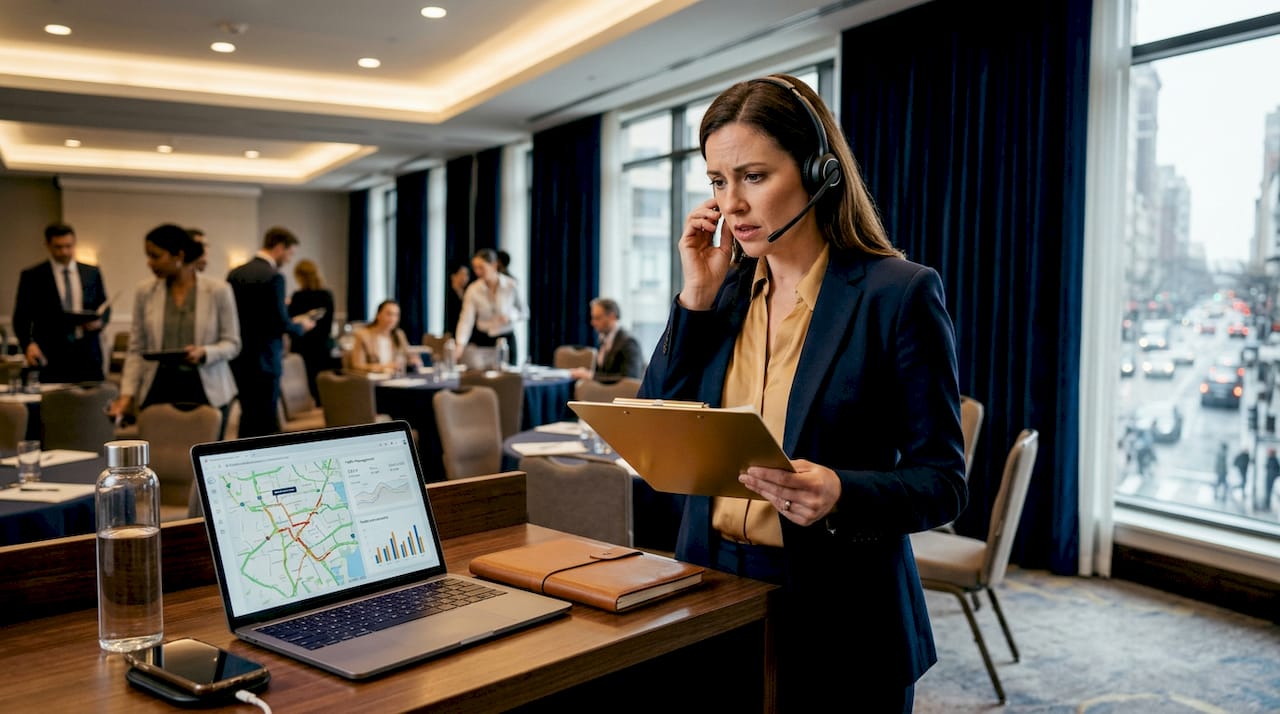
Last-minute talent changes are among the most disruptive scenarios you will face. A commentator is added, removed, or swapped after the vehicle manifest is final. The fix is to always carry one vehicle with buffer capacity and maintain a written change-request protocol so that adjustments are documented rather than verbally improvised.
Traffic congestion and road closures around major sports venues are predictable in the same way weather is predictable: you know something will happen, you just do not know the exact form. Limousine service providers with strong coordination practices maintain contingency plans including backup vehicles and alternate routes, and you should confirm these specifics exist before you sign a contract.
When delays do occur, the most damaging outcome is often not the delay itself but the silence. Communicating a known delay proactively to the production team, even when the news is unwelcome, allows the broadcast team to make adjustments. Silence forces them to speculate and scramble.
Managing multiple vehicles simultaneously requires a single point of coordination contact on your side. Do not have three drivers calling three different producers. One person owns the vehicle manifest and all driver communication. That clarity saves minutes when minutes are the difference between making air and missing it.
Vendor no-shows, while rare with reputable providers, require a pre-established backup vendor relationship. Effective coordination relies on real-time responsiveness and anticipating dynamic schedule changes, which means having a second provider on standby is not excessive. It is professional practice.
Evaluating service quality after the event
Post-event review is where good coordinators separate themselves from great ones. Most teams debrief the broadcast. Few debrief the transport.
Gather feedback from three groups:
- Commentators: Were pickups on time? Was the vehicle appropriate? Any comfort or privacy issues?
- Drivers: Were they given accurate information? Did any pickup instructions create confusion?
- Production staff: Were there any moments where transport delays affected on-air readiness?
Review your timing data against the original manifest. Calculate the percentage of pickups that met the confirmed schedule within a five-minute window. Track which vehicles or routes underperformed and why.
Document everything. A one-page debrief with three sections, what worked, what did not, and what changes you will make, is worth more than an hour-long verbal conversation that nobody records.
Pro Tip: Ask your limousine provider to share their driver log and GPS data from the event. Comparing their internal data to your external experience reveals discrepancies that neither side would have caught alone, and it builds a more honest working relationship for the next event.
Why transport coordination is more important than it looks
I have watched live broadcasts nearly fall apart because a commentator was stuck in traffic with no one actively managing the situation. Not a dramatic breakdown. Just a missed pickup confirmation, a driver waiting at the wrong hotel entrance, and twenty minutes of compounding confusion during the window when everyone was supposed to be in place.
In my experience, the quality of premium transport for analysts is not primarily about the vehicle. It is about the system around the vehicle. The check-in messages sent the night before. The chauffeur briefed with specific parking instructions. The coordinator watching a traffic app at 7 a.m. so they can reroute before the driver even knows there is a problem.
What I have found is that commentators who travel well perform better. That is not anecdotal. A person who arrives calm, prepared, and on time is a different professional than someone who sprinted from a car that was late and parked in the wrong zone. The preparation they do in the vehicle matters too, and a noisy, disorganized ride destroys that window. VIP transportation for sports events that is genuinely well-coordinated gives talent the mental space to be ready when the camera goes live.
My honest take: most production teams treat transport as a logistics checkbox rather than a performance variable. The ones who treat it as part of talent support get better results from the same commentators.
— Sammy
How Rigaglobaltravel handles sports commentator transport
When the broadcast schedule has no margin for error, you need a transport partner who understands the entertainment and sports media world from the inside. Rigaglobaltravel specializes in limousine and concierge services for media professionals, with a fleet and coordination approach built specifically for high-stakes event days. Their team manages multi-vehicle pickups, real-time route adjustments, and the kind of white-glove communication that keeps commentators informed and calm from door to booth. For sports commentary travel services where professionalism and punctuality are both required, Rigaglobaltravel brings the operational depth to deliver on both. Reach out to discuss your next event and get a transport plan that works as hard as your broadcast team does.
FAQ
What makes limo service for commentators different from standard transport?
Sports commentators need privacy, quiet preparation space, and guaranteed punctuality aligned with hard broadcast schedules. Standard transportation services are not built around those specific constraints.
How far in advance should I book limousine hire for events?
Book your limousine hire at least two to three weeks before major sports events, and confirm vehicle assignments and driver briefings 24 to 48 hours before event day.
What should a contingency plan include for event day transport?
A solid contingency plan includes a confirmed backup vehicle, at least one alternate route, and a direct escalation contact at your limousine provider who can authorize changes in real time.
How do I evaluate whether a provider is qualified for sports event transportation?
Ask for references from media or entertainment clients specifically, confirm that chauffeurs are background-checked and trained, and verify that the provider uses real-time traffic and route monitoring technology as a standard practice.
What is a typical cost for coordinating multiple vehicles at a sports event?
Costs vary significantly based on location, vehicle type, and duration. Metro area limo rates typically range from $160 to $350 or more per hour per vehicle, with additional charges for wait time and after-hours service.