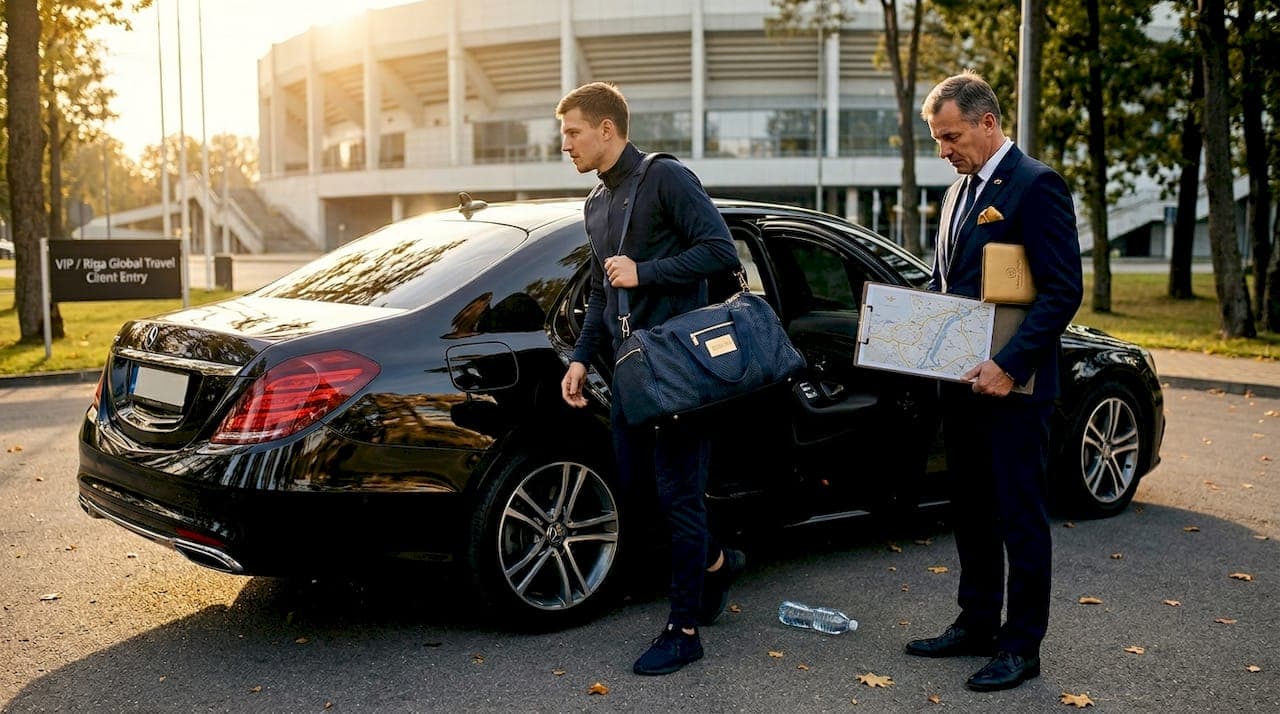
When a high-profile athlete steps into a vehicle, the stakes extend far beyond comfort. A single lapse in route planning, a chauffeur without proper vetting, or a venue access failure can trigger a security incident, a media crisis, or worse. Sports managers and event planners who treat celebrity transportation as a luxury purchase rather than a security operation are taking a risk that no amount of leather upholstery can offset. This guide delivers a concrete, step-by-step protocol for arranging black car service for athlete-celebrities, prioritizing defensible safety over brand image at every stage.
Table of Contents
- Pre-trip essentials: What must be in place before booking
- Step-by-step: Booking and briefing your black car partner
- On the ground: Ensuring safety and privacy during execution
- Verification and debrief: Closing the loop after the event
- Why security protocols must override luxury branding in sports celebrity transport
- Seamless, defensible transportation for athletes: Next steps
- Frequently asked questions
Key Takeaways
| Point | Details |
|---|---|
| Prioritize protocols | Always establish strict safety and operational requirements before booking. |
| Insist on compliance | Demand clear documentation and proof from your car service partner. |
| Monitor execution | Stay engaged during transport, verifying procedures and documenting any incidents. |
| Debrief thoroughly | Conduct post-event reviews to identify lessons and raise future standards. |
| Luxury follows safety | A flawless image is only truly possible when real-world safety isn’t compromised. |
Pre-trip essentials: What must be in place before booking
Before you contact a single service provider, your operational foundation needs to be solid. Rushing straight to vehicle selection or pricing is one of the most common mistakes planners make. The groundwork you lay before the first call determines whether everything downstream is defensible or improvised.
A practical methodology for high-profile black car operations treats the entire process as a security and operations standard operating procedure (SOP), covering risk assessment, chauffeur vetting, vehicle inspection, route security, communications, and emergency response with tabletop drills. That framework should shape every decision you make before, during, and after the event.
Risk assessment and access control
Start with a formal risk assessment specific to the athlete and event. Consider the athlete's public profile, the nature of the event (a press junket carries different risks than a championship appearance), and the geographic environment. Identify who has authorized access to the athlete's itinerary and enforce strict need-to-know information sharing. Loose access control at this stage is how route details leak.
Chauffeur background vetting
Never accept a chauffeur assignment without documented verification. Require the service provider to supply criminal background check results, driving record summaries, and proof of specialized training for high-profile transport. A chauffeur who has handled corporate executives is not automatically qualified for celebrity athlete transport, where crowd behavior and media presence introduce different variables entirely.
Vehicle standards and inspections
Every vehicle must pass a pre-trip mechanical inspection, and you should receive written confirmation of that inspection before the day of service. Check that the vehicle meets your specific requirements, including tinted windows, communication systems, and any medical or accessibility needs the athlete may have. Reviewing vehicle safety checks documentation from your provider is non-negotiable.
Pre-booking checklist: Documents to collect from your provider
- Chauffeur background check and driving record
- Vehicle inspection report (dated within 72 hours of service)
- Proof of commercial liability insurance
- Written emergency response procedures
- Backup vehicle confirmation and contact details
- Chauffeur training certifications for high-profile transport
| Requirement | Minimum standard | Why it matters |
|---|---|---|
| Chauffeur vetting | Criminal + driving record check | Prevents insider security threats |
| Vehicle inspection | Written report, pre-trip | Confirms mechanical reliability |
| Insurance coverage | Commercial liability policy | Protects all parties legally |
| Emergency procedures | Written and rehearsed | Enables fast, coordinated response |
| Backup vehicle | Confirmed and on standby | Eliminates single points of failure |
Pro Tip: Request the emergency procedures document in advance and read it yourself. If it is vague or generic, that is a red flag about the provider's operational maturity.
Step-by-step: Booking and briefing your black car partner
With all pre-trip essentials in place, the next step is translating your requirements into actionable instructions during the booking process. This is where many planners lose control, either by delegating too much to the provider or by failing to communicate athlete-specific constraints clearly.
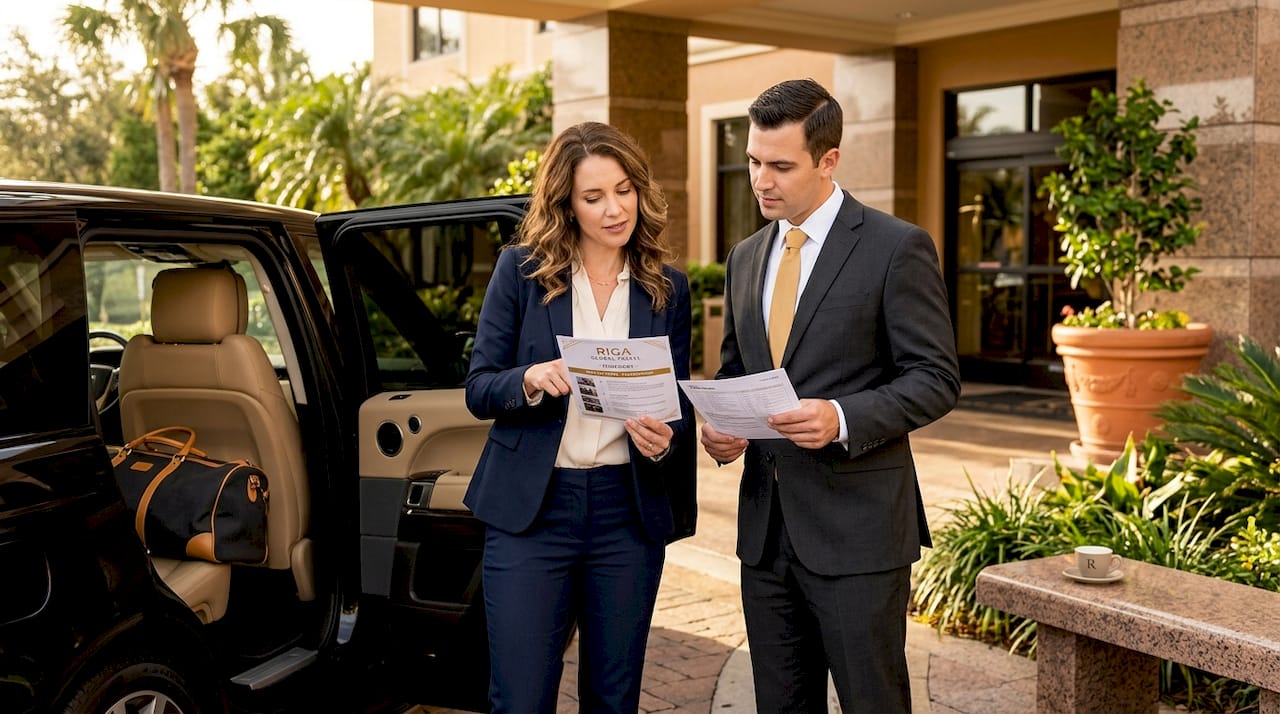
The safety standards framework outlines a full protocol covering risk assessment, chauffeur vetting and training, vehicle standards including event-specific checks, primary and secondary and tertiary route definitions, dedicated communications channels, written emergency response, and operational drills. Your booking conversation should touch every one of those elements explicitly.
The booking sequence
-
Define the operational brief. Before reaching out, document the athlete's name (use a code name if required), pickup and drop-off locations, timing windows, privacy requirements, and any physical or medical needs. This brief becomes the foundation of every conversation.
-
Qualify the provider. Ask directly: Do you have experience with high-profile entertainment or sports clients? Can you provide references? What is your chauffeur vetting process? Providers who cannot answer these questions with specifics are not ready for this assignment.
-
Communicate athlete-specific requirements. Every athlete is different. Some require complete media blackout during transit. Others have security personnel who must ride along. Some have strict timing requirements tied to broadcast schedules or press obligations. Communicate these requirements in writing, not just verbally.
-
Request route planning documentation. A professional provider will define a primary route, a secondary route, and a tertiary route for every trip. Ask to review these and confirm they account for event traffic, media presence, and known access restrictions at the venue.
-
Confirm communications protocols. Establish a dedicated communications channel for the day of service. Know exactly who calls whom if there is a delay, a route change, or an emergency. Ambiguity in communications is how small problems become large ones.
-
Require a written confirmation of all agreed terms. Verbal agreements disappear under pressure. Every requirement you have communicated should appear in a written booking confirmation or service agreement.
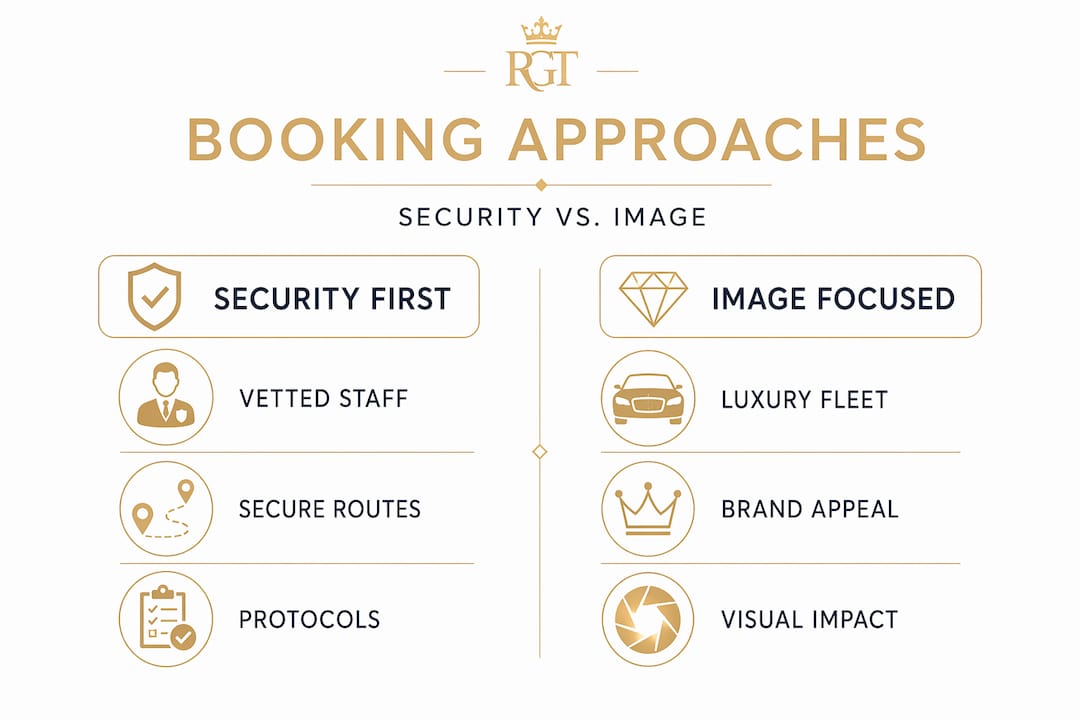
Image-focused booking vs. security-first booking
| Factor | Image-focused approach | Security-first approach |
|---|---|---|
| Provider selection | Based on vehicle aesthetics and brand reputation | Based on vetting documentation and operational protocols |
| Chauffeur assignment | Provider's choice, no verification requested | Background check and training records reviewed |
| Route planning | Single route, selected for convenience | Primary, secondary, and tertiary routes documented |
| Communications | General contact number provided | Dedicated channel with named contacts established |
| Emergency procedures | Not discussed | Written procedures reviewed and confirmed |
| Post-event review | Not conducted | Debrief scheduled and documented |
Pro Tip: When briefing the provider on privacy requirements, be specific about what "privacy" means operationally. Does it mean no photos? No disclosure of pickup location? No communication with media? Vague privacy requests produce inconsistent results.
On the ground: Ensuring safety and privacy during execution
Having booked and briefed your partner, focus now shifts to flawless on-the-day execution and real-time risk management. This is the phase where preparation either pays off or falls apart.
"Venue safety and security guidance emphasizes concrete checklists, access control, and documented emergency response. Planners should privilege the latter for defensible operational design."
Key safety checkpoints before and during the ride
- Confirm chauffeur identity in person before the athlete boards. Check ID against the name in your booking confirmation.
- Verify vehicle plate number matches the confirmation documents.
- Conduct a brief walkthrough of the vehicle before the athlete enters. Check for anything unusual.
- Confirm venue access credentials are in hand before departure. Do not assume credentials will be waiting at the gate.
- Establish a check-in protocol: the chauffeur should communicate at departure, at each route waypoint, and upon arrival.
Communications during transit
Designate a single point of contact on your team who monitors the vehicle throughout the trip. That person should have direct contact with the chauffeur, the venue security lead, and the athlete's personal representative. Three-way communication gaps are where coordination failures happen.
If the athlete has personal security staff, integrate them into the communications chain before the vehicle moves. A security detail that is operating on a separate information stream from the transportation coordinator creates dangerous blind spots.
Emergency response and escalation
Every trip should have a written escalation ladder. If the chauffeur encounters a crowd situation, who is called first? If the vehicle has a mechanical failure, what is the backup protocol? If there is a medical situation involving the athlete, what are the steps? These questions should be answered in writing before the vehicle leaves the curb.
Pro Tip: Run a five-minute tabletop exercise with your team and the provider the morning of the event. Walk through one emergency scenario out loud. This single exercise surfaces communication gaps that documents alone will not reveal.
Common execution mistakes to avoid
- Failing to monitor secondary and tertiary routes for real-time changes in crowd or traffic conditions
- Allowing venue access credentials to be held by a single person with no backup
- Skipping the chauffeur identity check because the vehicle "looks right"
- Relying on a general company phone number instead of a dedicated day-of contact
- Not briefing the athlete's personal team on the communications protocol
Verification and debrief: Closing the loop after the event
Once the ride concludes, your work is not over. True risk management demands a documented, feedback-driven closeout process. Post-event review is the step most planners skip, and it is the step that prevents the same problems from recurring.
Operational drills and post-event tabletop exercises are a recognized part of the safety protocol for high-profile events. The debrief is where those exercises become institutional knowledge.
Post-event closeout sequence
-
Collect all documentation. Gather the vehicle inspection report, chauffeur log, route deviation notes, and any incident reports from the day. File these in a dedicated event folder.
-
Conduct a structured debrief. Within 24 hours of the event, hold a debrief with the driver, the athlete's representative, the venue security lead, and your transportation coordinator. Use a standard set of questions: What went as planned? What deviated? What created unnecessary risk?
-
Log all lessons and near-misses. A near-miss is a near-miss whether or not anything went wrong. If a secondary route was blocked and no one had a tertiary option ready, that is a process gap that needs to be documented and fixed.
-
Update your SOP. Every event should produce at least one update to your standard operating procedure. If nothing changed, you probably did not look closely enough.
-
Review provider performance against agreed standards. Did the chauffeur follow the communications protocol? Was the vehicle in the condition documented? Did the provider respond appropriately to any deviations? This review informs your decision to rebook or seek alternatives.
Organizations that conduct structured post-event audits after high-profile transportation assignments significantly reduce operational risk in subsequent bookings. The reason is straightforward: documented lessons replace guesswork, and updated SOPs prevent teams from repeating the same improvisations under pressure.
Post-event documentation checklist
- Vehicle inspection report (post-trip)
- Chauffeur log with route and timing notes
- Incident or near-miss report (if applicable)
- Debrief notes from all stakeholders
- Updated SOP with lessons incorporated
- Provider performance evaluation
Why security protocols must override luxury branding in sports celebrity transport
Here is the uncomfortable truth that most transportation marketing will never tell you: the premium experience narrative is designed to sell vehicles, not to protect athletes. And when you are the manager responsible for a high-profile client, that distinction matters enormously.
The industry reality is that many ground-transport marketing pages focus on discretion, luxury, and narrative-driven "controlled presence," while venue safety and security guidance emphasizes concrete checklists, access control, and documented emergency response. Planners who privilege the former over the latter are making a choice that looks good in a pitch deck and fails in a crisis.
We have seen this pattern repeatedly. A manager selects a provider based on vehicle photos and a polished website. The booking conversation centers on amenities and arrival aesthetics. Nobody asks for the chauffeur's background check. Nobody requests the emergency procedures document. The event goes smoothly, and the manager concludes the process worked. Until it does not.
The checklist culture is not glamorous. Asking a provider for their tabletop drill records does not make for a compelling story. But it is the difference between a defensible operation and an improvised one. When something goes wrong, and in high-profile celebrity transport, something eventually will, the question you will face is not "Was the vehicle beautiful?" It is "Did you follow a documented protocol?"
Reviewing vehicle safety protocols and operational standards before every engagement is not excessive caution. It is the baseline for professional transportation management at this level. The athletes you represent have built careers on preparation and performance under pressure. Their transportation arrangements should reflect the same standard.
The managers who do this work well are not the ones with the best vendor relationships or the most impressive vehicle fleets on speed dial. They are the ones with the most rigorous documentation habits and the clearest escalation procedures. That discipline is what separates a close call from a catastrophe.
Seamless, defensible transportation for athletes: Next steps
Managing transportation for high-profile athletes is a discipline that rewards preparation and punishes shortcuts. Every section of this guide points to the same conclusion: documented protocols, verified providers, and structured debriefs are what make celebrity transport genuinely safe rather than just expensive.
For sports managers and event planners who want to simplify this process without sacrificing rigor, working with a specialist partner makes a measurable difference. Riga Global Travel provides limousine and concierge services built specifically for the entertainment industry, with the operational documentation, chauffeur vetting standards, and communications protocols that high-profile athlete transport demands. When your next event requires transportation that is both seamless and defensible, the right partner handles the complexity so you can focus on the athlete.
Frequently asked questions
What documents should I request from a black car service for sports celebrities?
Require proof of chauffeur background checks, vehicle inspection reports, commercial insurance, and written emergency procedures documentation. Safety standards for high-profile transport require all four before service begins.
How do I balance privacy with security for celebrity athletes?
Prioritize secure routes and documented emergency protocols over exclusively privacy-focused features, since operational security and privacy reinforce each other when properly structured.
Who should be involved in operational briefings before and after events?
Include the driver, the athlete's representative, event security, and your transportation coordinator in both pre-event and post-event briefings, as operational drills and debriefs require all stakeholders present to be effective.
What is a common mistake in black car arrangements for sports celebrities?
Over-emphasizing luxury branding while neglecting documented safety protocols is a frequent and costly mistake, leaving planners with no defensible record when something goes wrong.